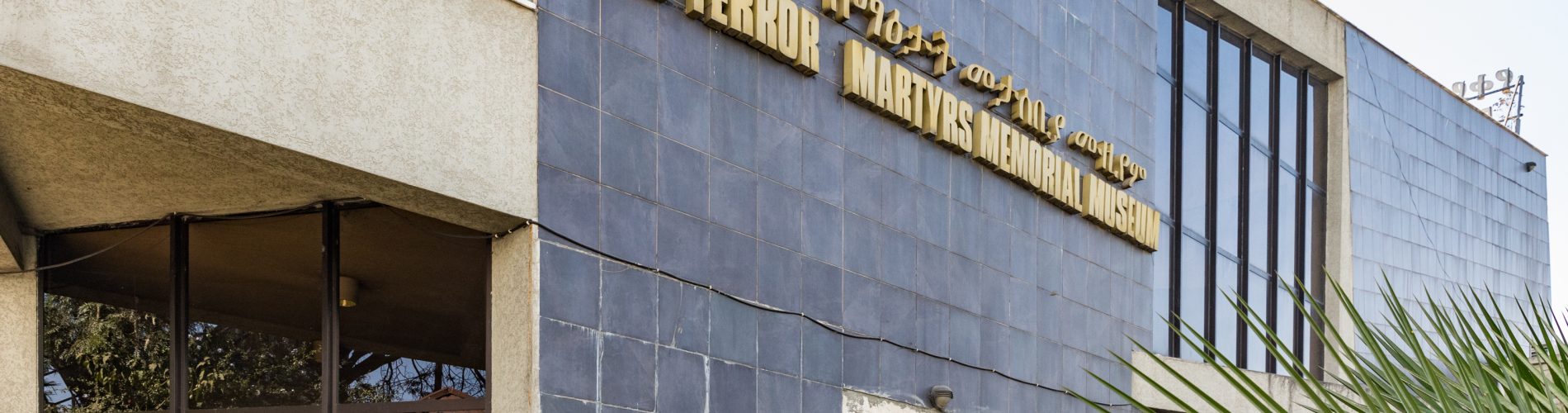
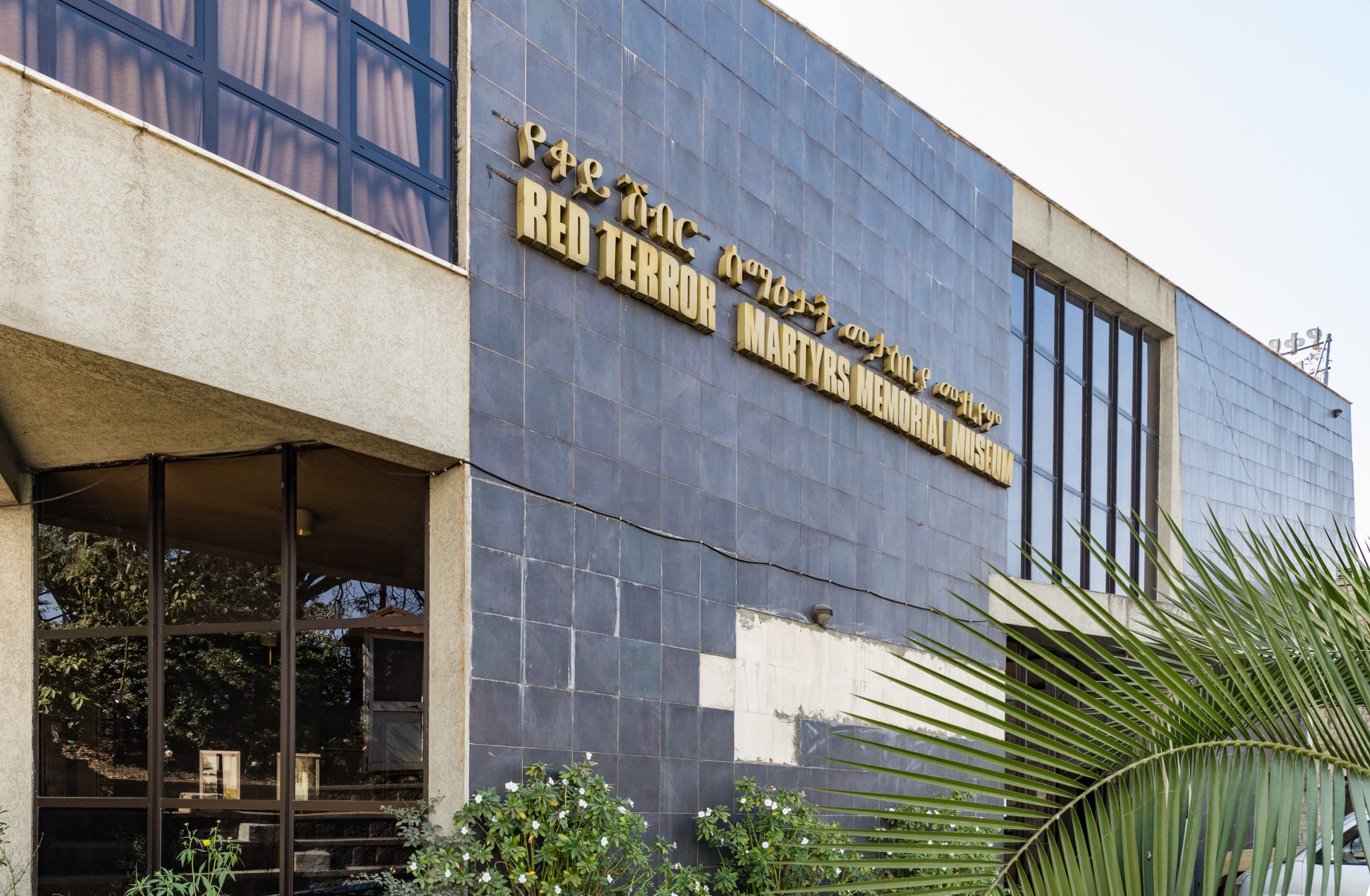
In April 1977, Mengistu Haile Mariam smashed a bottle of red paint on the ground during a speech in Addis Ababa, according to the audio guide of the Red Terror Martyrs’ Memorial Museum, which presents that speech as the beginning of the Red Terror. This photo essay uses images of the museum and the archive to trace how Ethiopia moved from the fall of its emperor in 1974 to the campaign its own government called the Red Terror, and how the country remembers it today.
The fall of the emperor
Haile Selassie had ruled Ethiopia as emperor since 1930. According to Britannica, famine, worsening unemployment and political stagnation led sections of the army to mutiny in 1974. The soldiers deposed him and set up a provisional military government known as the Derg, and the emperor spent the rest of his life under house arrest in his own palace.
Britannica’s biography of Mengistu says that he, then a major, was made chairman of the Armed Forces Coordinating Committee in June 1974, and after the emperor’s arrest in September became a vice chairman of the Provisional Military Administrative Council, the body that took over the functions of government.
The executions of November 1974
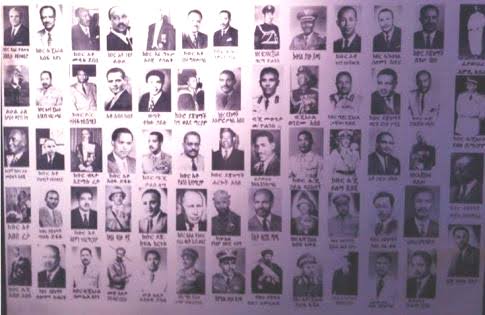
On the night of 23 November 1974, the military council removed Lieutenant General Aman Andom, former chief of the military government, and executed 60 political prisoners, according to a telegram sent two days later by the United States Embassy in Addis Ababa and now published by the State Department’s Office of the Historian. Britannica describes those killed as aristocrats and former officials of the old imperial regime.
Britannica says Mengistu ordered the killing of Aman, the council’s chairman, and urged the killing of the 60 aristocrats and former officials. The embassy telegram called the killings the “Saturday night massacre” and said they marked “a further radicalization of the Ethiopian revolution.”
The road to the Red Terror
Opposition did not end with the old government. A 1991 report by Human Rights Watch explains that in mid 1976 the Ethiopian People’s Revolutionary Party (EPRP) began assassinating leading members of the Derg and its urban dwellers’ associations, known as kebeles. Mengistu labelled this campaign the “White Terror.” In February 1977, Britannica records, a battle inside the ruling council killed its chairman and several other members, and Mengistu emerged as head of state.
Human Rights Watch writes that in a public speech on 17 April 1977, Mengistu called on the people to fight the “enemies of the revolution” and smashed three bottles filled with blood, or something resembling blood, to signify the coming destruction of imperialism, feudalism and bureaucratic capitalism. Accounts of the details differ: The Irish Times says he flung six bottles to the ground at Meskel Square, the site of the speech.
The scale of the killing
Human Rights Watch describes the Red Terror as a campaign of urban counterinsurgency waged in Ethiopia’s main cities, notably Addis Ababa, between 1976 and 1978, and “one of the most systematic uses of mass murder by the state ever witnessed in Africa.” It says the number of dead is not known but is “certainly well in excess of 10,000.” In the killings that began on the night of 29 April 1977, ahead of May Day, the official government estimate was 732 dead over the next few days, while others put the figure at 2,000 or more. Bodies were left by the roadside, and some families had to pay one Ethiopian dollar for each “wasted bullet” before a body was returned, the report says.
Judgment and memory
In December 2006, BBC News reported, an Ethiopian court found Mengistu guilty of genocide after a 12 year trial held in his absence; he had lived in exile in Zimbabwe since being ousted in 1991. Britannica notes that he received a life sentence the following year and that, after a prosecution appeal, he was sentenced to death in May 2008.
On 7 March 2010, AFP, as published by News24, reported that Ethiopia inaugurated a museum for the victims of the Red Terror. According to the German Federal Foundation for the Reappraisal of the SED Dictatorship, its memorial was unveiled by Kebebushe Admasu, a mother whose four children were killed in one day . The museum’s audio guide describes exhibits of photographs, newspaper articles, documents, military uniforms, helmets and propaganda posters, among them a bottle similar to the one Mengistu threw.
Sources
- Encyclopaedia Britannica, Haile Selassie I
- Encyclopaedia Britannica, Mengistu Haile Mariam
- Office of the Historian, US Department of State, Foreign Relations of the United States 1969 to 1976, volume E6, document 118
- Human Rights Watch / Africa Watch, Evil Days: Thirty Years of War and Famine in Ethiopia (1991), chapter 6, The Red Terror
- The Irish Times, Ethiopia still haunted by memory of Derg genocidal regime
- BBC News, Mengistu found guilty of genocide, 12 December 2006
- News24 (AFP), Ethiopia opens Red Terror museum, 7 March 2010
- Bundesstiftung Aufarbeitung, Red Terror Martyrs Memorial Museum, Addis Ababa
- Red Terror Martyrs’ Memorial Museum audio guide (iZi Travel), The beginning of terror
- Wikimedia Commons, Red Terror Martyrs’ Memorial Museum in Addis Ababa 02, by Ninaras, CC BY 4.0
- Wikimedia Commons, file description for the Massacre of the Sixty montage