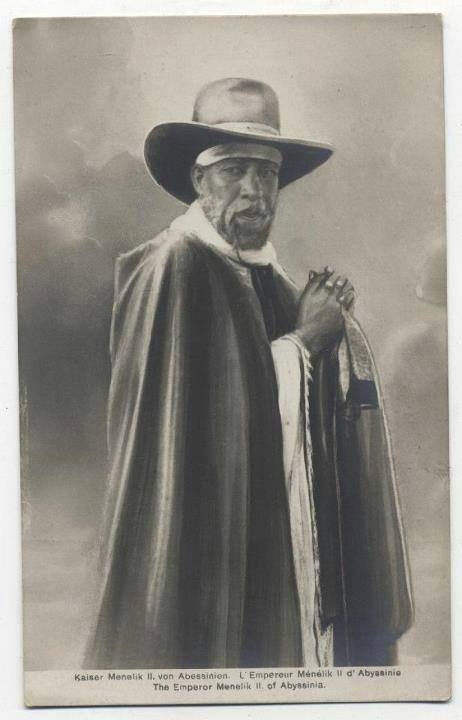
Few faces from Ethiopian history are as recognizable as that of Menelik II, the ruler who defeated an Italian army at Adwa and built a new capital at Addis Ababa. The postcard below, from the Mereja Images archive, is one of the many portraits of him that circulated in Europe, printed with a caption in three languages: German, French and English.
From Ankober to the throne
According to Encyclopaedia Britannica, Menelik was born Sahle Mariam on 17 August 1844 at Ankober in Shewa. His father, Haile Malakot, later became king of Shewa. When Emperor Tewodros II invaded Shewa in 1855, the boy was captured and held for nearly ten years at the mountain fortress of Magdela. Britannica says he escaped in 1865, returned home and, at about 21, declared himself king of Shewa.
He spent the next two decades as a regional king under the emperors Tekle Giorgis and Yohannes IV, expanding his domains south and east, Britannica writes. When Yohannes died fighting in 1889, Menelik had become the strongest man in the country.
Crowned at Entoto Maryam
The British Museum records that he was crowned Emperor Menelik II at St. Mary’s church on Mount Entoto on 3 November 1889. The Library of Congress notes that the coronation took place at Entoto Maryam and was painted by the Italian artist Pio Joris. The church itself had been founded by Empress Taytu Betul and blessed in 1887, according to the Encyclopaedia Aethiopica, which describes it as the main church where the imperial court venerated St. Mary.
Adwa and after
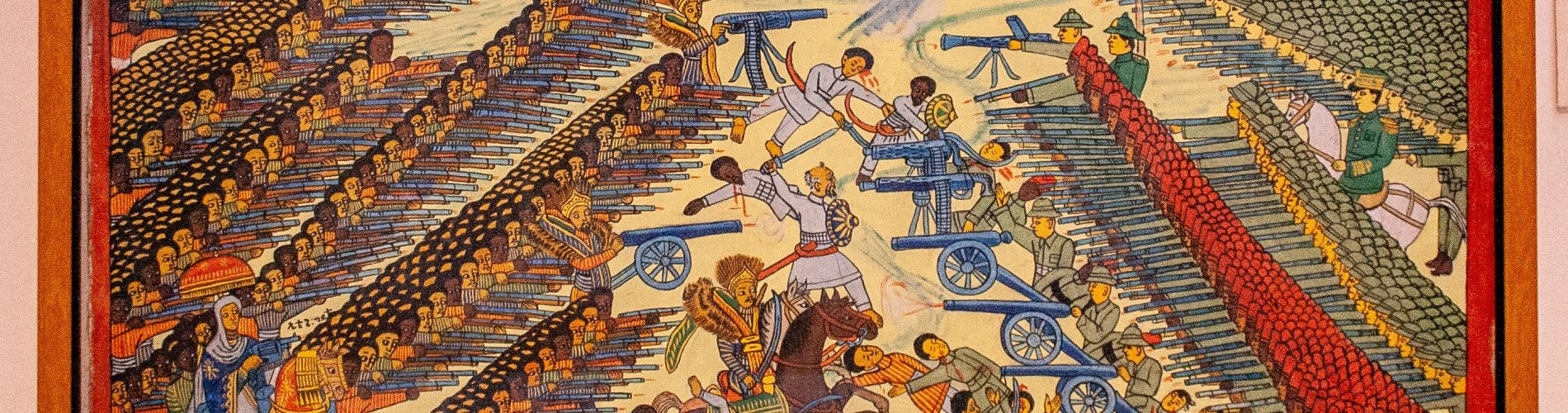
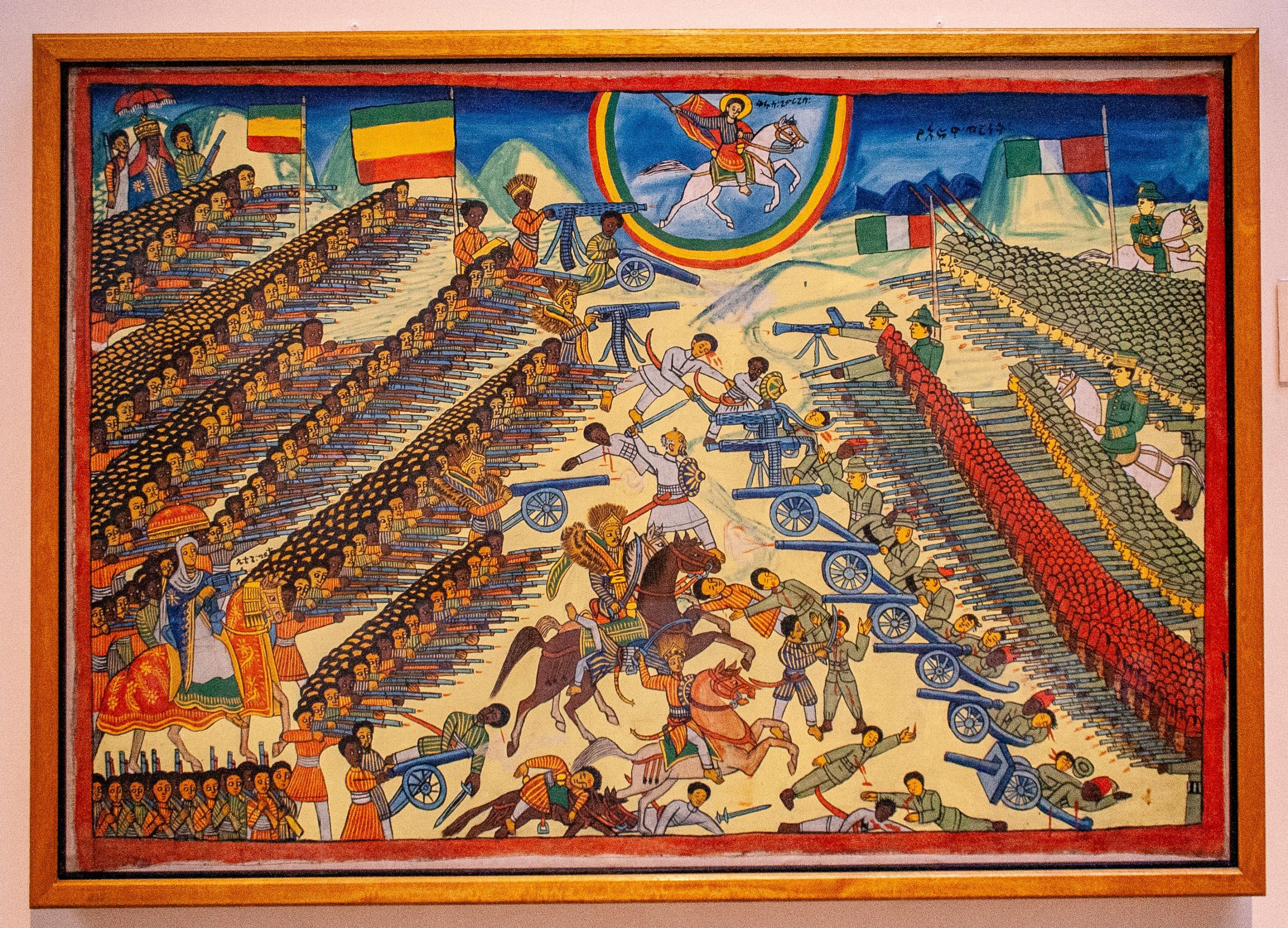
That same year Menelik signed the Treaty of Wichale with Italy. Encyclopaedia Britannica explains that Italy read Article XVII as making Ethiopia a protectorate; Menelik rejected that reading and renounced the treaty in 1893. On 1 March 1896 his army met Italian forces at Adwa. Britannica’s account of the battle puts the Ethiopian force at more than 100,000 against 14,500 under Italian command, and calls the result the first crushing defeat of a European power by African forces in the colonial era. The Treaty of Addis Ababa, signed in October 1896, cancelled the Treaty of Wichale and recognized Ethiopia’s independence.
After Adwa, Britannica says, Menelik created ministries, began modern education, built telephone and telegraph lines and commissioned a railway from Djibouti to Addis Ababa, his new capital. A series of strokes from 1906 or 1907 left him unable to rule, and power passed to Empress Taytu, the regent Ras Tesemma and his grandson Lij Iyasu. He died in Addis Ababa on 12 December 1913.
Menelik is remembered today largely through images like these: studio portraits sold abroad as postcards, and paintings that place him at the head of the army at Adwa. Together they show how a king from Ankober became the face of Ethiopian independence.