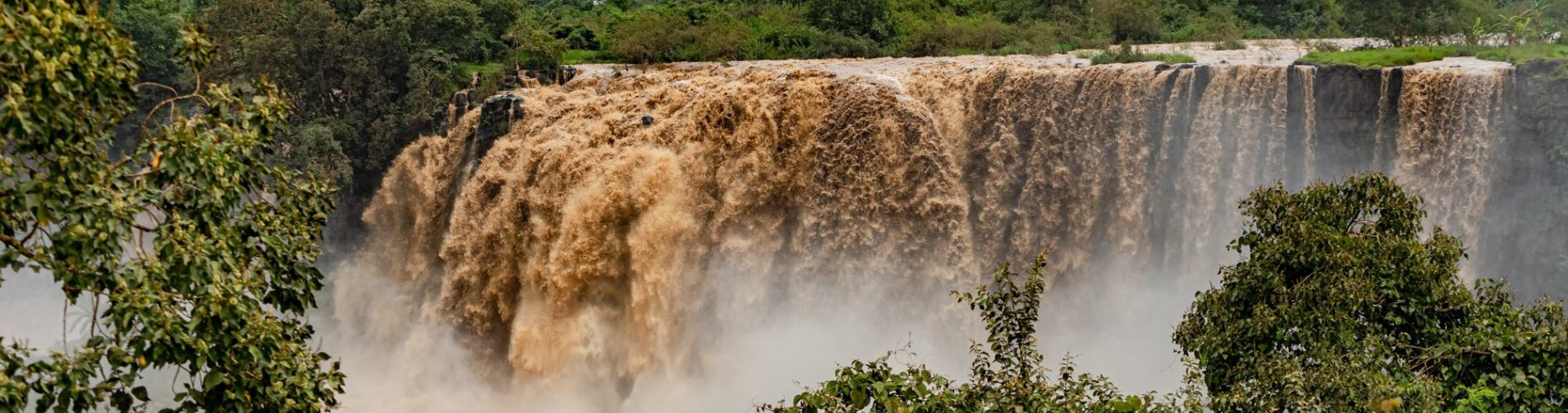
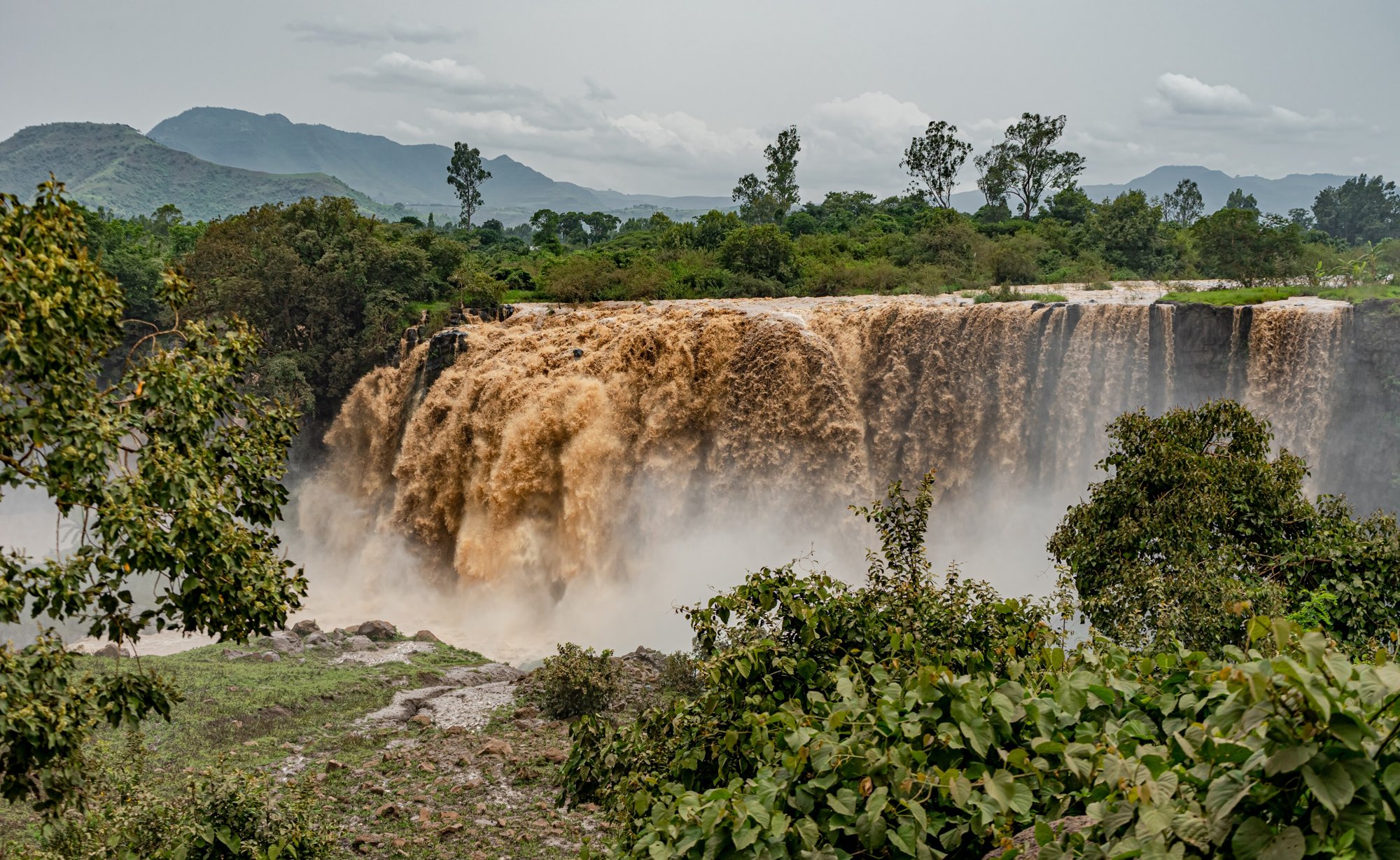
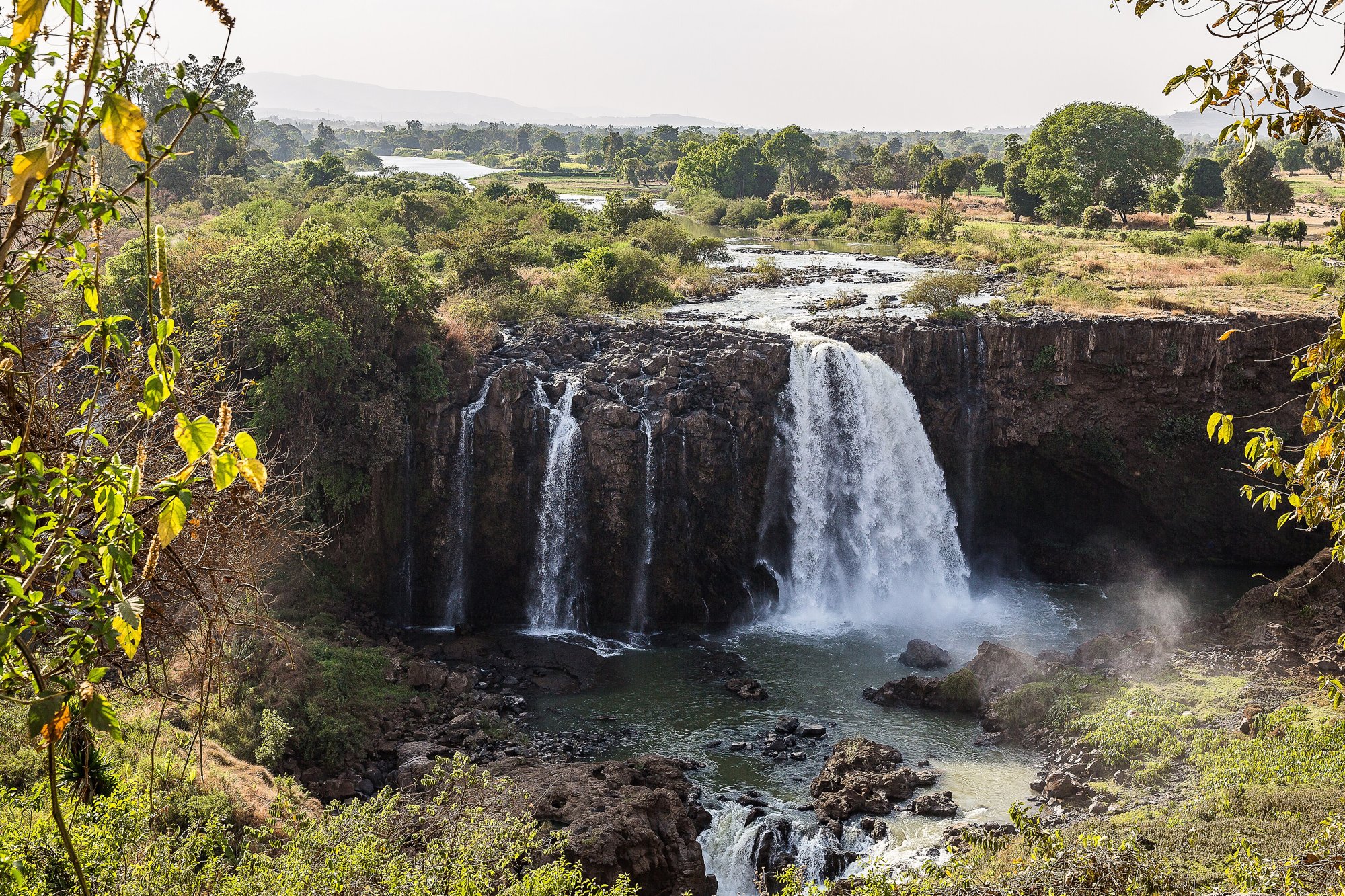
The Blue Nile, known in Ethiopia as the Abay, is the only river that flows out of Lake Tana, according to the Freshwater Ecoregions of the World profile of the lake. The Lake Tana Biosphere Reserve says the river winds for around 30 kilometres through papyrus and farmland before it drops over a sheer edge onto bare rock. The reserve gives the drop as 45 metres, while the ecoregion profile puts it at about 40. Ethiopians call the falls Tis Issat, which the reserve translates as smoking water, after the clouds of spray that rise from the gorge.
A barrier that shaped a lake
The ecoregion profile, written for the World Wildlife Fund, says the falls cut Lake Tana’s freshwater animals off from the rest of the Nile, and that this isolation helped drive the evolution of the lake’s endemic species. It reports that about 70 percent of the fish species in the lake live nowhere else, including a group of fifteen described species of large barbs, the only extended species flock of cyprinid fish in Africa. The biosphere reserve adds that over thousands of years the spray has kept a strip of rainforest green beside the falls, home to vervet monkeys and birds such as the white cheeked turaco.
Water for power
How much water reaches the edge has changed sharply. In a 2009 study in the journal Hydrological Processes, Matthew McCartney of the International Water Management Institute, working with Abeyu Shiferaw, an independent consultant, and Yilma Seleshi of Addis Ababa University, traced the change to the Chara Chara weir at the lake’s outlet and to diversions into the Tis Abay hydropower stations beside the falls. They report that the first station, Tis Abay I, came into service in 1964 and took only about 4.5 percent of the river’s yearly flow. In 2001, five new gates were added to the weir and a second station, Tis Abay II, was completed. From then until 2006, the authors found, about 72 percent of the flow went through turbines. Average discharge over the falls fell from an estimated 128 cubic metres per second in 1964 to 2000 to just 41 cubic metres per second in 2001 to 2006, with a yearly low of 4.7 cubic metres per second in 2004.
A bridge from 1626
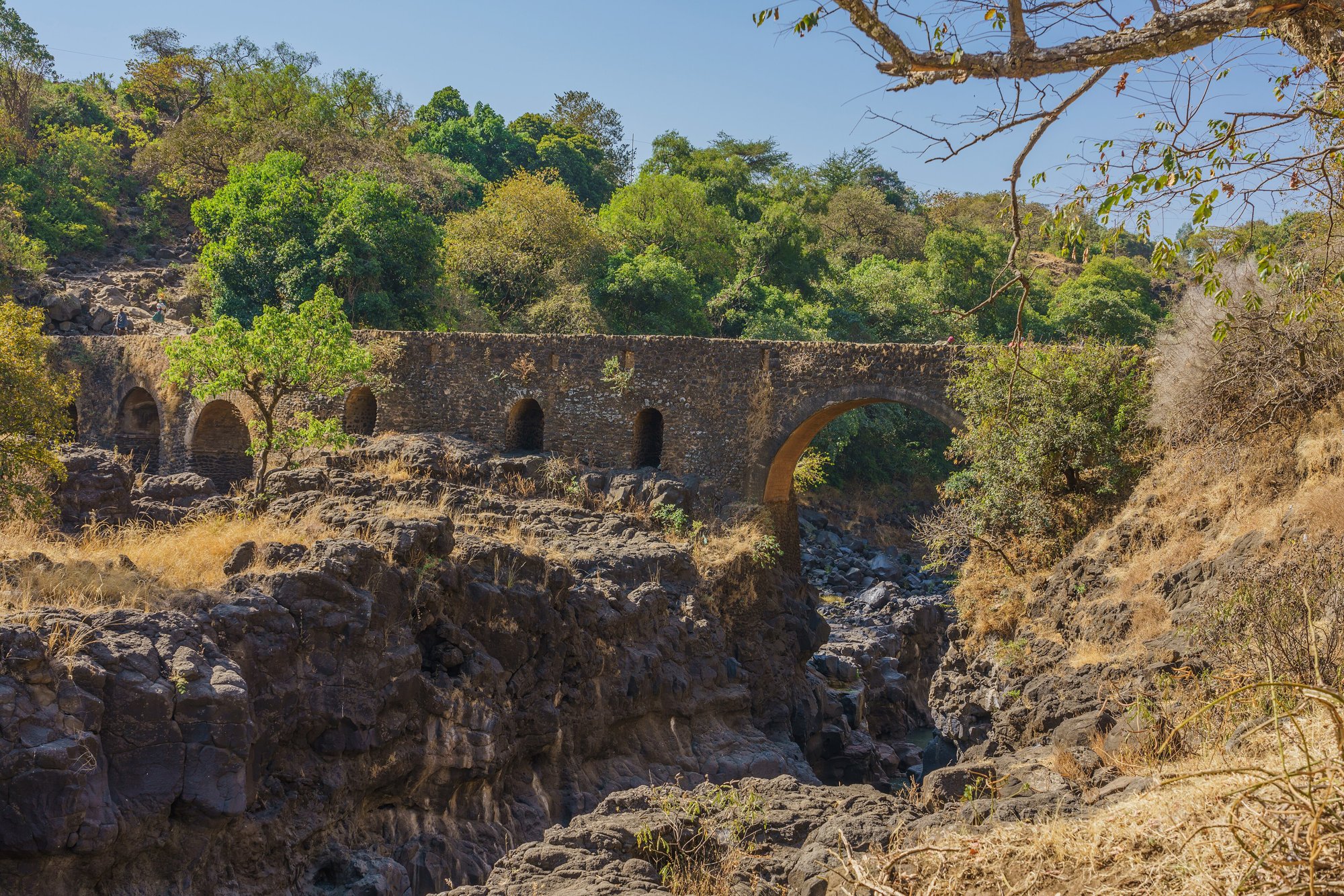
Below the falls, an old stone bridge crosses the river’s gorge. An online exhibition on the Jesuits in Ethiopia, hosted by ISCTE University Institute of Lisbon, describes it as an L shaped structure 64 metres long, carried on eight arches. Local tradition credits it to Emperor Fasiladas, the exhibition notes, but the Jesuit missionary Jerónimo Lobo wrote that it was built in the reign of Fasiladas’s father, Emperor Susenyos, with the help of Indian masons whom the Jesuits had brought from Goa. Another Jesuit, Manuel de Almeida, recorded that the bridge was built in 1626. The exhibition says Ethiopia’s cultural heritage conservation authority has since restored it.
Sources
- Michele Thieme and Ashley Brown, World Wildlife Fund, Freshwater Ecoregions of the World: Lake Tana (ecoregion 526)
- Lake Tana Biosphere Reserve: Tis Isat Falls (archived May 2026)
- Matthew McCartney, Abeyu Shiferaw and Yilma Seleshi, Estimating environmental flow requirements downstream of the Chara Chara weir on the Blue Nile River, Hydrological Processes 23 (26), 2009
- Jesuits in Ethiopia exhibition, ISCTE University Institute of Lisbon: Tis Abbay (bridge)