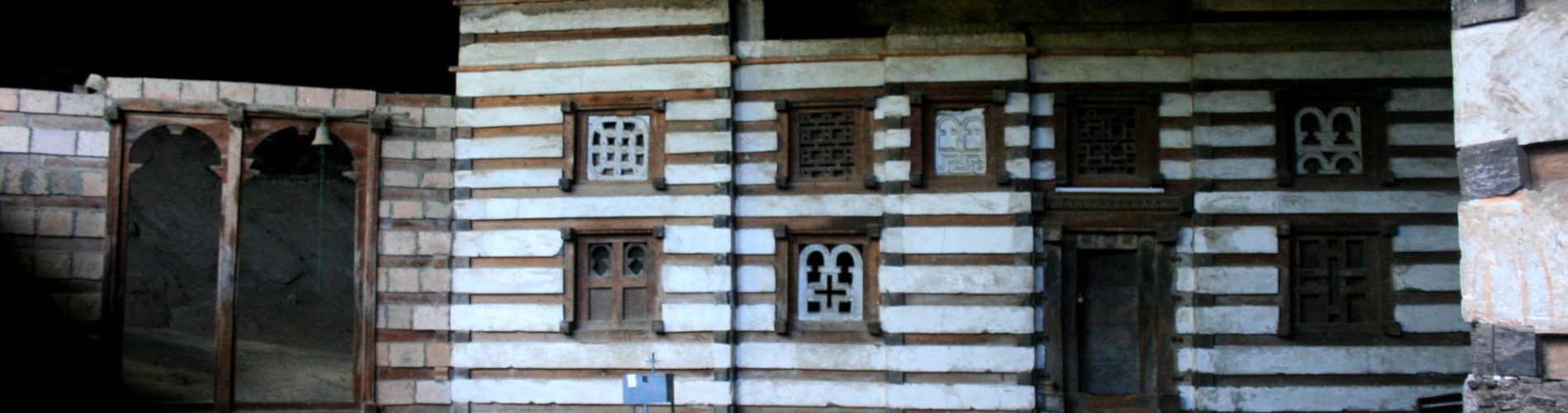
Yemrehanna Kristos is a church of stone and wood built inside a mountain cave north of Lalibela. It bears the name of a Zagwe king and may be older than Lalibela’s rock churches.
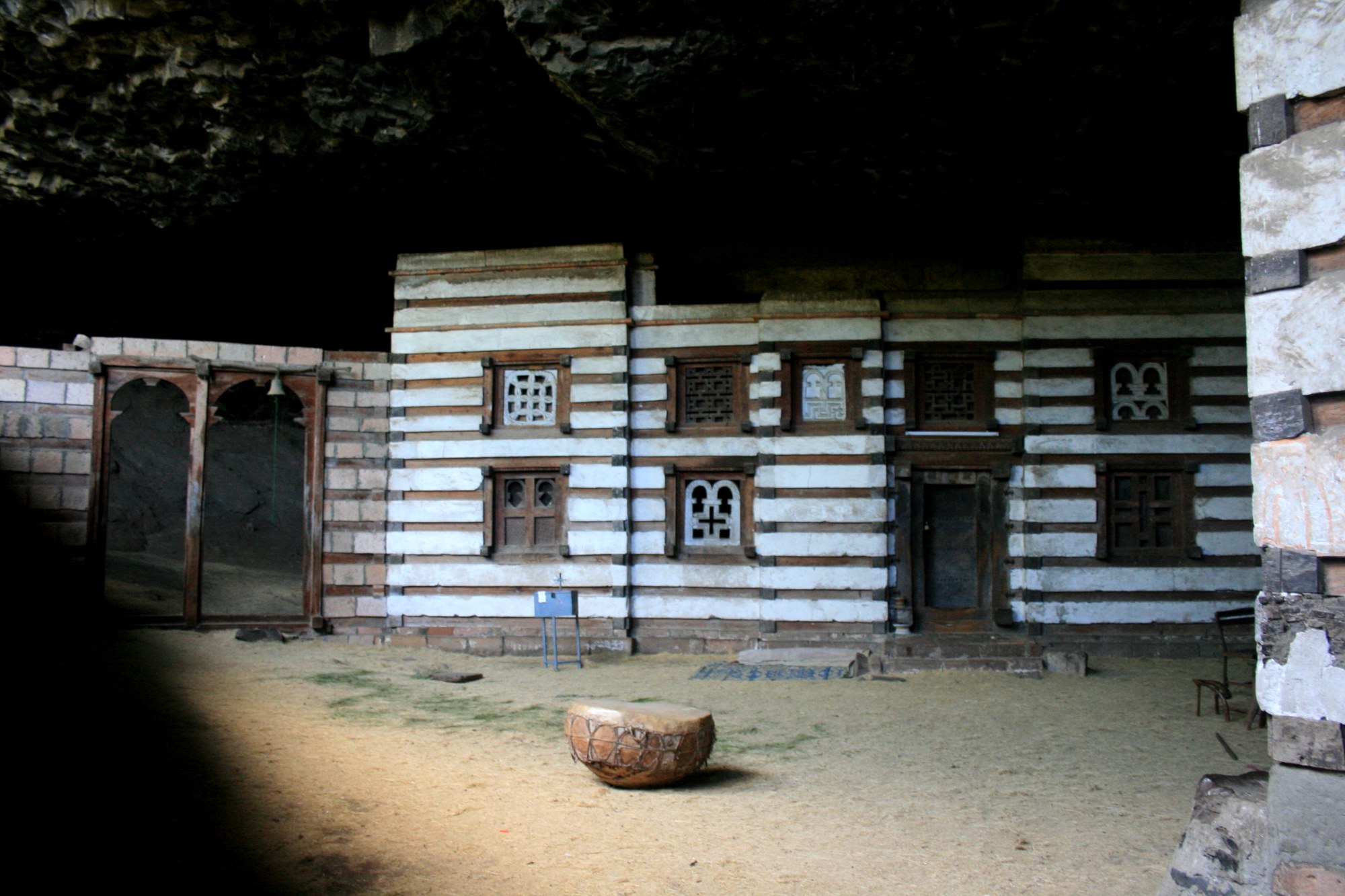
A church built, not carved
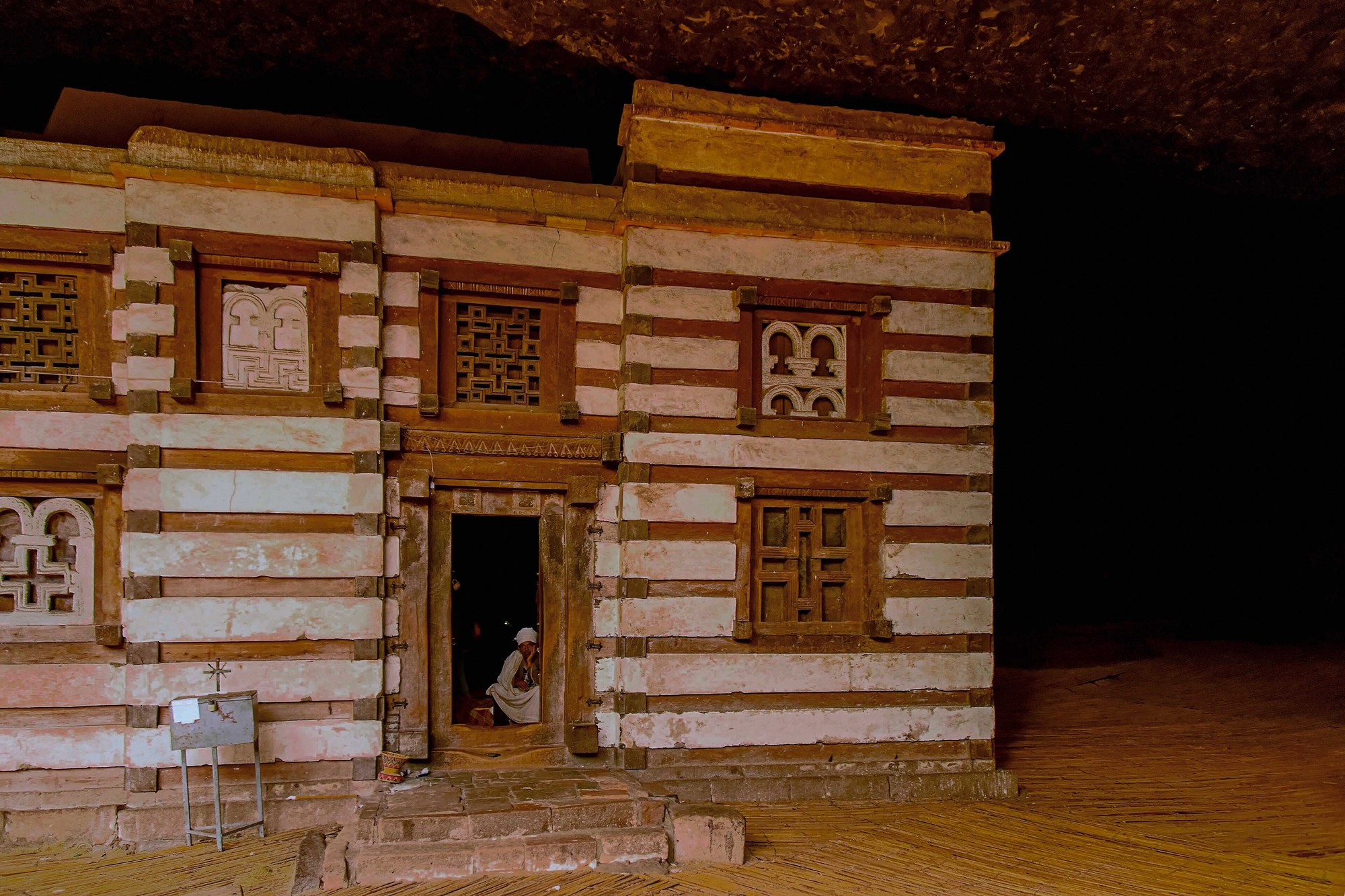
Unlike the famous churches of Lalibela, which were cut out of the rock, Yemrehanna Kristos was built, as the Lonely Planet guide points out. Its stepped front is made of alternating layers of wood and stone, and the guide suggests that this style explains why so many of the Lalibela churches look the way they do. It adds that the church may be up to 80 years older than them, and that it rests on a base of olive wood panels laid over marshy ground, inside a cave whose roof is formed by basalt lava flows.
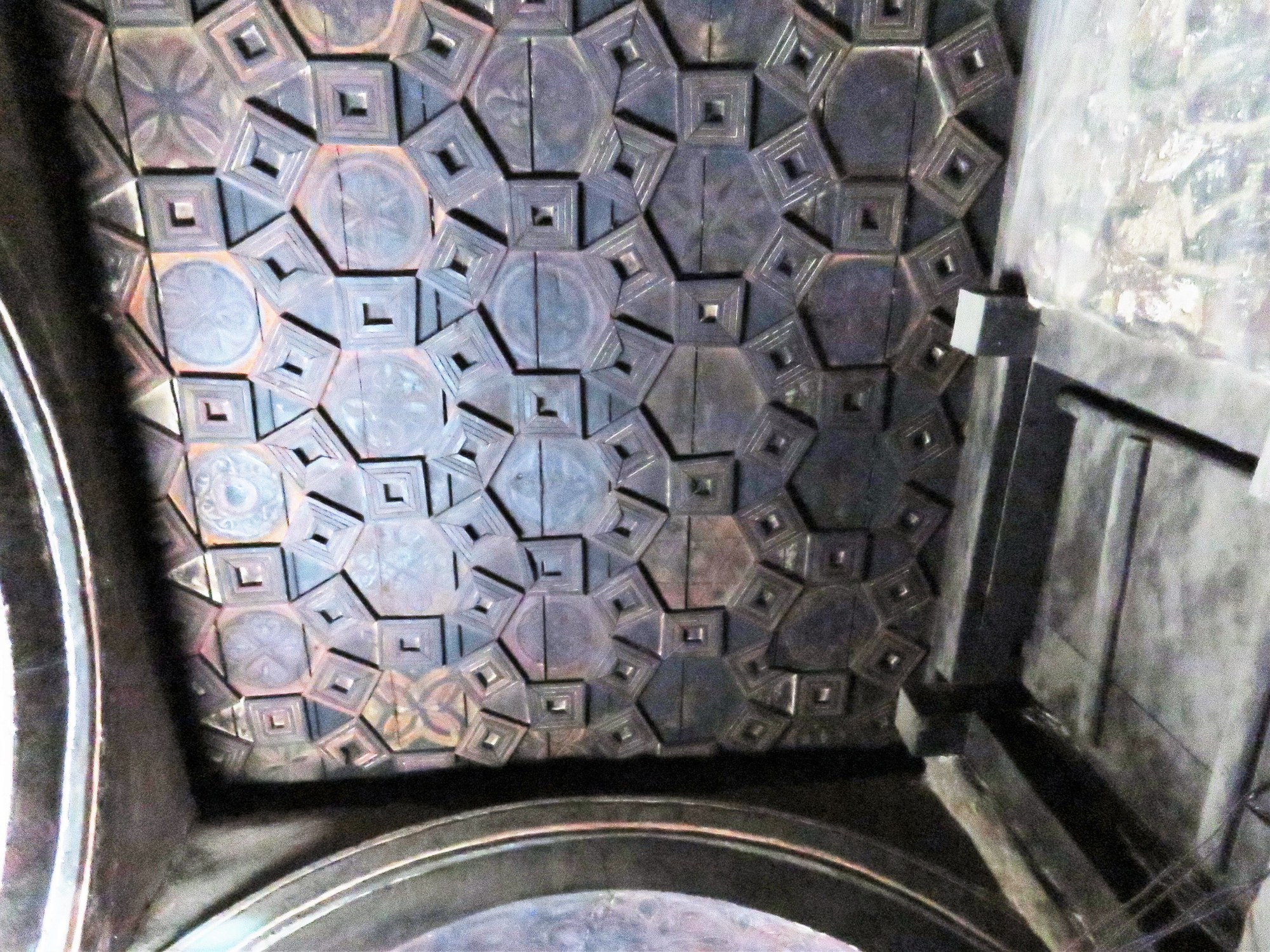
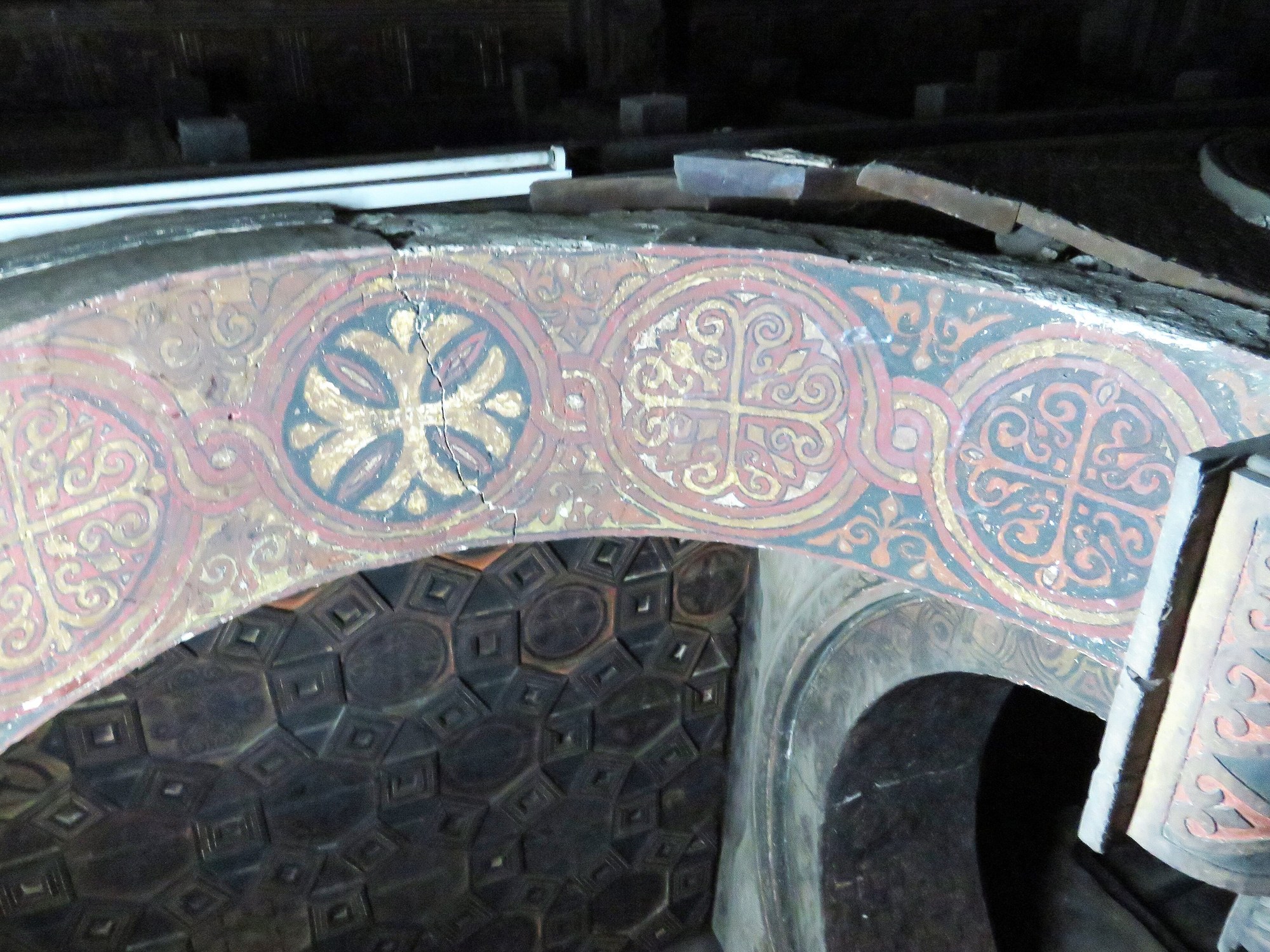
The Ethiopian Heritage Fund describes the church and the building beside it, known as the palace, as two of the most important ancient buildings in Ethiopia. It praises the church for building methods inspired by Aksum, for its refined interior decoration and for a scheme of wall paintings of rare importance. Lonely Planet puts the church about 45 kilometres north of Lalibela, roughly an hour and a half by four wheel drive.
The king in the name
The church is named after Yemrehanna Kristos, whom Paolo Marrassini, writing in the Encyclopaedia Aethiopica, describes as the third king of the Zagwe dynasty, ruling in the second half of the twelfth century. Marrassini notes that the main source on the king’s life is his Gädl, a saint’s life written in the hagiographic rather than the historical tradition. In that account, the king turns a building into a splendid church and decorates it with ornaments obtained from Egypt and from the Byzantine empire.
The cave holds more than the church. The Zamani Project at the University of Cape Town, which documented the site in 2016, records the palace next to the church, the tomb of the king behind it and, deeper in the cave, a heap of skeletons of monks and others. Lonely Planet says some of the dead are thought to be pilgrims who came there to die, and others are said to be the workmen.
How old is it?
The date is still open. According to the Ethiopian Heritage Fund, proposed dates for the church and the palace range from the tenth to the thirteenth century. In May 2017 its conservators studied the plaster of the palace, and radiocarbon dating, the first scientific dating at the site, pointed most likely to AD 1017, give or take 24 years. That is much earlier than usually assumed, and the fund says it has far reaching consequences for dating the church. The same study identified the palace timber as a type of cedar, which fits the building accounts in the Gädl. The fund calls the palace the only free standing secular medieval building in the Aksumite style to survive in Ethiopia.
Culture in Crisis, a programme founded by the Victoria and Albert Museum and now managed by the British Council, describes the wall paintings as dating from the late eleventh and early twelfth centuries and counts them among the oldest surviving wall paintings in the country.
Saving a fragile building
The World Monuments Fund placed the church on its 2014 Watch. In autumn 2015 the fund received a grant from the US State Department Ambassadors Fund for Cultural Preservation, which Culture in Crisis lists at $149,996. The work began in February 2016 with a ceremony led by Abune Mathias, patriarch of the Ethiopian Orthodox Church, and in March a team used laser scanning and movement monitors to find the causes of the building’s structural instability.
The Ethiopian Heritage Fund says the project was carried out jointly by Ethiopia’s Authority for Research and Conservation of Cultural Heritage and the World Monuments Fund. The Zamani Project made the laser scans, Studio Croce of Rome studied the structure, and the conservators Lisa Shekede and Stephen Rickerby examined the paintings. They found the paintings stable but fragile, and concluded that treatments such as cleaning could now damage them beyond repair.
Sources
- Ethiopian Heritage Fund: Yemrehanna Kristos
- Culture in Crisis: Conservation of the Early 12th-Century Church of Yemrehanna Kristos near Lalibela
- World Monuments Fund: Yemrehanna Kristos
- Zamani Project: Yemrehanna Kristos Church
- Lonely Planet: Yemrehanna Kristos
- Marrassini, P. (2014), Yǝmrǝḥannä Krǝstos, in Encyclopaedia Aethiopica, vol. 5, pp. 53 to 54, Wiesbaden: Harrassowitz