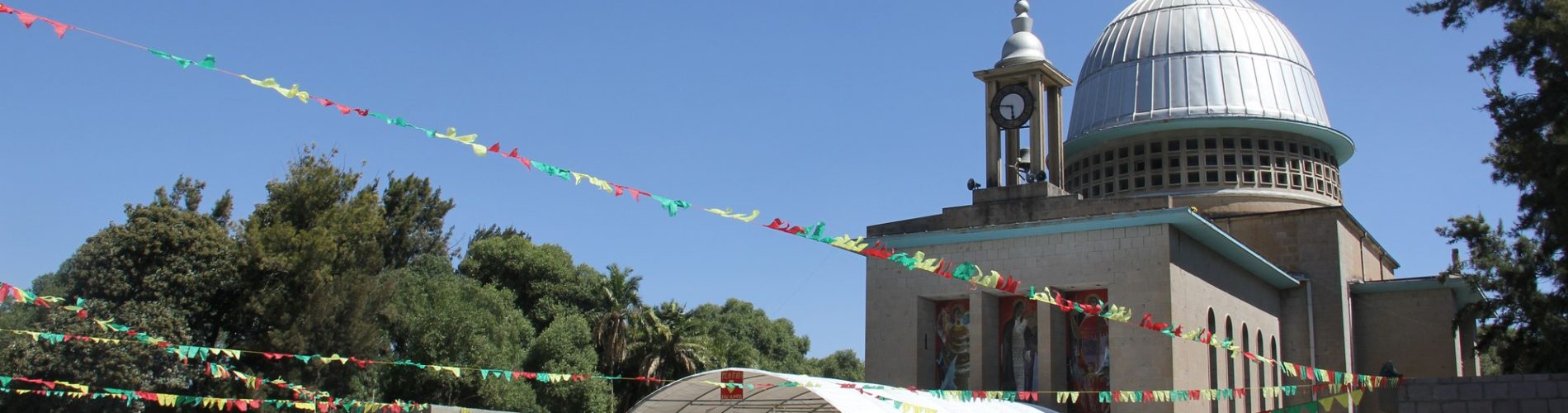
In a gorge north of Addis Ababa, Debre Libanos monastery holds the shrine of Saint Tekle Haymanot. A Swiss pilot photographed it in 1934, three years before troops under Italian command massacred its community.
A monastery on a frontier
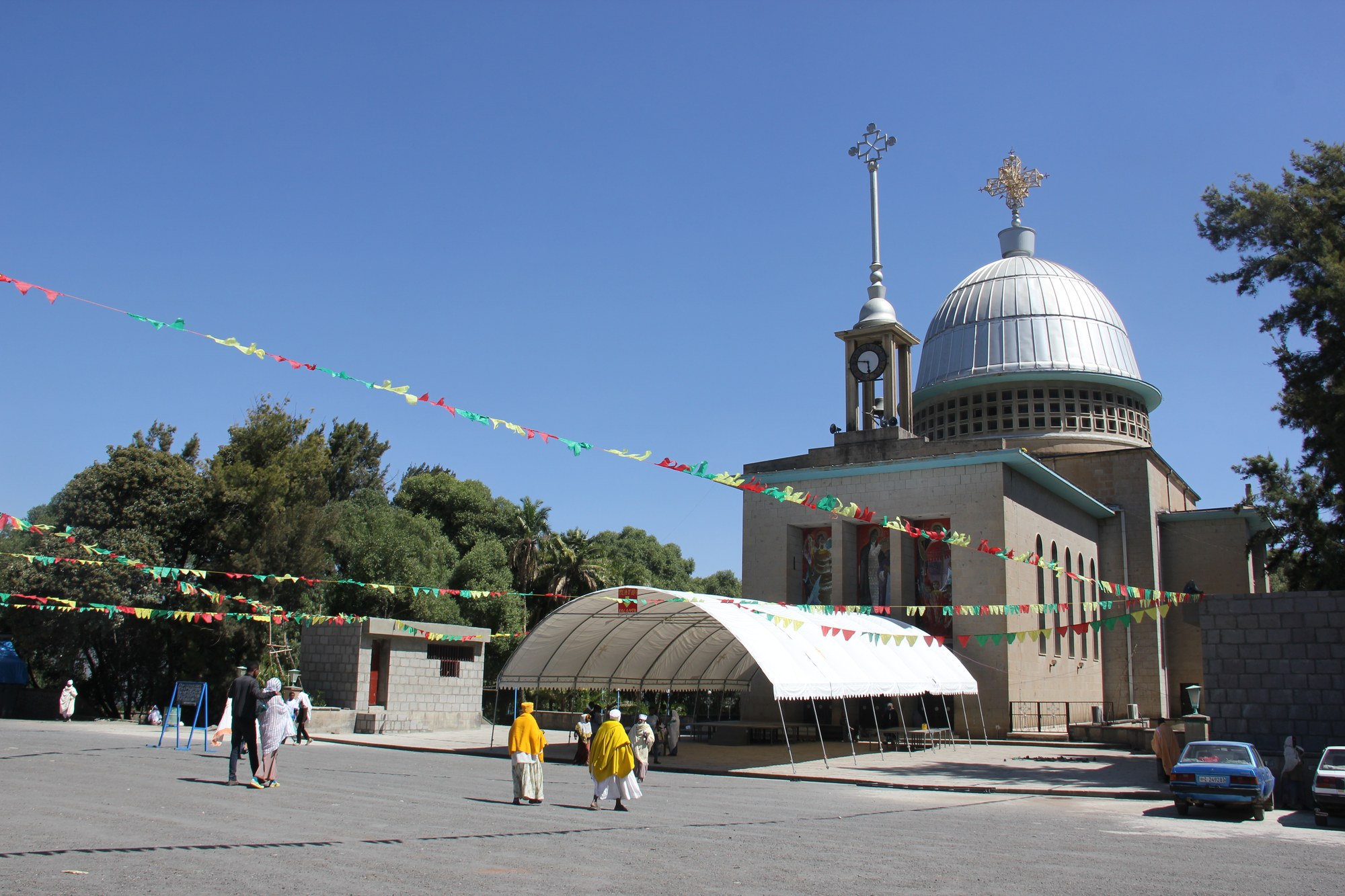
Debre Libanos stands in Selale, in the old province of Shewa, in a gorge near the Zega Wedeb river, according to the historian Marie-Laure Derat in her entry for the Encyclopaedia Aethiopica. The London Review of Books puts it about sixty miles north of the capital. The saint’s own hagiography, the Gadla Tekle Haymanot, says he founded the community at the start of the fourteenth century, after converting the local ruler of Gerarya, who gave him land at a place called Asbo. There he built a church dedicated to the Virgin Mary, and the first monks probably lived in caves. Derat stresses how far south this was: the community grew up between the kingdom of Damot, which was not Christian, and the Muslim sultanate of Shewa, then under the authority of Ifat.
The monastery was first known as Debre Asbo. Emperor Zara Yaqob renamed it Debre Libanos in 1445. Early in that century an abbot named Tewodros had built a new church for the saint, which became the shrine of the saint and of the community’s abbots. Relations with the crown were not always easy. Derat notes that one fourteenth century abbot, Filpos, was remembered as a martyr for opposing the marriages of Emperor Amda Seyon, and that under Zara Yaqob the head of the house, Endreyas, died in prison. After that the emperor chose the next abbot himself, and the monastery moved close to the throne. Its abbot became a privileged adviser to the emperor. Later, probably after the fifteenth century, the abbots took the title echege and came to be seen as the heads of Ethiopian monasticism.
Destruction, exile and return
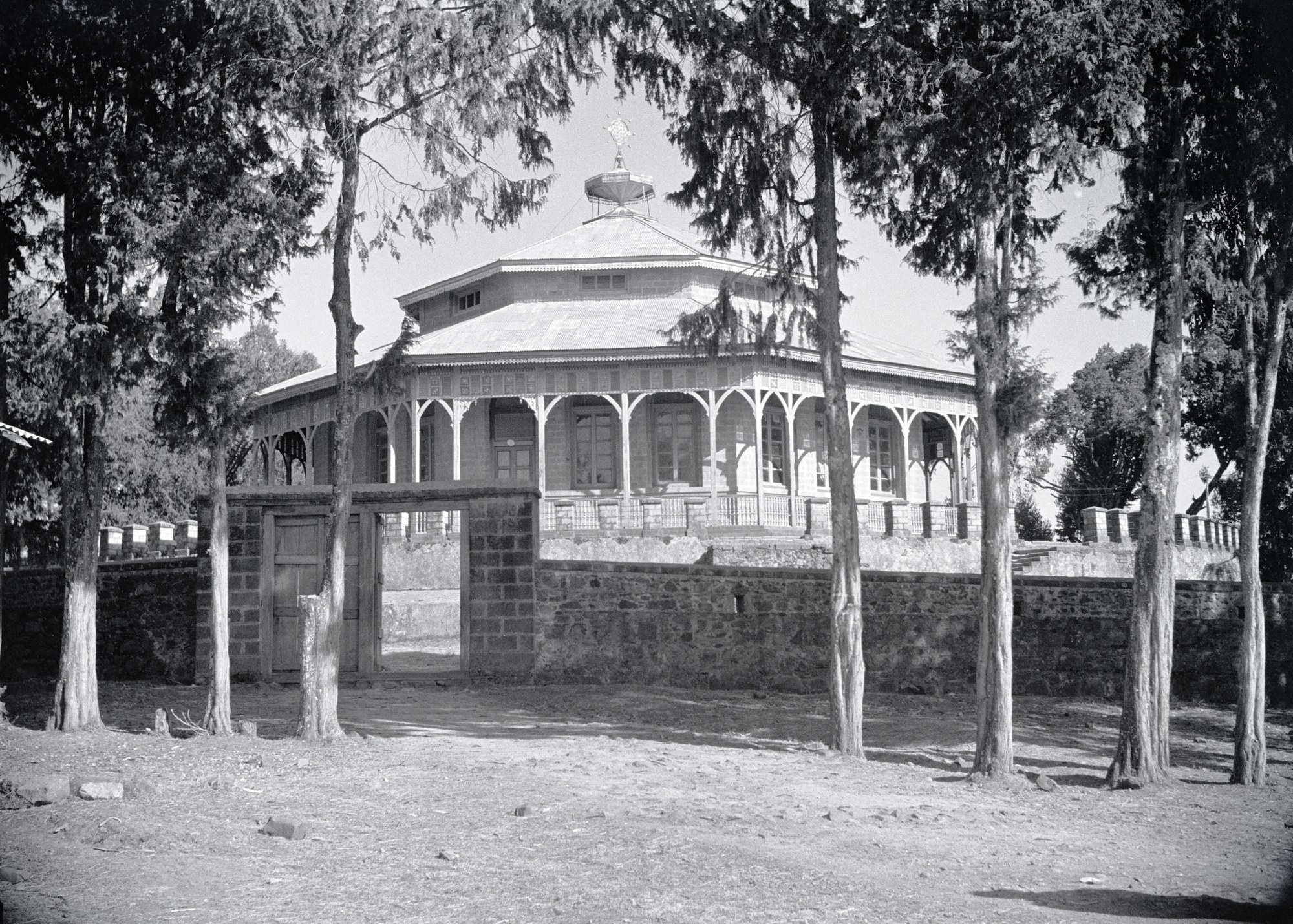
The armies of Imam Ahmad ibn Ibrahim destroyed the monastery in July 1532, but the community survived. Later, Derat writes, the Oromo migrations cut it off from the rest of the empire, and the monks moved toward Lake Tana, following the shift of the empire’s political centre; a “house of Tekle Haymanot” was set up at Azezo, near Gondar. They returned to the old site only in the late eighteenth century, when they found the saint’s tomb again. The main church was rebuilt in 1812 under Wesen Seged, in 1884 under Emperor Yohannes IV and in 1908 under Emperor Menelik II.
A Swiss camera in 1934
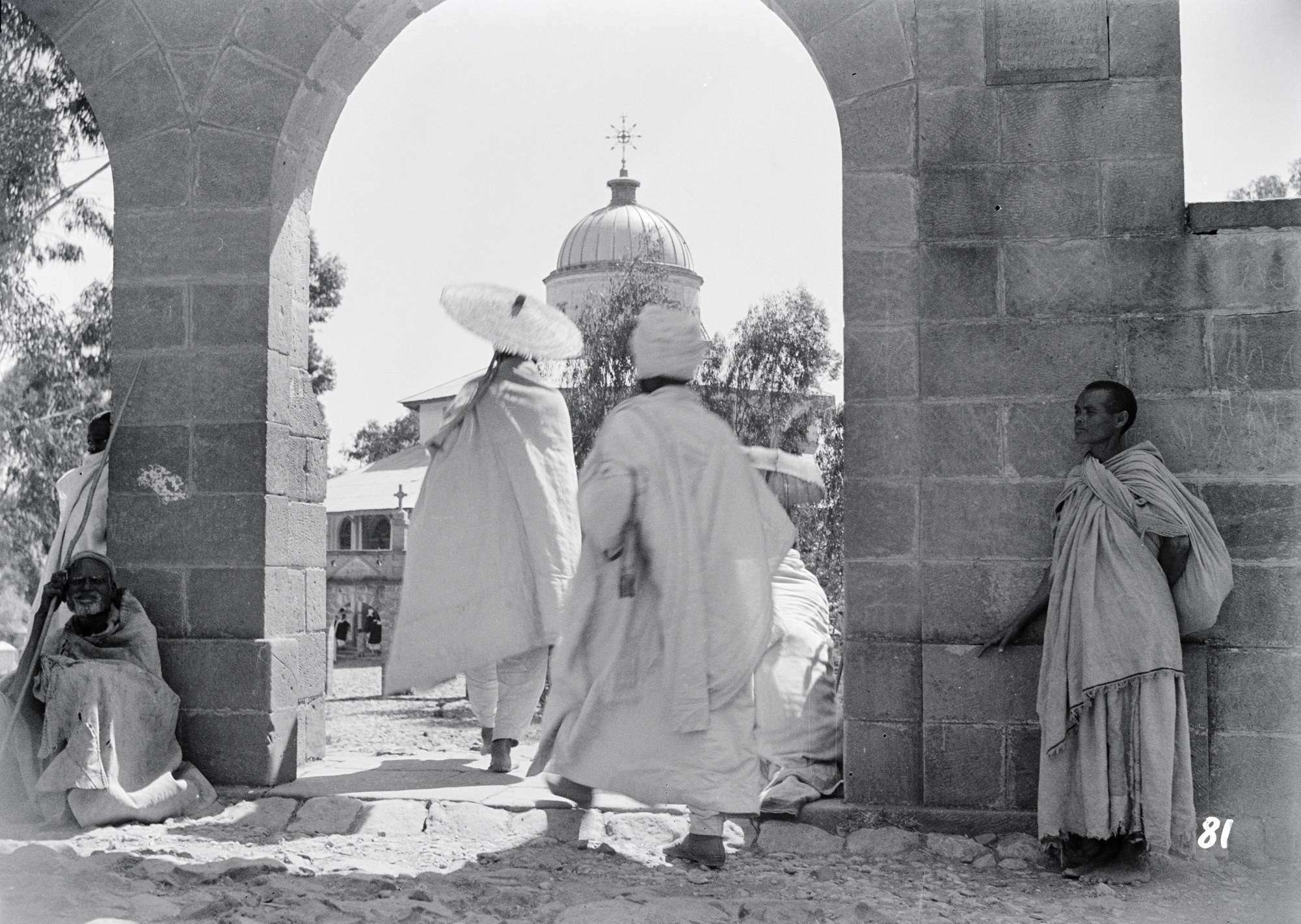
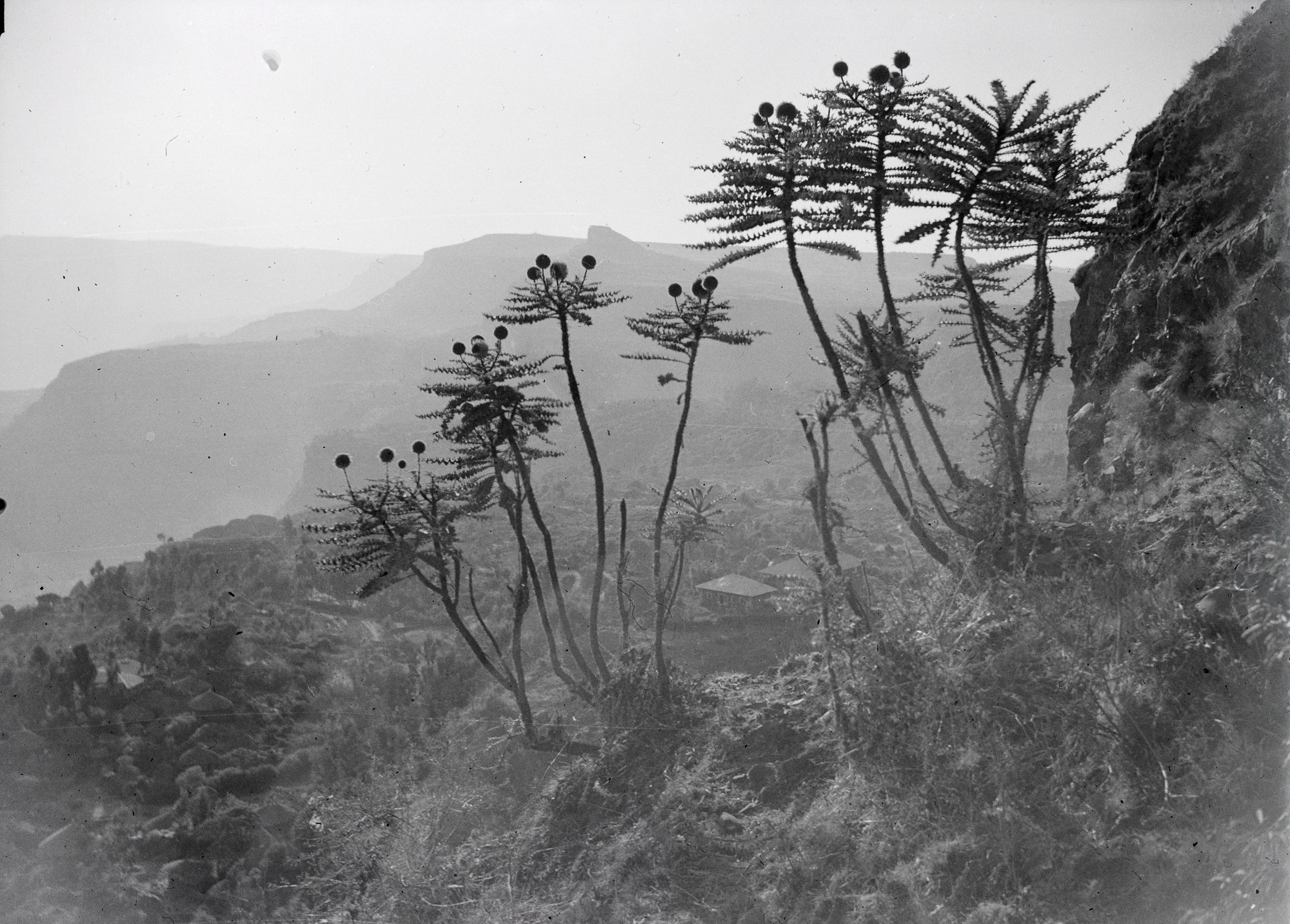
The black and white pictures here were taken by Walter Mittelholzer, a Swiss aerial photographer, aviation pioneer and cofounder of Swissair who lived from 1894 to 1937. According to the ETH Library in Zurich, which holds his archive, he and his crew flew from Switzerland to Addis Ababa between 2 and 23 February 1934 to deliver a three engine Fokker aircraft to the court of Emperor Haile Selassie. Besides the flight, he photographed the emperor, the court and the army. The library’s records date the Debre Libanos frames to around February and March 1934. In the book of the trip, published the same year, he captioned his valley view with the remark that people lived on the upper slopes and plateaus but avoided the fever ridden gorges below.
May 1937
Italy invaded Ethiopia in October 1935. In February 1937 the viceroy, Rodolfo Graziani, survived an attempt on his life in Addis Ababa, and Italian reprisals in the city killed at least 19,000 people over three days, John Foot writes in a 2022 review of the historian Ian Campbell’s book Holy War. Graziani blamed the Ethiopian Church and claimed the attackers had passed through the monastery’s lands. Pilgrims gathered every year for the feast of Tekle Haymanot on 20 May. On 19 May Graziani ordered that every monk be shot. General Pietro Maletti, commanding a Muslim battalion of Eritrean, Libyan and Somali troops, carried out the order. Most victims were taken away in trucks, machine gunned and buried in mass graves. Campbell estimates that between 1,200 and 1,600 pilgrims and clergy were killed in a single day, and that the death toll for the massacre as a whole was higher. Derat adds that the monastery stayed closed for some time afterwards and that its treasures were reportedly taken to Italy.
The monastery today
Emperor Haile Selassie rebuilt the monastery, and the work was finished in 1963, according to Derat. Pilgrims still come in large numbers to the tomb of Tekle Haymanot, above all on three of his feasts: 12 Genbot, which marks the moving of his body, 24 Tahsas, his birthday, and 24 Nehase, the day of his death. Many families try to bury their dead near the monastery. Writing in 2005, Derat called Debre Libanos apparently the largest monastery in the country, with about 240 monks counted in 1985 and 1986 and many more disciples and helpers, as well as a convent of nuns. It is run by two officials, the maggabi and the sebate, who preside over a council of twelve representatives of the monks.
Sources
- Marie-Laure Derat, “Däbrä Libanos”, Encyclopaedia Aethiopica, volume 2 (Wiesbaden: Harrassowitz, 2005), pages 25 to 28
- John Foot, “Where are those crowns?”, London Review of Books 44, no. 8 (21 April 2022), a review of Ian Campbell, Holy War: The Untold Story of Catholic Italy’s Crusade against the Ethiopian Orthodox Church (London: Hurst, 2021)
- ETH-Bibliothek, ETHeritage: “Mittelholzers Abessinienflug (1934)”
- Walter Mittelholzer, Abessinienflug (1934), and the ETH-Bibliothek image archive records for photographs LBS MH02-22-0245, 0460 and 0465.