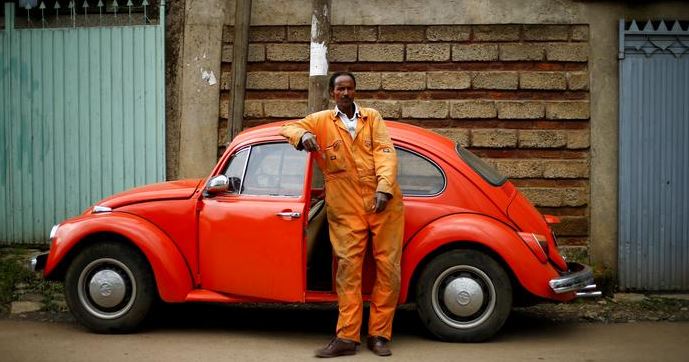
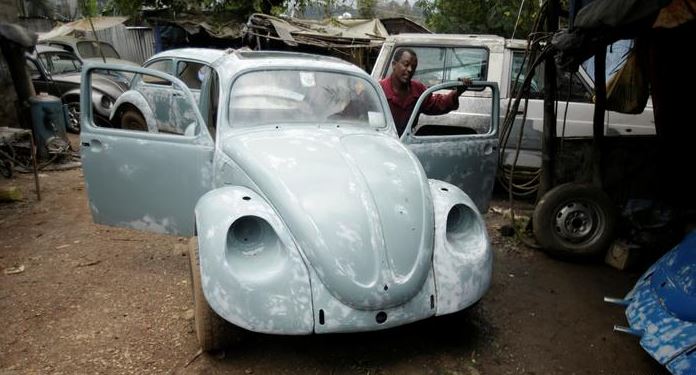
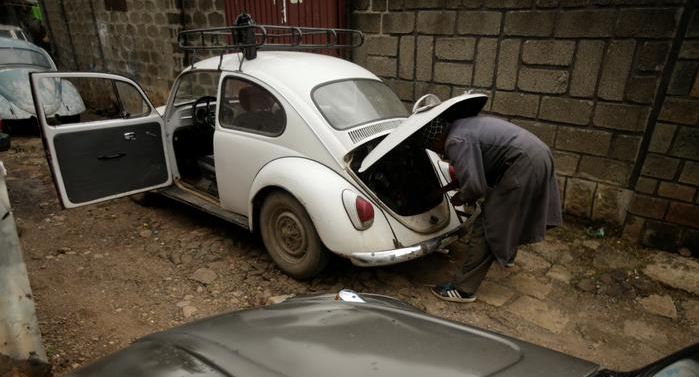
The classic Volkswagen Beetle went out of production in 2003, yet it is still a familiar sight in Ethiopia, as these photographs show. Mechanics keep old cars running by taking parts from Beetles that can no longer be repaired and fitting them into ones that still work.
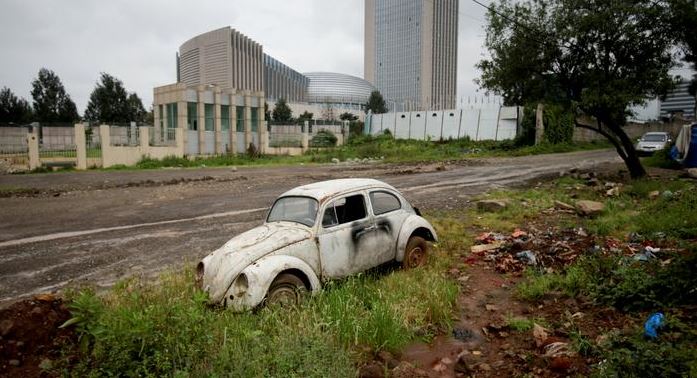
Some Beetles are beyond saving and are left at the roadside, as the photograph above shows.
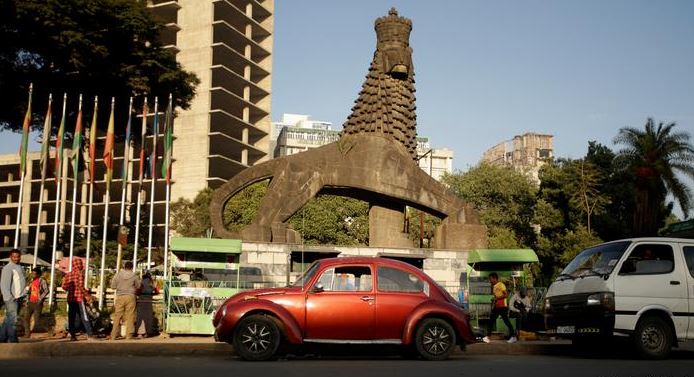
The end of the line
The last classic Volkswagen Beetle rolled off the production line at the Volkswagen plant in Puebla, Mexico, on 30 July 2003, bringing the total to 21,529,464 vehicles, according to the Volkswagen Newsroom. Volkswagen had built the Beetle in Puebla since 1967, and the final 3,000 cars were a special series called the Última Edición.
History.com reports that the final car was sent to a museum in Wolfsburg, Germany, where Volkswagen has its headquarters, and that rising competition from other cheap compact cars and a Mexican decision to phase out two door taxis led Volkswagen to end production.
A simple machine
Part of the Beetle’s long life comes from how little it changed. The Volkswagen Newsroom notes that the car stayed true to its engine concept in layout and design until the end, and that the final version produced 46 PS, only 21 PS more than in its early days. That mechanical simplicity is exactly what makes it possible for mechanics like those in these photographs to take parts from one worn out car and fit them into another.
Why it still matters
Production of the classic Beetle may have ended in 2003, but it is still a familiar sight in Ethiopia, as these photographs show. For owners and mechanics, it remains what it was designed to be: affordable, repairable transport.