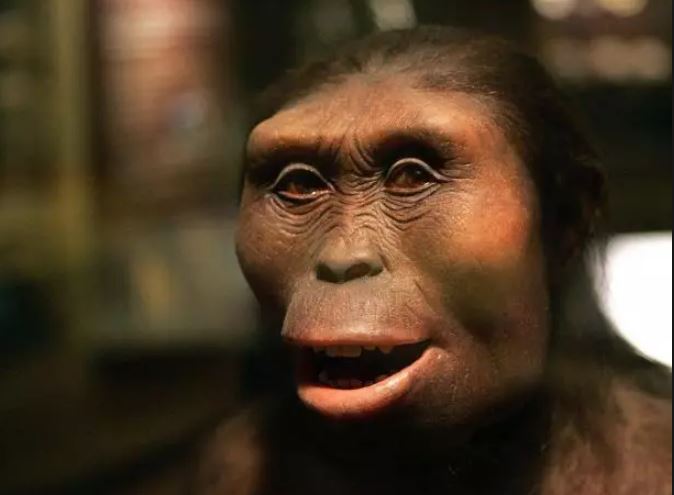
For some believers, the scientific account of human origins and religious teaching about creation seem hard to reconcile. Ethiopia sits at the centre of that conversation because of Lucy.
Who was Lucy?
According to Encyclopaedia Britannica, Lucy is a hominin skeleton about 40 per cent intact, found by the American palaeoanthropologist Donald Johanson at Hadar in Ethiopia on 24 November 1974 and dated to 3.2 million years ago. She is usually classified as Australopithecus afarensis and is kept at the National Museum of Ethiopia in Addis Ababa. Britannica says her skeleton suggests that walking upright came before the development of a larger, more humanlike brain.

What the Catholic Church has said
In a message to the Pontifical Academy of Sciences on 22 October 1996, Pope John Paul II, according to the Vatican’s published text, recalled that Pope Pius XII’s encyclical Humani Generis of 1950 had treated evolution as a serious hypothesis worthy of study, and said that new knowledge led to recognising the theory of evolution as more than a hypothesis. He also stressed that the human soul is created directly by God.
Lucy and her species
Lucy’s nickname comes from the Beatles song “Lucy in the Sky With Diamonds”, which was played again and again at the party that followed the discovery, according to Encyclopaedia Britannica, which gives her height as about 109 cm and her weight as about 27 kg. She was not alone. The Smithsonian National Museum of Natural History says her species, Australopithecus afarensis, lived between about 3.85 and 2.95 million years ago in Ethiopia, Kenya and Tanzania and survived for more than 900,000 years. Besides Lucy, it is known from a group of fossils at Hadar called the “First Family”, from the skeleton of a child found at Dikika in Ethiopia, and from footprints preserved at Laetoli in Tanzania, the museum says.