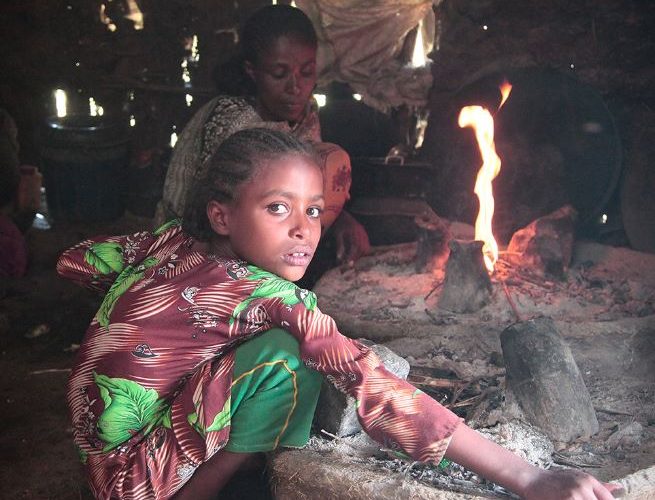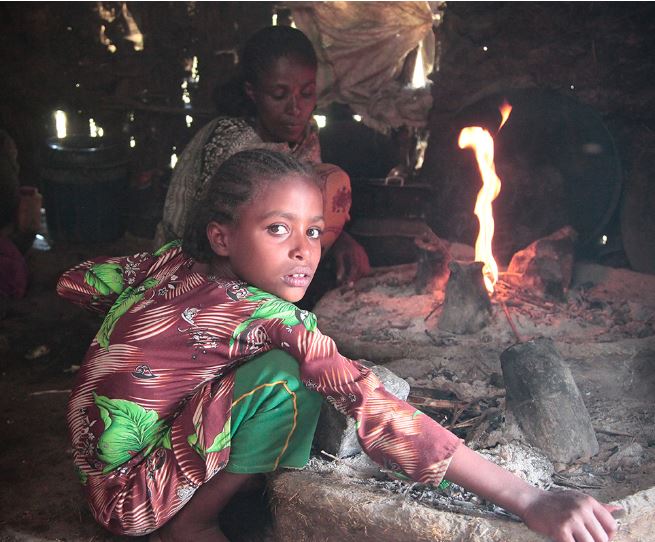
In many Ethiopian homes, cooking is done over an open fire, with a clay plate resting on three stones. This is known as a three stone fire. It uses a great deal of wood, brushwood or dried dung, which then cannot be used as fertiliser in the fields.
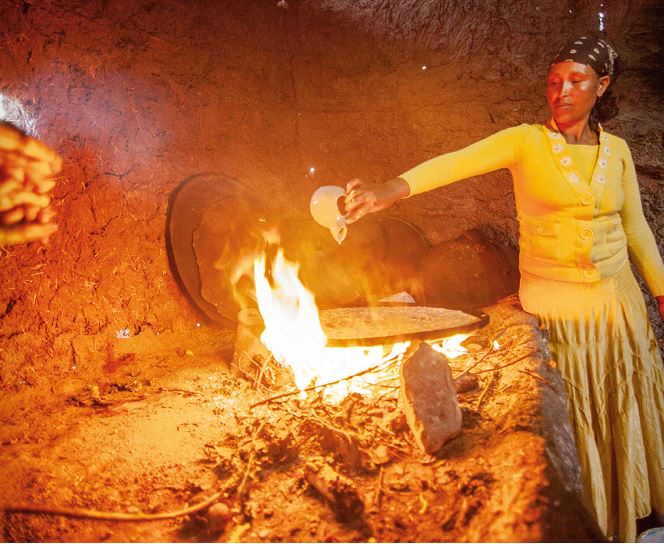
A closed, wood saving stove offers an alternative: it uses less fuel, produces less smoke in the home and protects the clay plate.
The global picture
The three stone fire described here is one of the most common ways of cooking in the world. According to the World Health Organization, around 2.1 billion people worldwide still cook using solid fuels such as wood, crop waste, charcoal, coal and dung, or kerosene, in open fires and inefficient stoves.
Why smoke is a health problem
The WHO explains that incomplete burning of these fuels creates household air pollution. It attributes an estimated 2.9 million deaths per year in 2021 to this pollution, including more than 309,000 deaths of children under the age of 5. Exposure is particularly high among women and children, who spend the most time near the domestic hearth, the WHO says.
The hidden cost of firewood
The WHO also highlights the burden of collecting fuel. Gathering fuel increases the risk of musculoskeletal injuries and consumes considerable time for women and children, limiting education and other productive activities.
Why better stoves matter
A closed stove that burns less fuel addresses several of these problems at once: less wood to collect, less smoke inside the home and longer lasting clay plates. The WHO lists cleaner cooking technologies and fuels as the main way to reduce household air pollution, and it notes that women and children bear the greatest health burden from polluting fuels and technologies in homes.