Ethiopia is often called a cradle of humanity because of fossils found in its Rift Valley. The most famous is Lucy.
Lucy
According to Encyclopaedia Britannica, Lucy is the nickname of a remarkably complete hominin skeleton, about 40 per cent intact, found by the American palaeoanthropologist Donald Johanson at Hadar in Ethiopia on 24 November 1974 and dated to 3.2 million years ago. She is usually classified as Australopithecus afarensis. Britannica says her long arms, short legs and small brain, combined with a relatively humanlike pelvis, suggest that walking upright came before the development of a larger brain. Lucy stood about 109 cm tall and is kept at the National Museum of Ethiopia in Addis Ababa.
Holy Trinity Cathedral
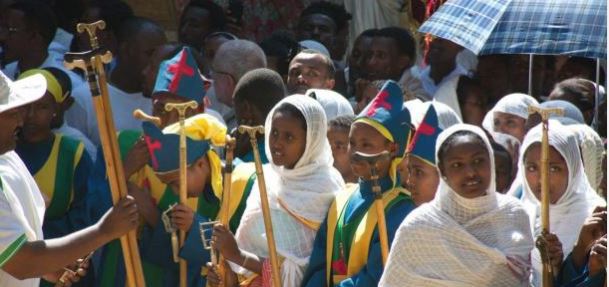
In Addis Ababa, Holy Trinity Cathedral is the burial place of Emperor Haile Selassie. BBC News reported that his remains were laid to rest there on 5 November 2000, 25 years after his death.
Lalibela
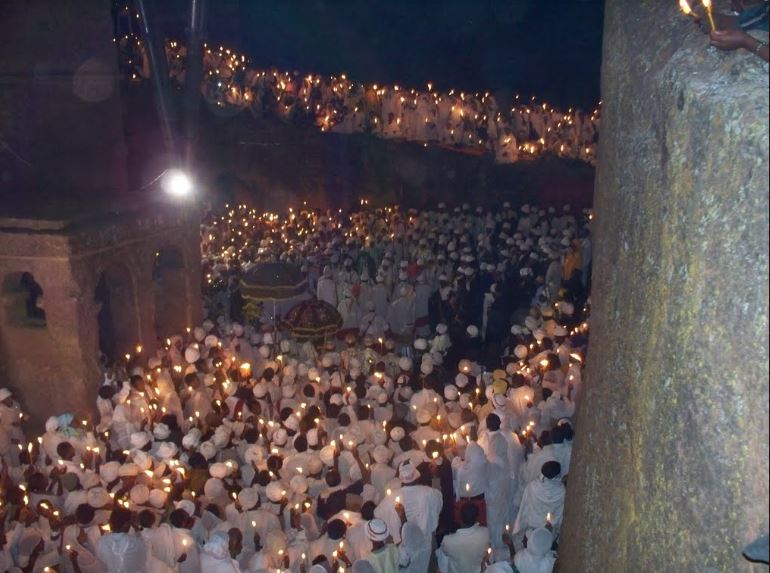
UNESCO describes eleven medieval monolithic churches at Lalibela, carved out of rock and attributed to King Lalibela, who set out in the 12th century to build a “New Jerusalem”. The church of Biete Ghiorgis, the House of St George, is isolated from the others but connected by a system of trenches and has a cruciform plan, UNESCO says.
Lake Tana and Gondar
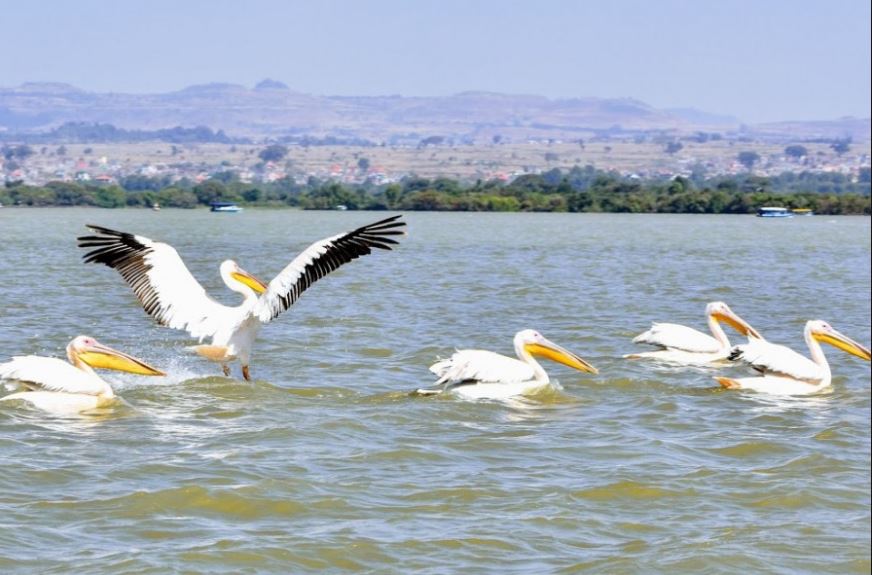
Lake Tana, Ethiopia’s largest lake, is home to monasteries and churches of the Ethiopian Orthodox Tewahedo Church, some dating back to the 13th century, according to UNESCO. North of the lake, Gondar became a permanent capital in 1636 under King Fasil, and its fortified royal compound, Fasil Ghebbi, remained the centre of government until 1864, UNESCO says.
Lucy’s species
Lucy belongs to a species that lived for a long time. According to the Smithsonian National Museum of Natural History, Australopithecus afarensis is known from fossils dated between 3.85 and 2.95 million years ago in Ethiopia, Kenya and Tanzania, and it survived for more than 900,000 years, about three times as long as our own species has existed so far.
The Smithsonian says the species is best known from Hadar in Ethiopia, where Lucy and a group of fossils known as the “First Family” were found; from Dikika in Ethiopia, where the skeleton of a child was discovered; and from Laetoli in Tanzania, which preserves the oldest documented trails of footprints made by upright walkers. The species was formally named in 1978, after a wave of discoveries at Hadar and Laetoli.
Sources
- Encyclopaedia Britannica, Lucy
- BBC News, Haile Selassie laid to rest, 5 November 2000
- UNESCO World Heritage Centre, Rock Hewn Churches, Lalibela
- UNESCO Man and the Biosphere Programme, Lake Tana
- UNESCO World Heritage Centre, Fasil Ghebbi, Gondar Region
- Smithsonian National Museum of Natural History, Human Origins: Australopithecus afarensis