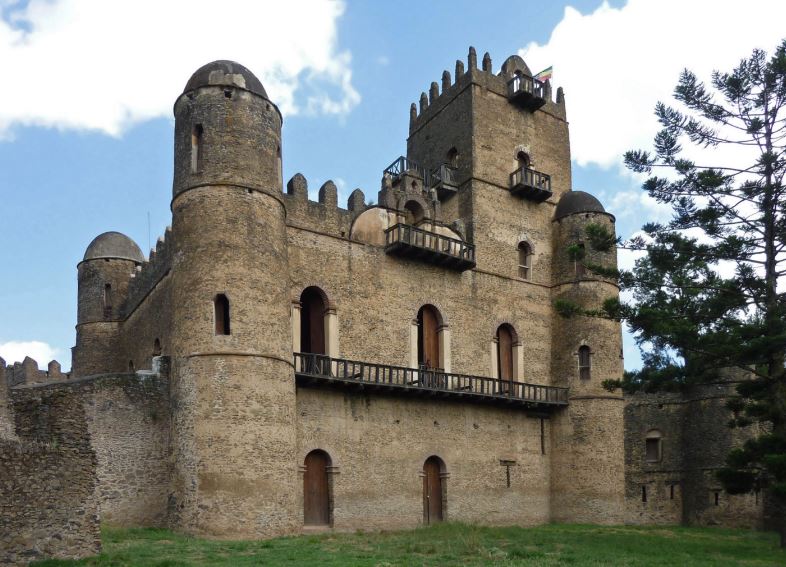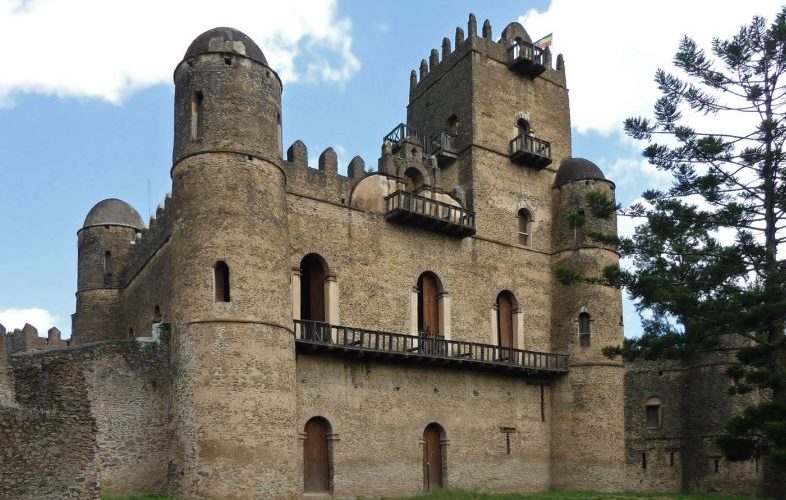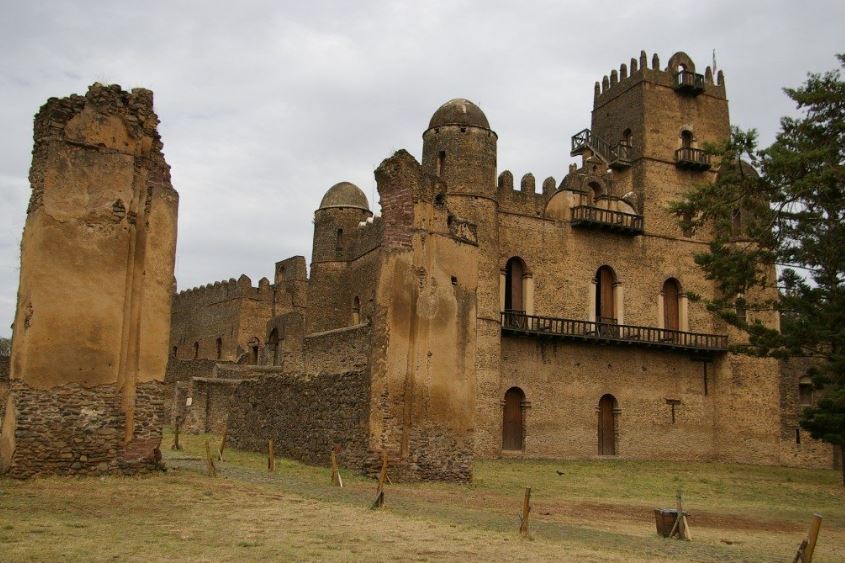
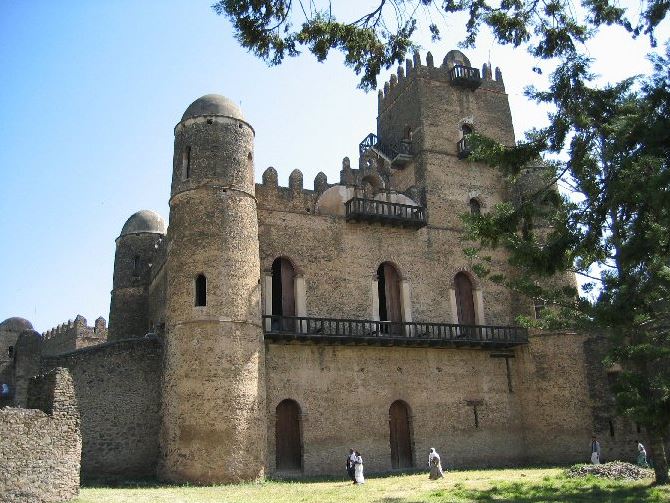
Gondar, north of Lake Tana, was the seat of Ethiopia’s emperors for more than two centuries. According to UNESCO, Ethiopian rulers had moved their royal camps frequently between the 13th and 17th centuries, until King Fasil, also known as Fasilidas, settled in Gondar and made it a permanent capital in 1636.
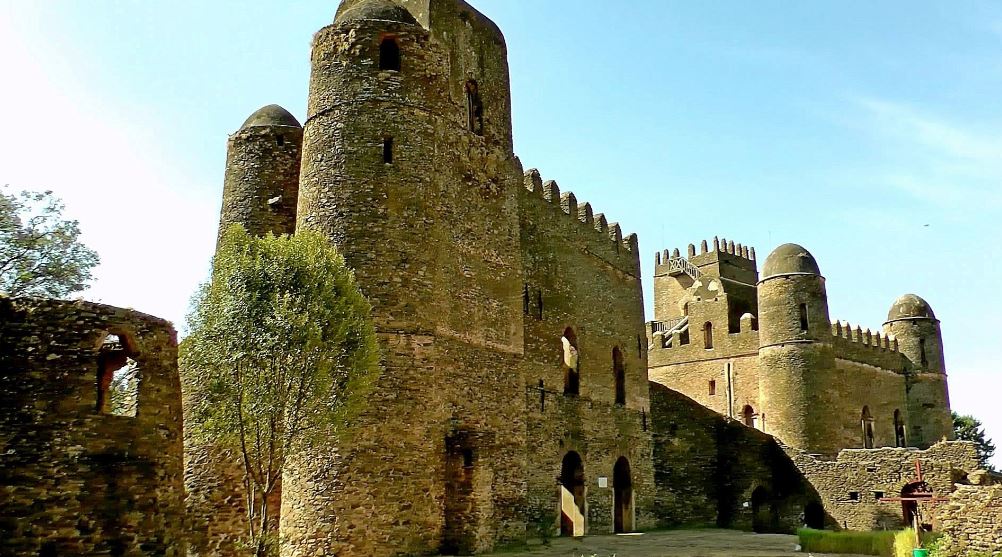
Over time the royal court grew from a camp into a fortified compound called Fasil Ghebbi. UNESCO describes six major building complexes surrounded by a wall 900 metres long, with twelve entrances and three bridges. The compound contains some twenty palaces, royal buildings, decorated churches and monasteries, and the main castle, with its huge towers and battlemented walls, resembles “a piece of medieval Europe transposed to Ethiopia”, UNESCO says. The fortress city remained the centre of Ethiopian government until 1864.
The Bath of Fasilidas
Outside the city centre, by the Qaha River, stands a two storey bathing pavilion associated with Emperor Fasilidas. UNESCO describes it as a battlemented building set within a rectangular pool fed by a canal from the river, reached by a stone bridge part of which could be raised for defence.
Churches and later palaces
UNESCO lists the church and monastery of Debre Berhan Selassie, the Bath of Fasilidas and the hillside palace and church of Qusquam among the components of the World Heritage property. Later rulers such as Iyasu the Great continued building and expanded to the hills northwest of the city centre, in the area known as Qusquam. UNESCO notes that Gondar’s buildings show cultural elements related to the Ethiopian Orthodox Church, Ethiopian Jews and Muslims, and that painting, literature and music flourished there in the 17th and 18th centuries.
World Heritage
Fasil Ghebbi was inscribed on the World Heritage List in 1979. UNESCO notes that cement repairs carried out between 1930 and 1936 damaged original materials, and that restoration in the 1970s and later conservation programmes since 1990 replaced much of that work with lime mortar.