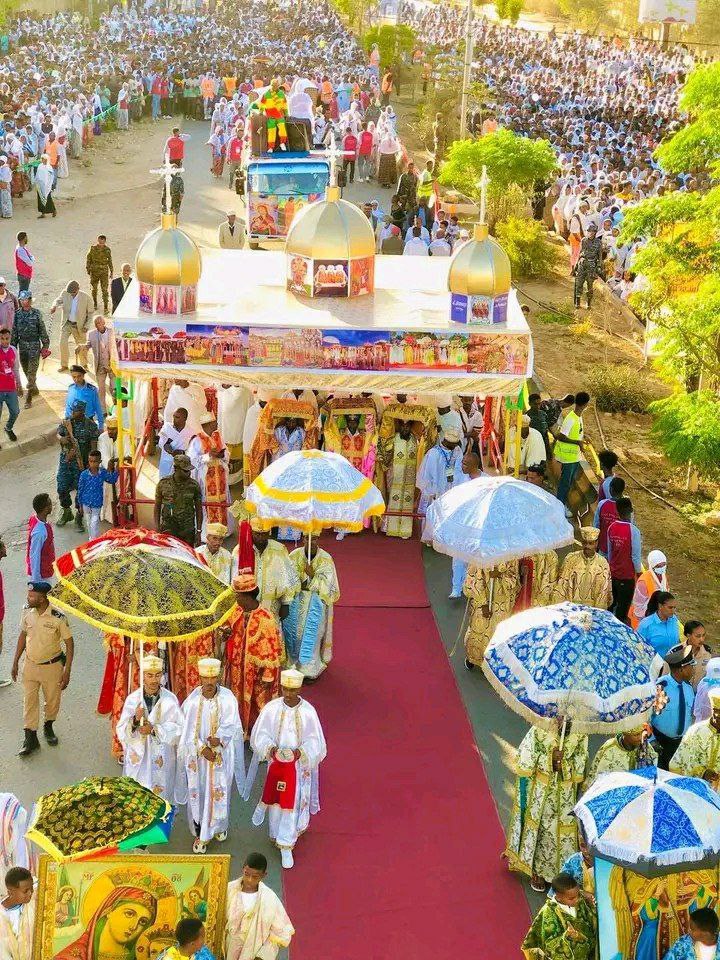
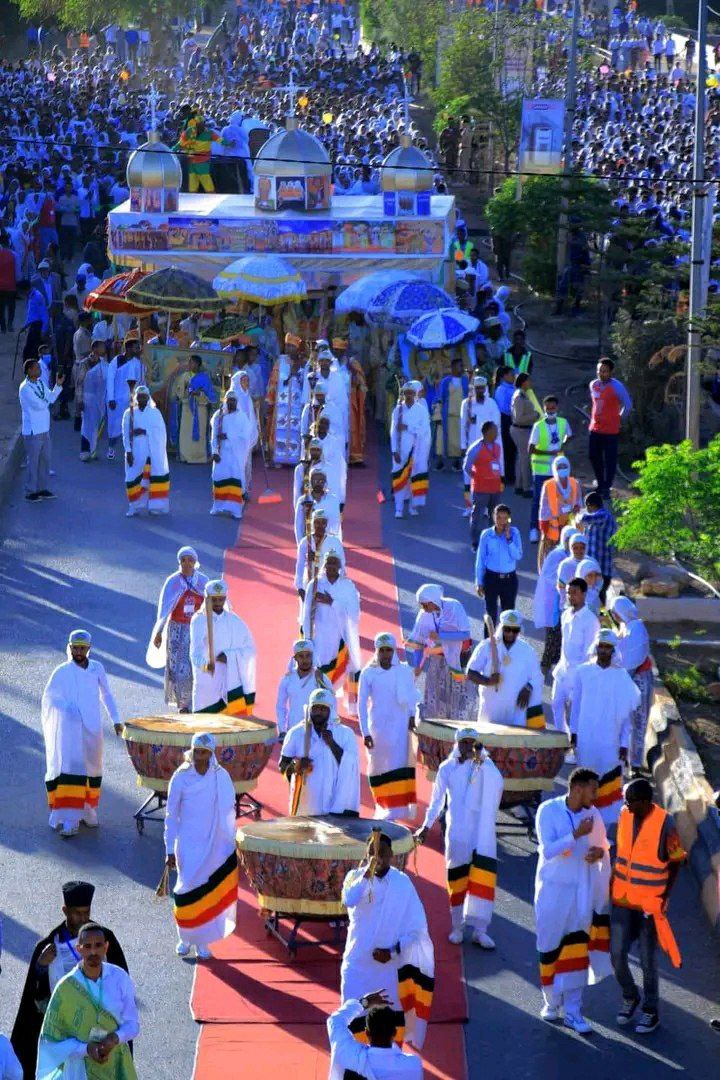
Timket is the Ethiopian Epiphany. During the festival, priests carry tabots, replicas of the Ark of the Covenant, out of their churches to a water site, escorted by choirs and crowds, according to UNESCO, which added the Ethiopian Epiphany to its Representative List of the Intangible Cultural Heritage of Humanity in 2019.
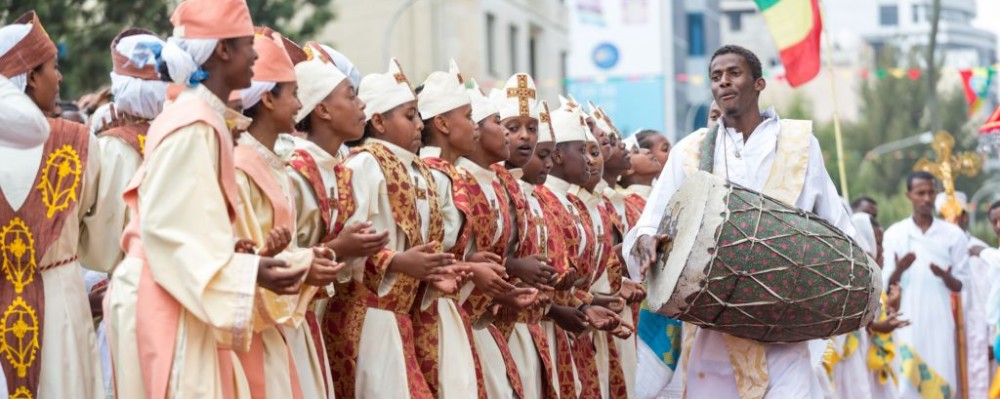
UNESCO describes youth singing with the begena, the ten string harp, and priests with prayer sticks, drums and sistrums in front of the tabots.
What Timket commemorates
Timket commemorates the baptism of Jesus Christ by John the Baptist in the River Jordan and is celebrated all over Ethiopia, according to UNESCO.
Ketera, the eve
UNESCO explains that the commemoration begins on the eve of the main festival, 18 January. The eve is known as Ketera, meaning blocking the flow of water for the blessing of the celebrants. People escort the tabot of their parish church to a Timkete Bahir, which may be a pool, a river or an artificial reservoir. The tabot is carried by a priest of the parish, and people spend the night at prayers and hymn services, including the Eucharistic Liturgy, UNESCO says.
The day of the festival
Hundreds of thousands of people take part on the main day, 19 January (a day later in leap years), according to UNESCO. The celebration starts early with rituals before sunrise, followed by the sprinkling of blessed water on the congregation. At around 10 a.m., each tabot begins its procession back to its church, in an even more colourful ceremony with traditional and religious songs. UNESCO credits Orthodox clergy with keeping the tradition alive: they sing the hymns, carry the Ark and preach the relevant texts.
Why the tabot matters
Encyclopaedia Britannica notes that the ark is an essential item in every church of the Ethiopian Orthodox Tewahedo Church and that considerable emphasis is placed on the Hebrew Bible. That is why the tabot, rather than a statue or icon, sits at the centre of the processions shown in these photographs, wrapped in cloth and sheltered beneath ceremonial umbrellas.
The procession is also a public event shared by whole neighbourhoods. As UNESCO puts it, the viability of the festival is ensured through its continued practice, year after year.
1 Comments