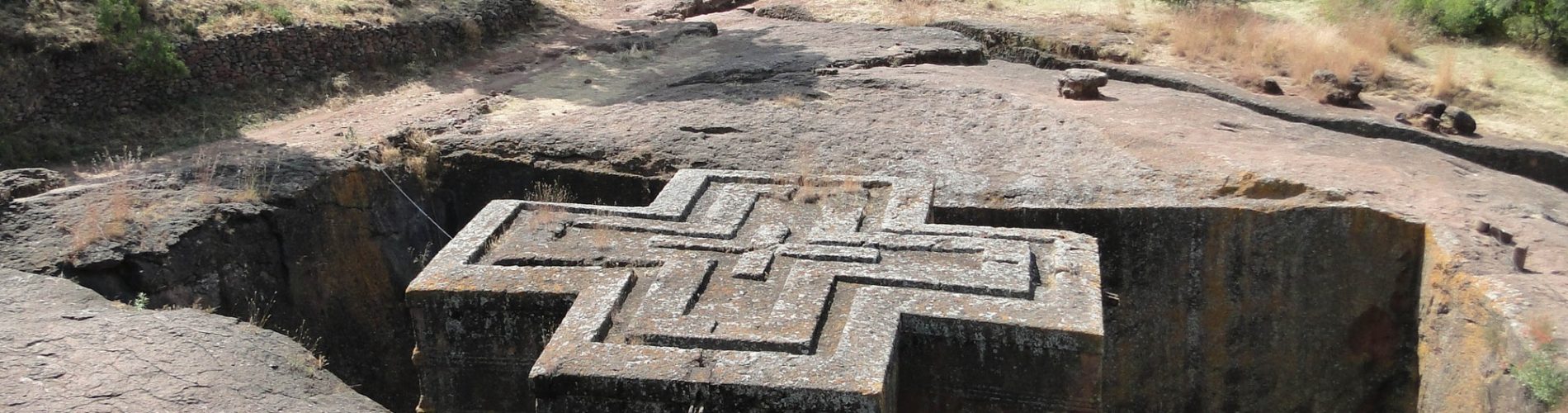
In a mountainous region in the heart of Ethiopia, some 645 kilometres from Addis Ababa, eleven medieval churches were carved out of living rock. According to the UNESCO World Heritage Centre, their building is attributed to King Lalibela, who set out in the twelfth century to construct a New Jerusalem after conquests had halted Christian pilgrimages to the Holy Land. UNESCO writes that Lalibela flourished after the decline of the Aksum Empire. The site remains, in UNESCO’s words, a high place of Ethiopian Christianity and a place of pilgrimage and devotion.
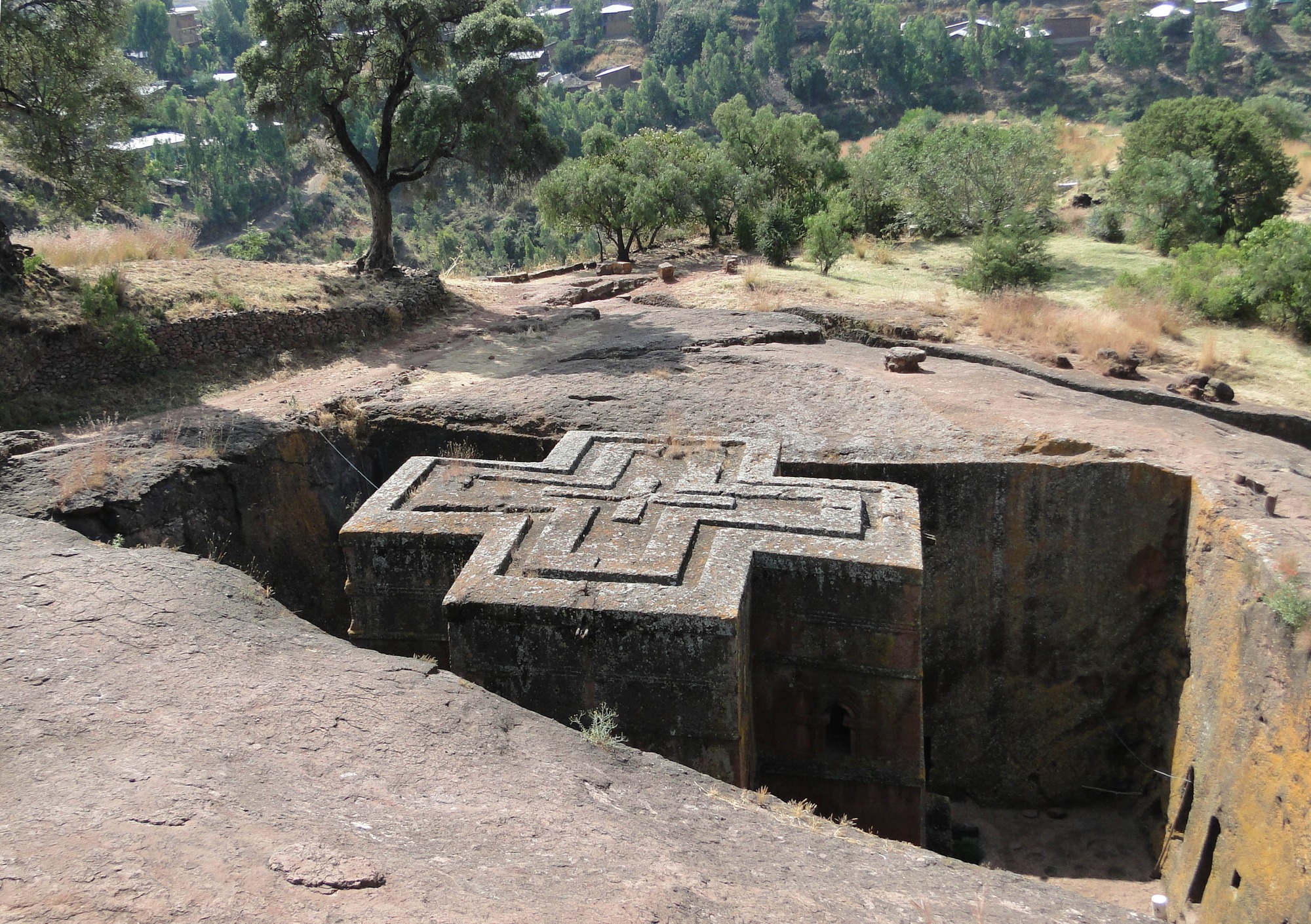
A New Jerusalem in stone
UNESCO explains that the churches were not built in a traditional way. They were hewn from the living rock of monolithic blocks, then chiselled to form doors, windows, columns, floors and roofs. An extensive system of drainage ditches, trenches and ceremonial passages completed the work, some with openings to hermit caves and catacombs. UNESCO divides the churches into two main groups on either side of a river the site names the Jordan. North of the river stand Biete Medhani Alem (House of the Saviour of the World), Biete Mariam (House of Mary), Biete Maskal (House of the Cross), Biete Denagel (House of Virgins) and Biete Golgotha Mikael. South of the river stand Biete Amanuel (House of Emmanuel), Biete Qeddus Mercoreus, Biete Abba Libanos, Biete Gabriel Raphael and Biete Lehem. The eleventh church, Biete Ghiorgis (House of St. George), is isolated from the others but connected by a system of trenches.
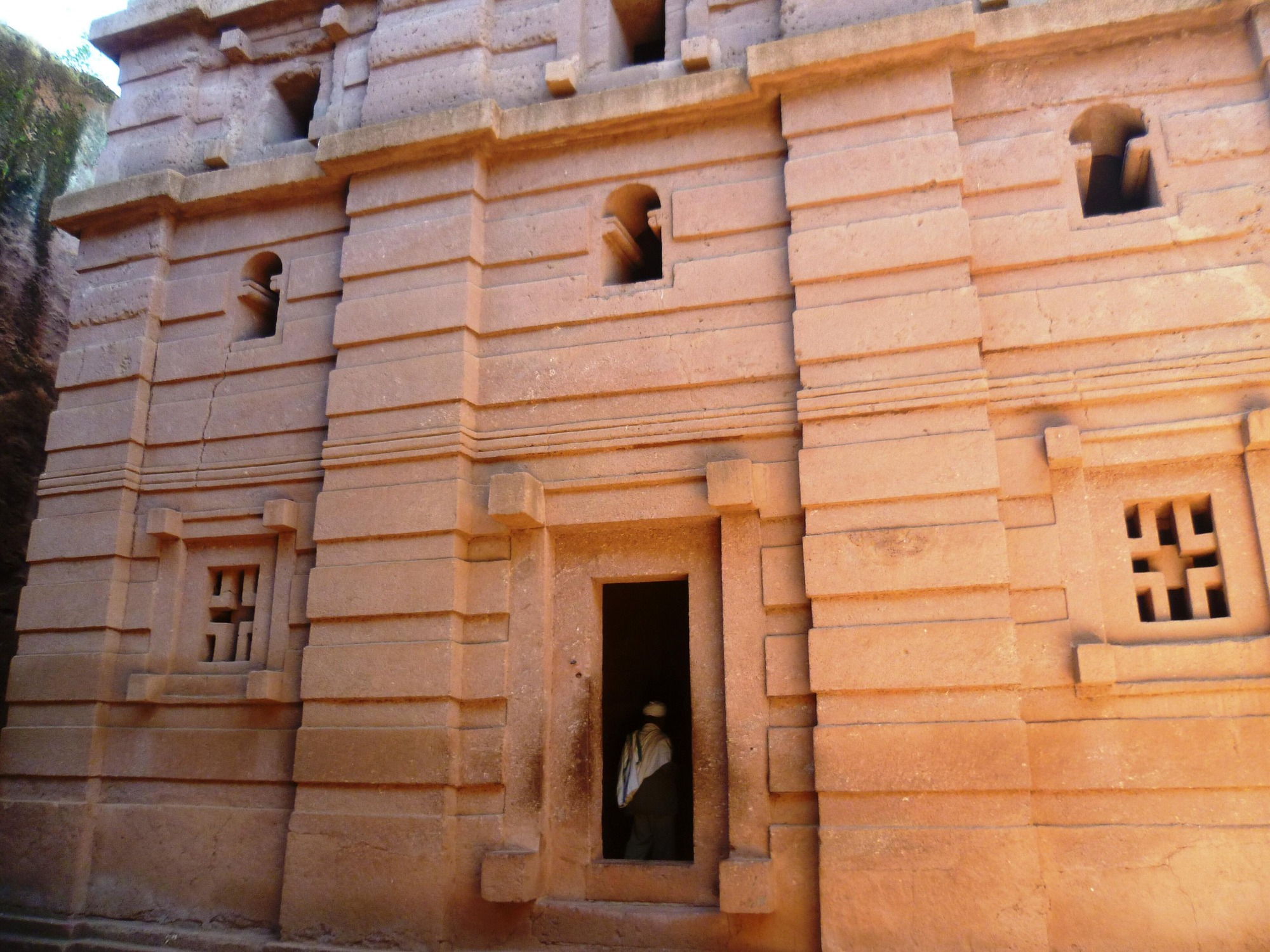
Largest monolith and a cruciform plan
UNESCO says Biete Medhani Alem, with its five aisles, is believed to be the largest monolithic church in the world, while Biete Ghiorgis has a remarkable cruciform plan. Most of the buildings were probably used as churches from the outset, UNESCO notes, though Biete Mercoreos and Biete Gabriel Rafael may formerly have been royal residences. Several interiors, UNESCO adds, are decorated with mural paintings. Near the churches, the village of Lalibela has two storey round houses of local red stone, known as the Lasta Tukuls. UNESCO records that these churches have been a focus of pilgrimage for Coptic Christians since the twelfth century.
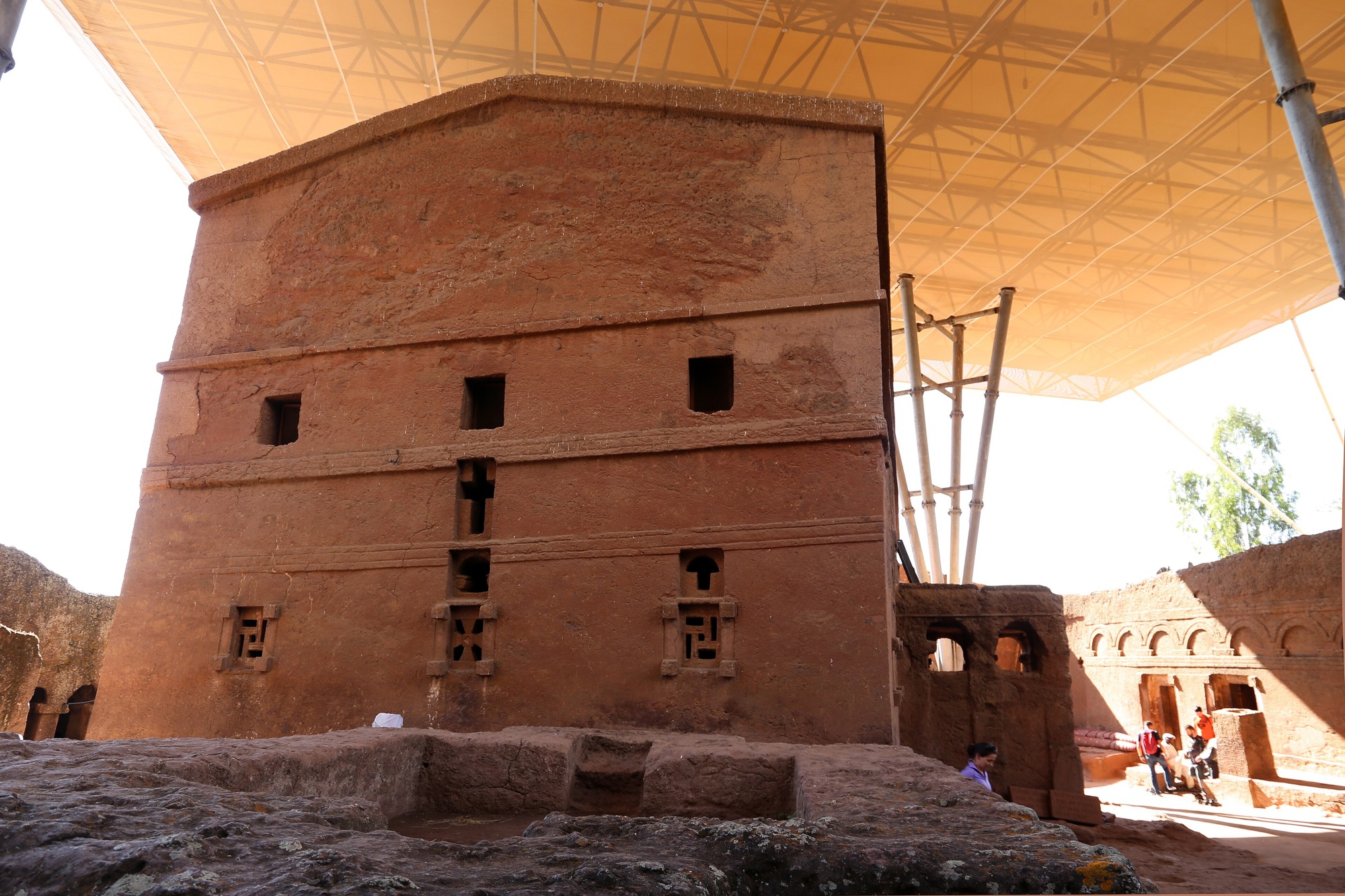
On the World Heritage List since 1978
The UNESCO World Heritage Committee Decision 2 COM VIII.38 (1978) entered Rock Hewn Churches, Lalibela on the World Heritage List in 1978, in the Committee’s second session, among the first twelve properties inscribed worldwide. UNESCO lists the property under cultural criteria (i), (ii) and (iii): a unique artistic achievement in execution, size and boldness of form; a substitute for the holy places of Jerusalem and Bethlehem that has influenced Ethiopian Christianity; and an exceptional testimony to medieval and post-medieval civilization in Ethiopia, including the traditional circular village houses. UNESCO also notes temporary lightweight shelters installed over some churches. Those shelters protect soft rock from weather, UNESCO writes, while affecting visual integrity. The association of the rock hewn churches with vernacular circular houses, and the continued use of the site as a place of pilgrimage, remain, according to UNESCO, evidence of authenticity and living tradition.