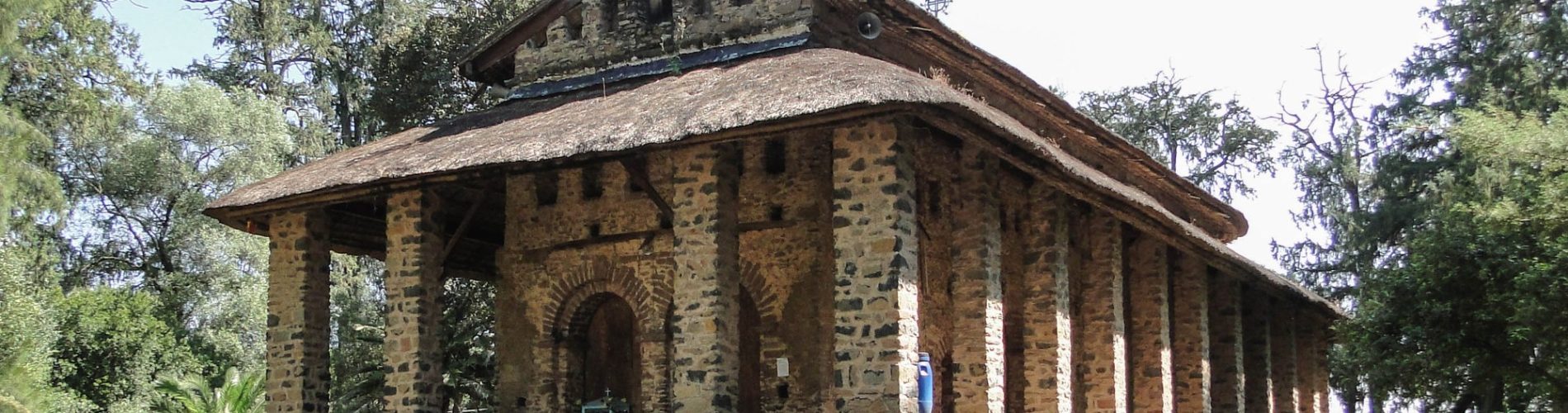
In Gondar stands Debre Berhan Selassie, a walled church whose ceiling of painted angel faces is among the most recognised images in Ethiopian church art.
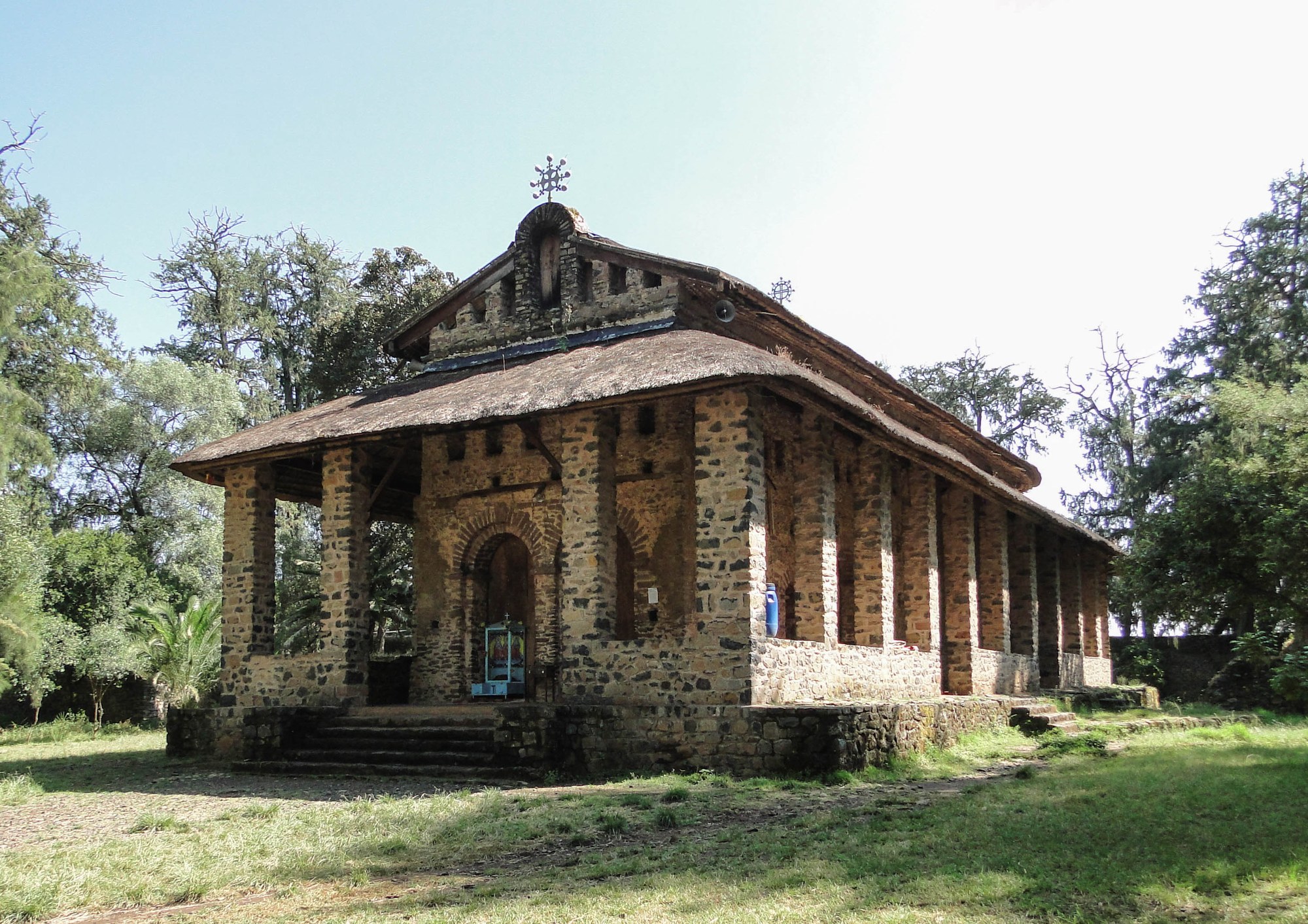
A church in a royal city
Gondar became a fixed royal seat under Emperor Fasilidas. According to UNESCO, he established it as a permanent capital in 1636, after centuries in which Ethiopian rulers moved their royal camps from place to place. The city stayed the centre of government until 1864, UNESCO says, and the buildings of what it calls the Gondarian Period shaped Ethiopian architecture for more than two centuries. When Fasil Ghebbi was inscribed on the World Heritage List in 1979, Debre Berhan Selassie, a monastery and church, was named among the components outside the palace compound.
Few of the city’s churches came through the following centuries. Britannica notes that only a handful of the 44 churches said to have stood in Gondar in the 18th century survive, and it singles out Debre Berhan Selassie as a richly decorated church still in use. Gondar suffered badly in the civil wars between 1750 and 1890, Britannica adds. Mahdist forces from Sudan devastated the old capital in the late 1880s: Britannica’s entry on Emperor Yohannes IV dates the invasion to 1887, while other accounts put the sack of Gondar in January 1888.
Iyasu the Great and a disputed date
The church is tied to Iyasu I, known as Iyasu the Great, who reigned from 1682 to 1706 by Britannica’s dates. Accounts of its age differ. Britannica calls it a 17th century church. The Lonely Planet guide, however, says the first church here was a round building put up by Iyasu in the 1690s and later destroyed by lightning, and that the present building dates only from the late 18th century. For that reason the guide doubts the local tradition that credits most of the paintings to Haile Meskel, a 17th century artist.
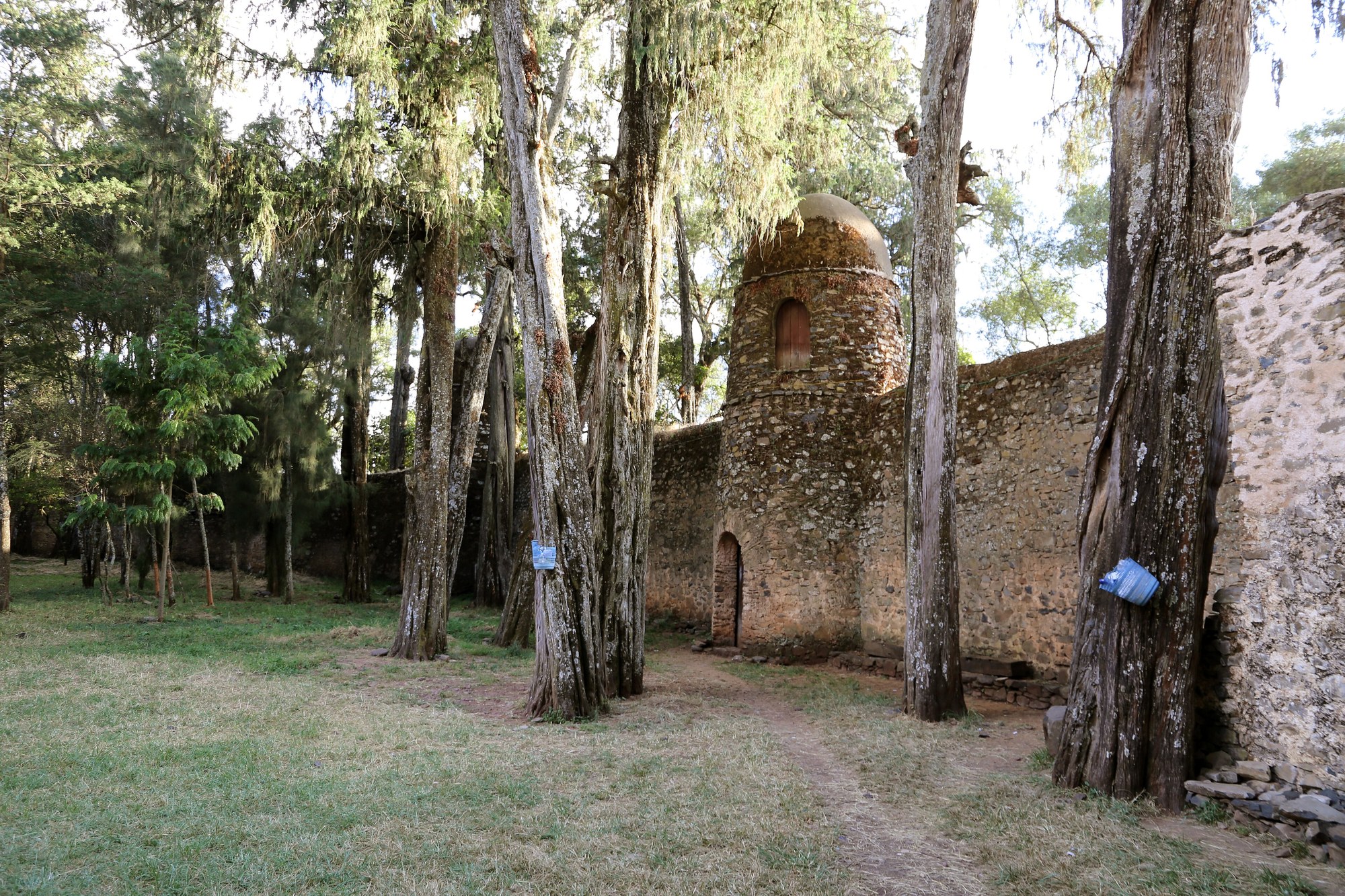
Lonely Planet also describes the stone wall around the compound. Its 12 rounded towers stand for the 12 apostles, the guide says, while a larger 13th tower at the entrance gate represents Christ and is shaped to suggest the Lion of Judah.
The ceiling of angels
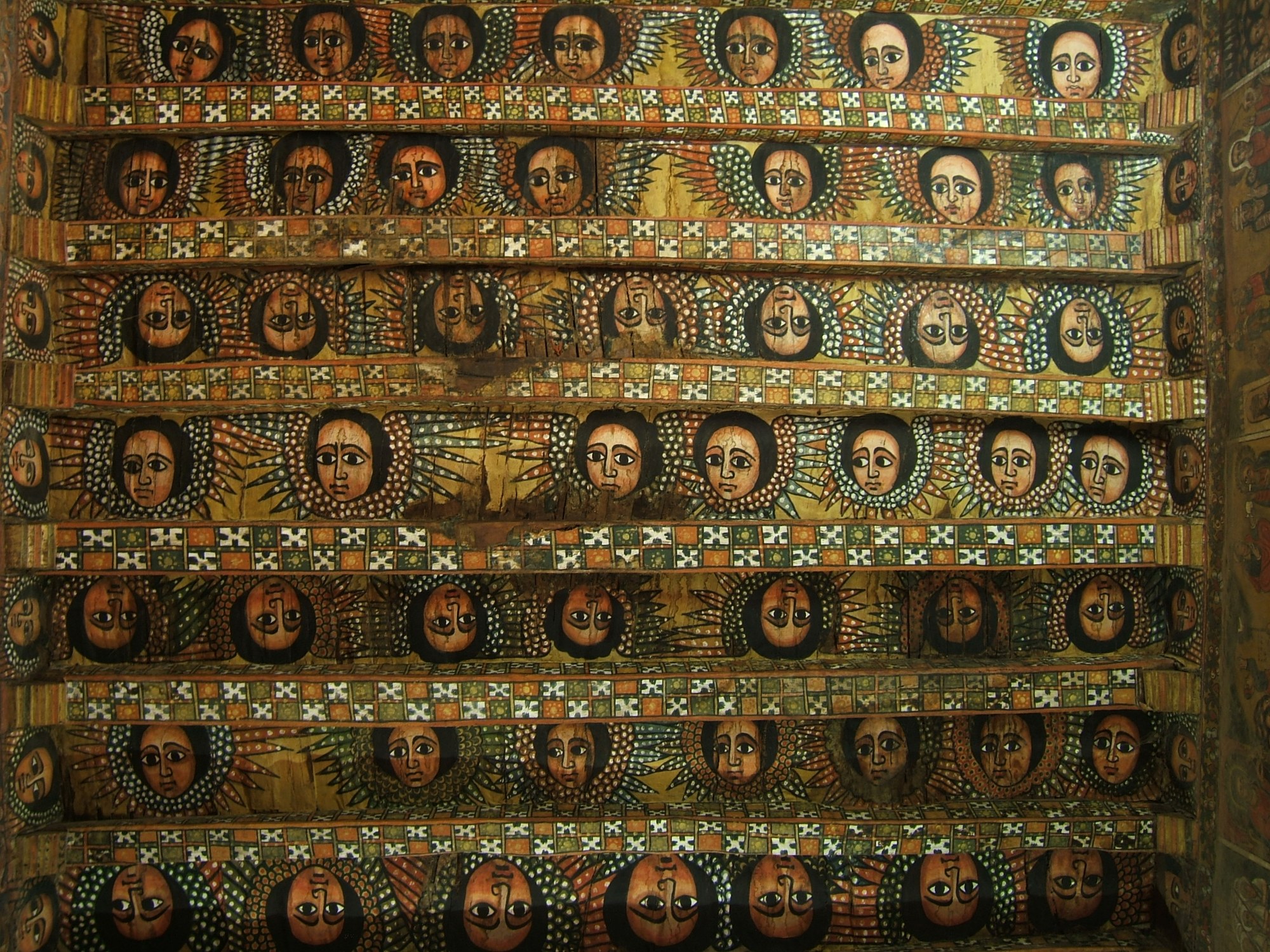
Inside, the ceiling is completely covered with the faces of angels set between wooden beams, as the conservation body ICCROM describes it. Lonely Planet says there is room for 135 of these winged faces, though water damage has erased 13 of them, and it explains the rows of cherubs as a symbol of God being present everywhere.
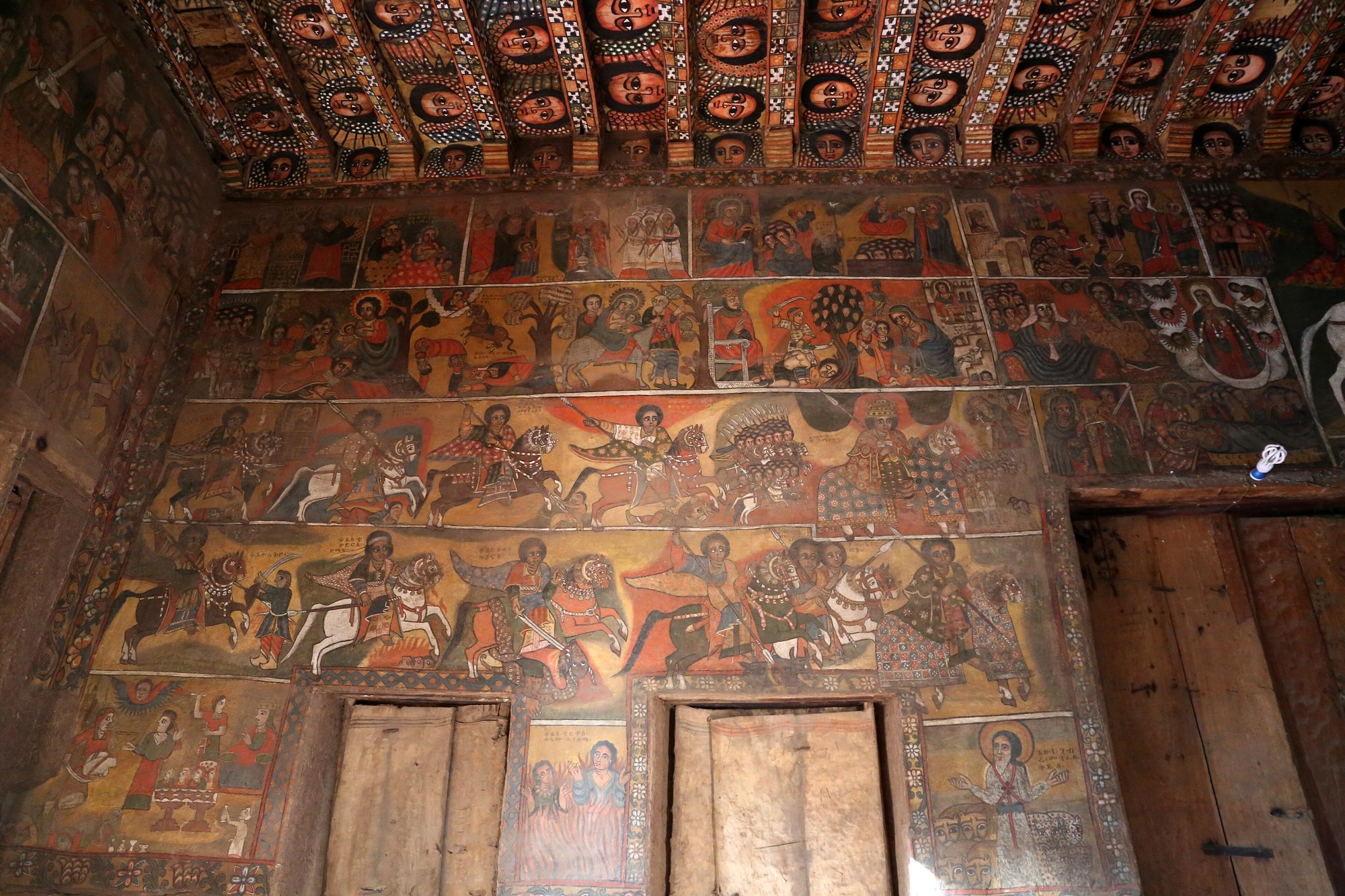
The walls are painted too. Between 1979 and 1982, ICCROM ran three campaigns to conserve and restore the wall paintings, following missions to the church that began in 1973. The work had support from Ethiopia’s Ministry of Culture, Youth Affairs and Sport, from UNESCO and from the United Nations Development Programme. Its aim, according to ICCROM, was to train a local team of wall painting conservators while treating the parts of the church that had not yet been restored. Ethiopian conservators did the work with help from international experts, and ICCROM still holds the mission reports, photographs and paint samples in its archive.