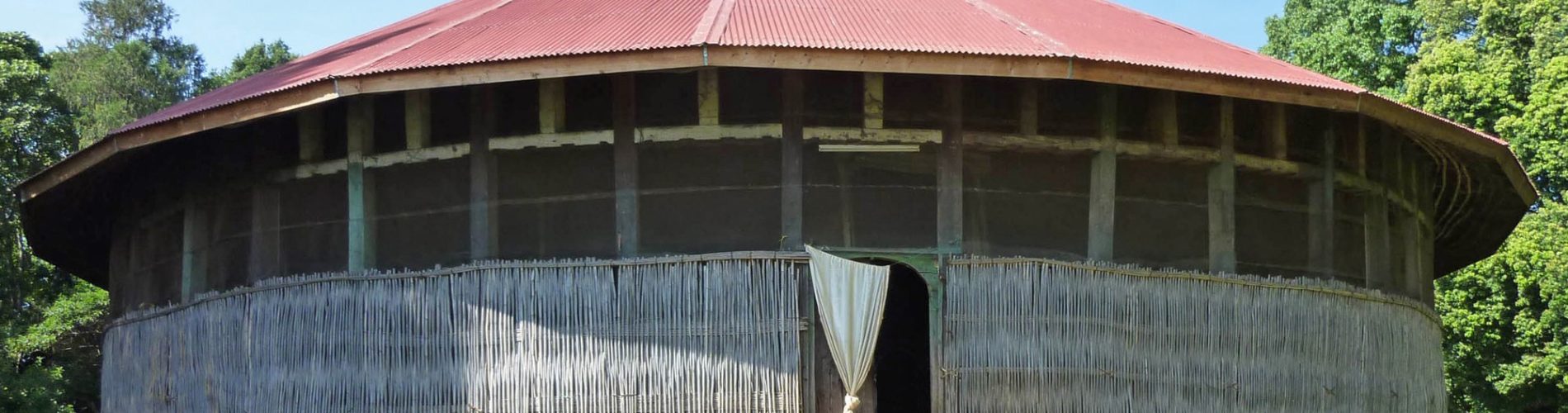
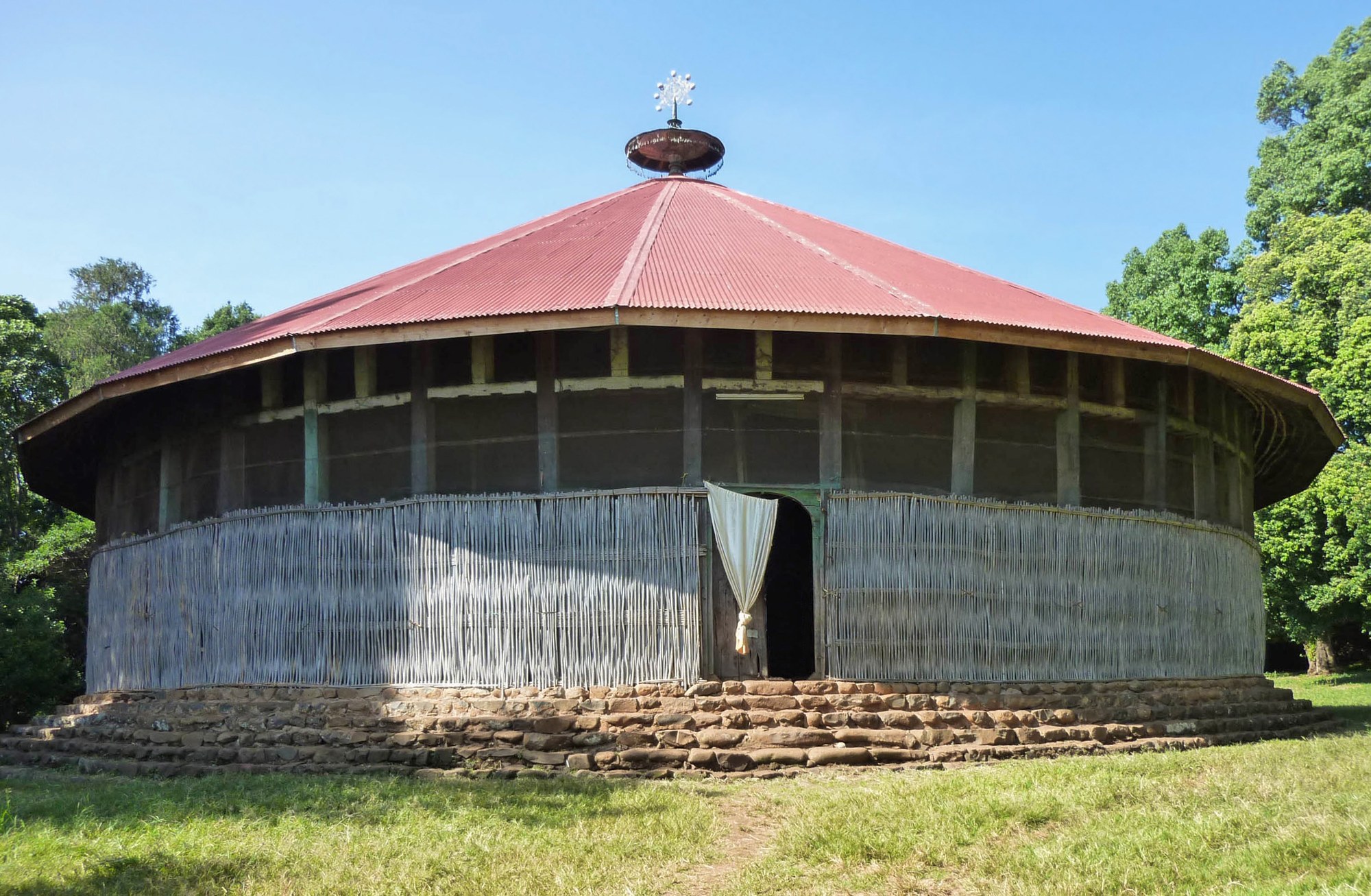
On the Zege Peninsula of Lake Tana stands Ura Kidane Mehret, a round monastery church known for its painted sanctuary and a library of more than 300 manuscripts.
A lake of monasteries
Lake Tana is the largest lake in Ethiopia, lying in a depression of the northwestern plateau about 1,800 metres above sea level, according to Britannica. Its surface covers 3,673 square kilometres, and the Blue Nile flows out of its southern end near Bahir Dar. Britannica notes that monasteries were built on the islands of Dak and Daga in the Middle Ages, and that Portuguese Jesuits visited them in the 16th and 17th centuries.
In 2015 the lake and its surroundings joined UNESCO‘s World Network of Biosphere Reserves. UNESCO’s listing points to the many monasteries and churches of the Ethiopian Orthodox Tewahedo Church in the reserve, some of them going back to the 13th century, which hold valuable treasures of the Ethiopian Christian tradition.
Zege and its founders
Zege is a thickly forested peninsula on the southwest shore of the lake, about 20 kilometres west of Bahir Dar, according to the entry on Zege by Ewa Balicka-Witakowska in the Encyclopaedia Aethiopica, volume 5 (2014), pages 104 to 106. Several of its monastic communities, for men and for women, were founded by two monks of the 14th century, abba Yohannes from Shewa and abba Betre Maryam. By the 17th century Zege was the leading monastic centre of the region, the entry says, and it went on flourishing through the 18th and 19th centuries. Emperor Tewodros II liked to camp there, which did not stop his army from plundering it.
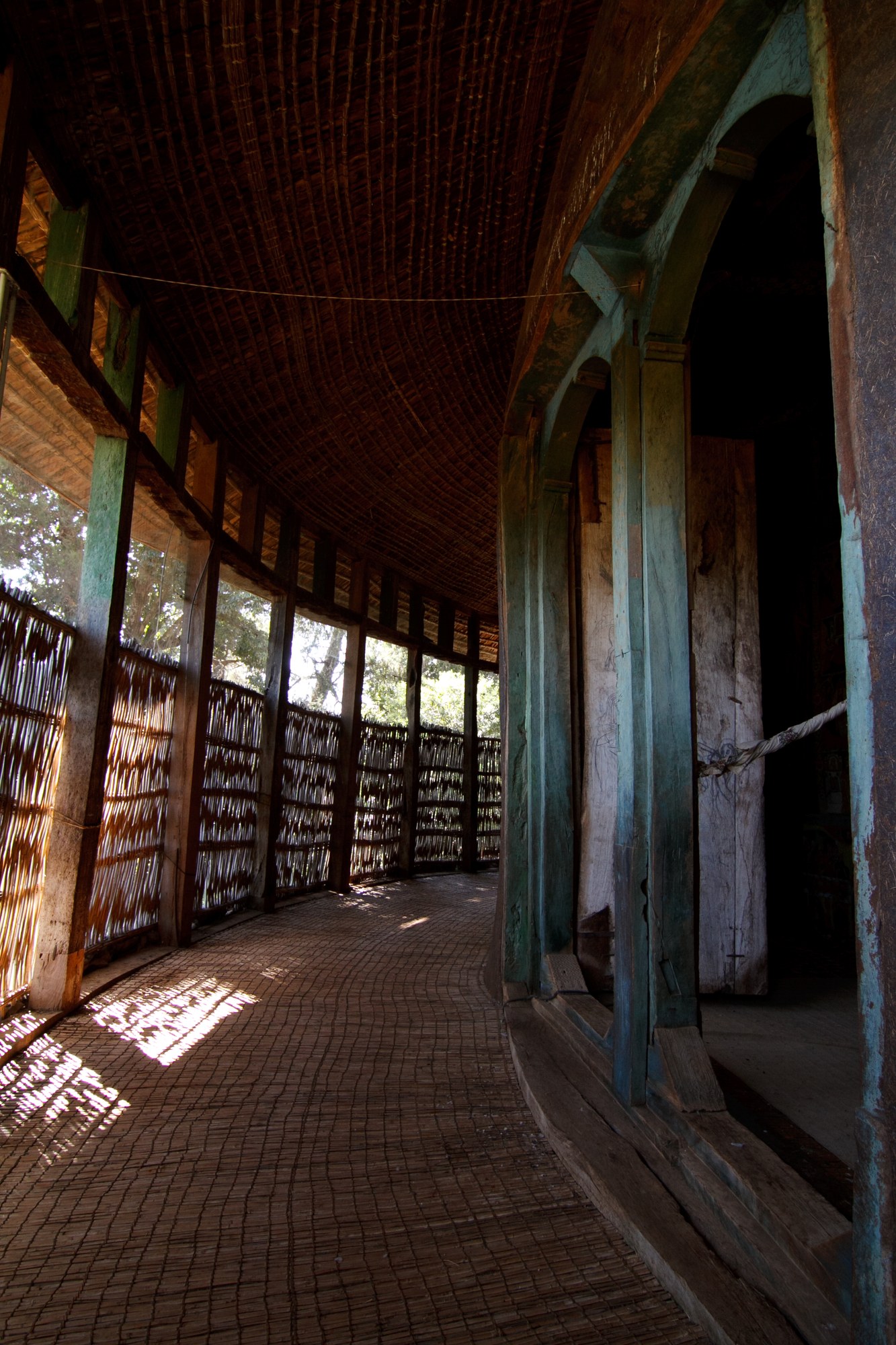
Seven churches stand on the peninsula today. The encyclopedia credits abba Yohannes with founding Ura Kidane Mehret, while Betre Maryam is credited with two others, the church that bears his name and Mahel Zege Giyorgis. A widely published account instead credits Betre Maryam with founding the monastery in the 14th century and dates the present circular church to the 16th century. All seven follow a circular plan, between 20 and 26 metres across, and stand on a stepped base around a square inner sanctuary called the maqdas.
Painted walls
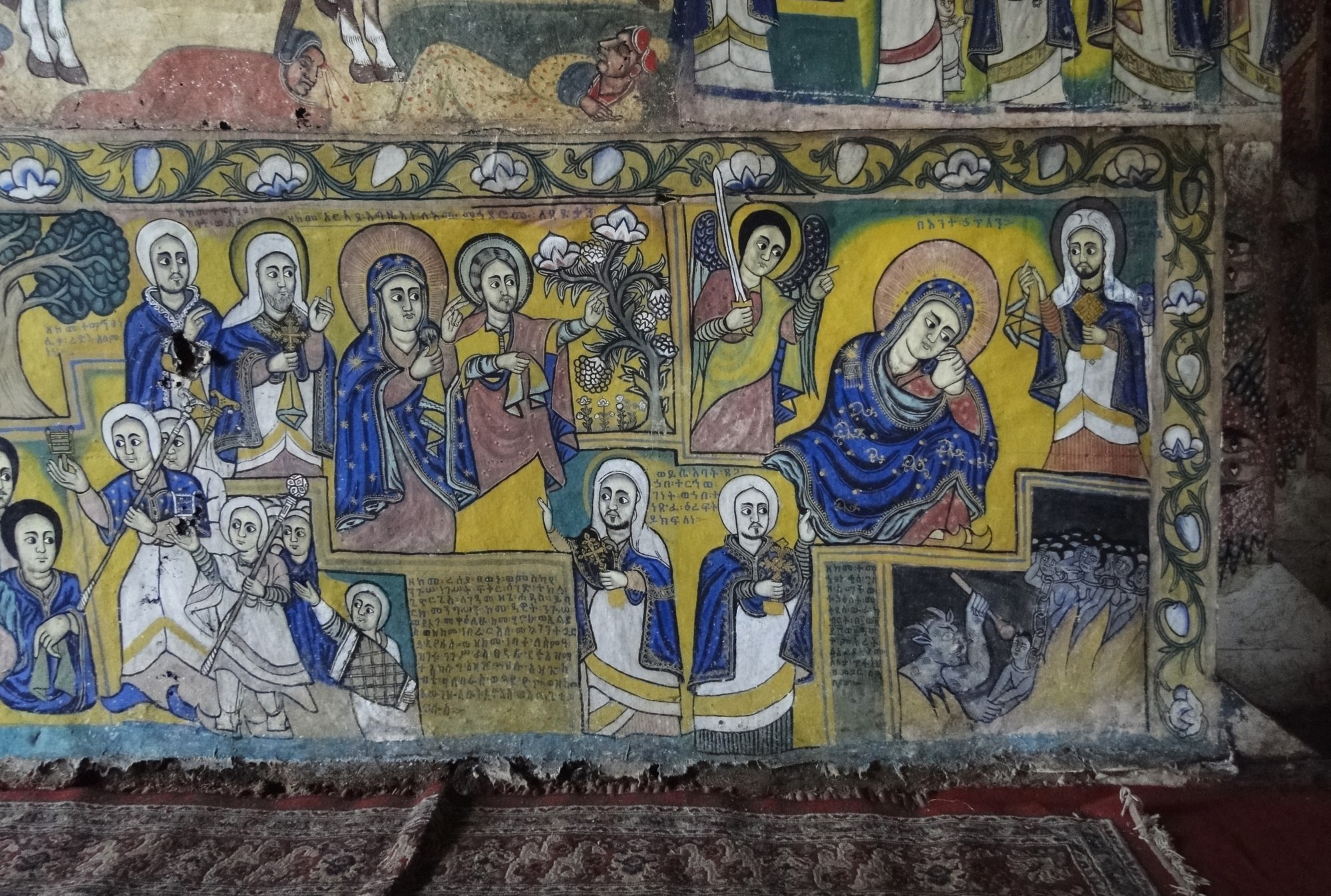
In the Zege churches, paintings cover the outer walls of the maqdas and the roof beams, according to the encyclopedia. At Ura Kidane Mehret the oldest set dates from the 18th century and survives only in part. The church is also the best example of the scheme of images worked out for round churches in the second half of that century. An inscription records that the southern wall of its maqdas was painted in 1895 by alaqa Engida.
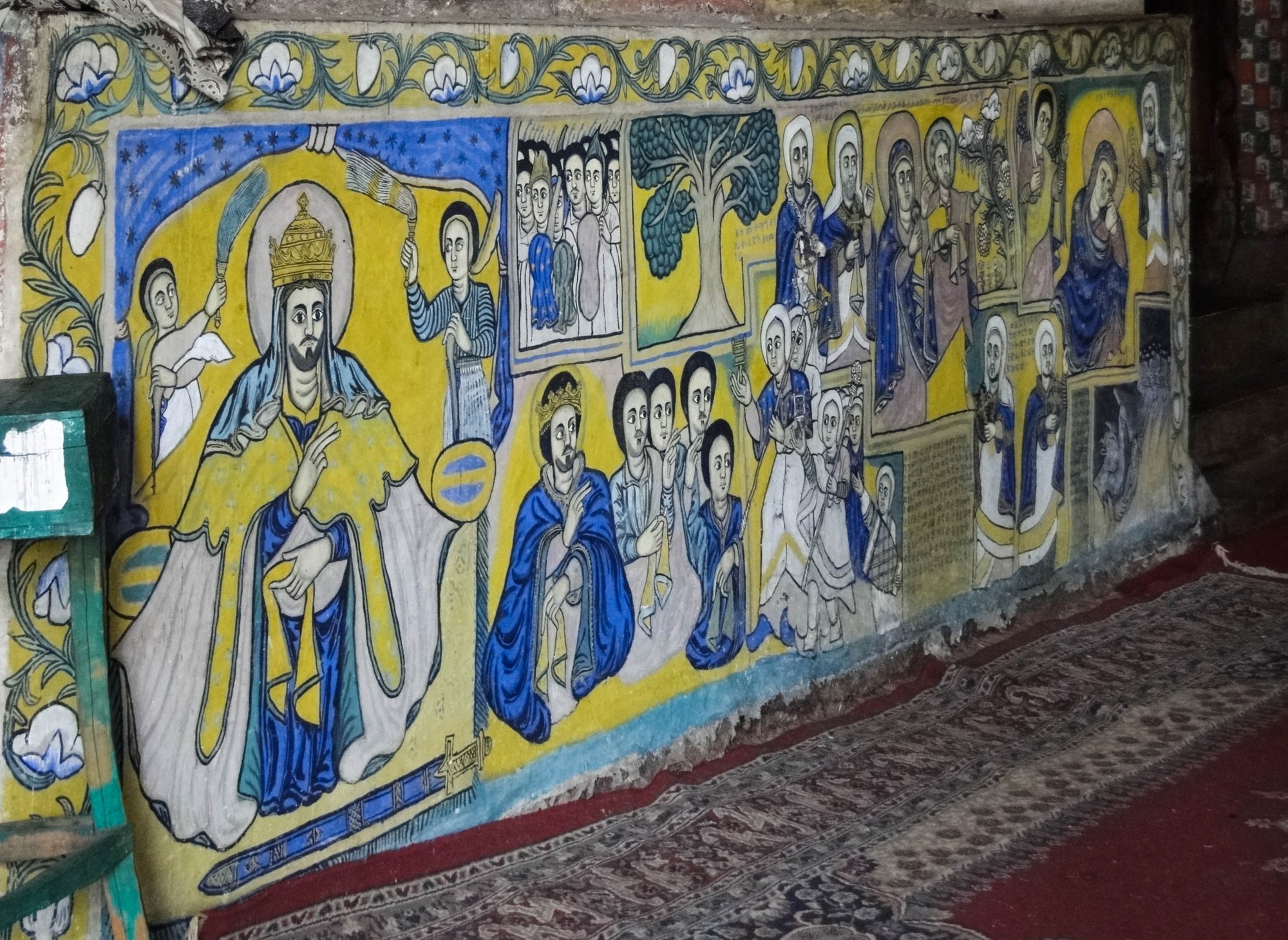
The Lonely Planet guide finds the church plain from outside but calls its maqdas beautifully painted, and says the monastery keeps an important collection of crosses and crowns dating from the 14th to the 20th century. The Lake Tana Biosphere Reserve visitor guide adds that, unlike some monasteries on the lake, Ura Kidane Mehret admits both men and women.
A library on the peninsula
Ura Kidane Mehret also holds the largest collection of manuscripts on Zege, more than 300 books that are thought to include volumes from destroyed churches in the area, according to the encyclopedia. In the 1970s the Ethiopian Manuscript Microfilm Library filmed more than 100 manuscripts from the Zege churches, 23 of them at Ura Kidane Mehret, but the entry notes that they had still not been catalogued when it was published in 2014. Among the church’s books it lists an illuminated Dersane Mikael from the 18th century.
Sources
- Britannica: Lake Tana
- UNESCO Man and the Biosphere Programme: Lake Tana
- Ewa Balicka-Witakowska, “Zege” (Zäge), Encyclopaedia Aethiopica, volume 5 (Wiesbaden: Harrassowitz, 2014), pages 104 to 106.
- Lonely Planet: Ura Kidane Meret
- Lake Tana Biosphere Reserve: Monasteries