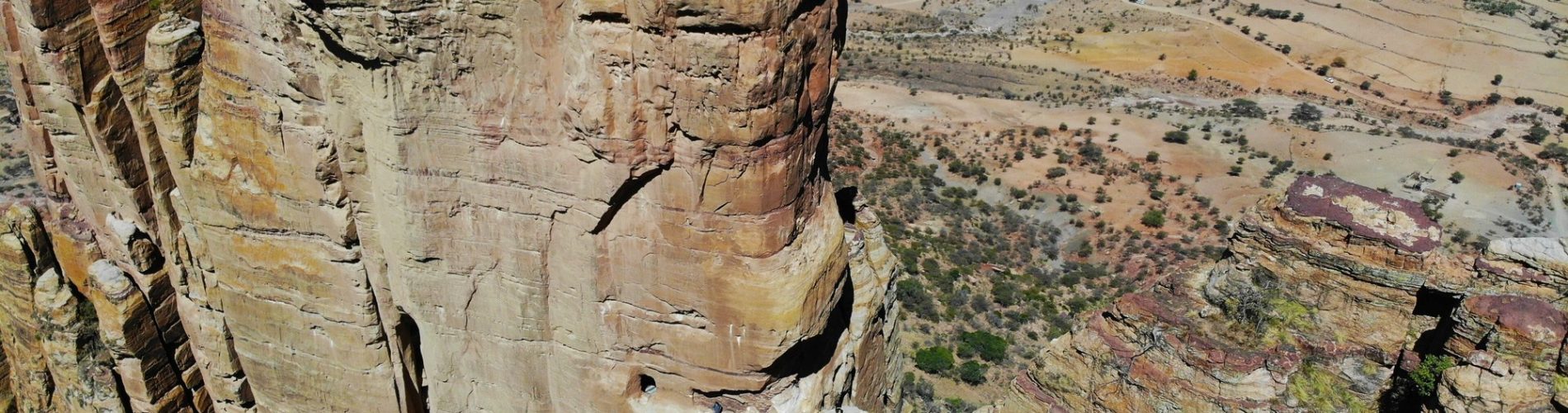
Abuna Yemata Guh is a church carved into the side of a sandstone spire in the Gheralta mountains of Tigray. Reaching it takes a hard climb and a walk along a narrow ledge.
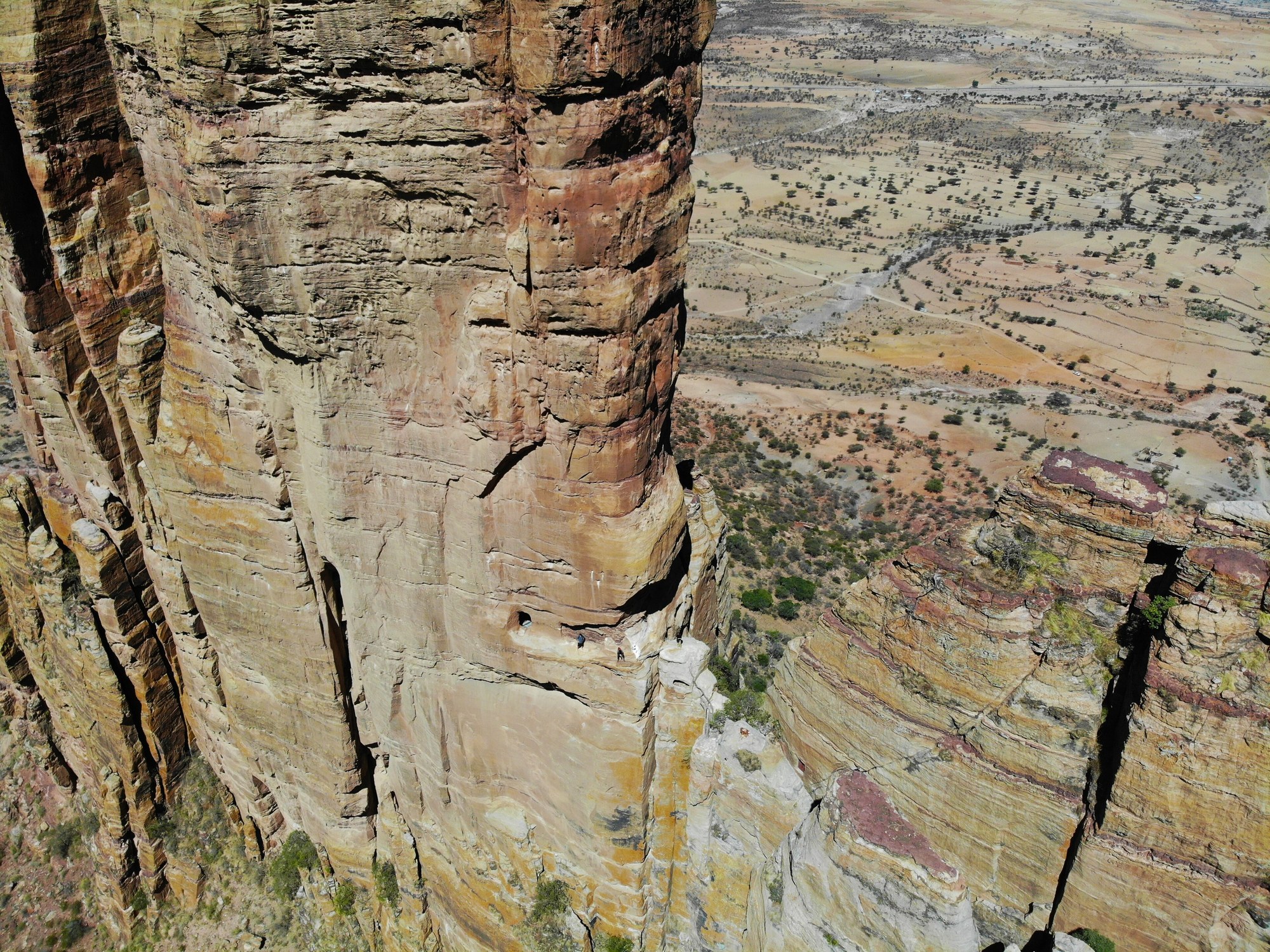
A church inside a pinnacle
The church is cut into one of the tallest sandstone spires in the Gheralta area, according to a 2016 study in Heritage Science by Kidane Fanta Gebremariam, Lise Kvittingen and David Graham Nicholson of the Department of Chemistry at the Norwegian University of Science and Technology. The authors describe the pillars of the range as the last eroded remains of a sandstone plateau that once covered much older Precambrian rock.
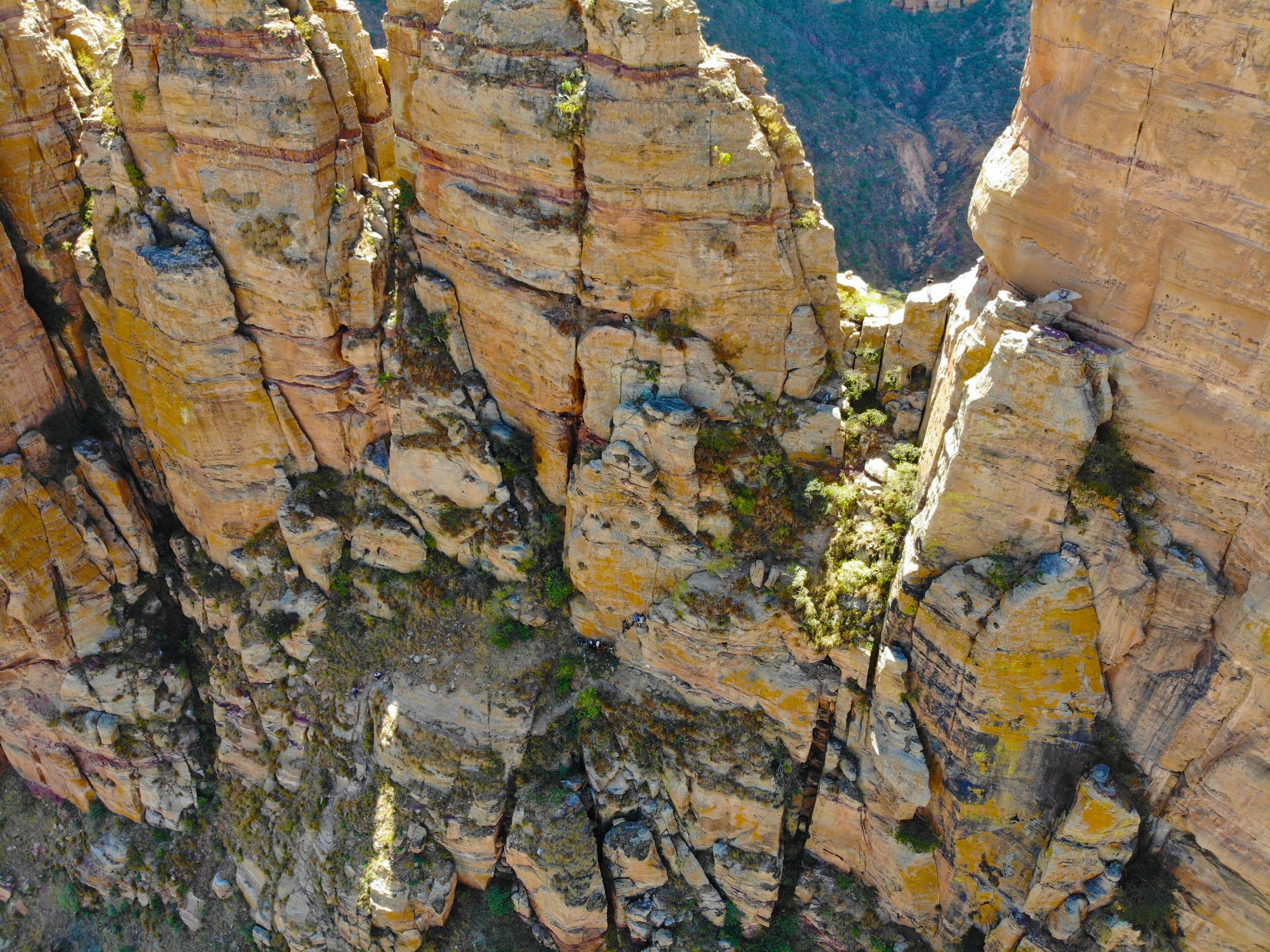
The same study calls the approach one of the hardest in Ethiopia: a strenuous ascent, then a vertical rock wall climbed with hand and foot holds alone, and finally a ledge about 50 centimetres wide above a drop of 300 metres. The Lonely Planet guide places the church about 4 kilometres west of Megab and gives a smaller figure for the drop, 200 metres. It says guides carry ropes for the final push.
A saint’s hermitage
The church takes its name from Abuna Yemata, one of the Nine Saints. According to the 2016 study, tradition holds that these monks came to northern Ethiopia early in the sixth century and founded monasteries in Tigray. They are credited with spreading Christianity, starting a monastic tradition and translating scripture into Ge’ez, still the language of the church’s liturgy. Local legend, the authors note, says the church itself was carved in the sixth century.
Saints and apostles on the walls
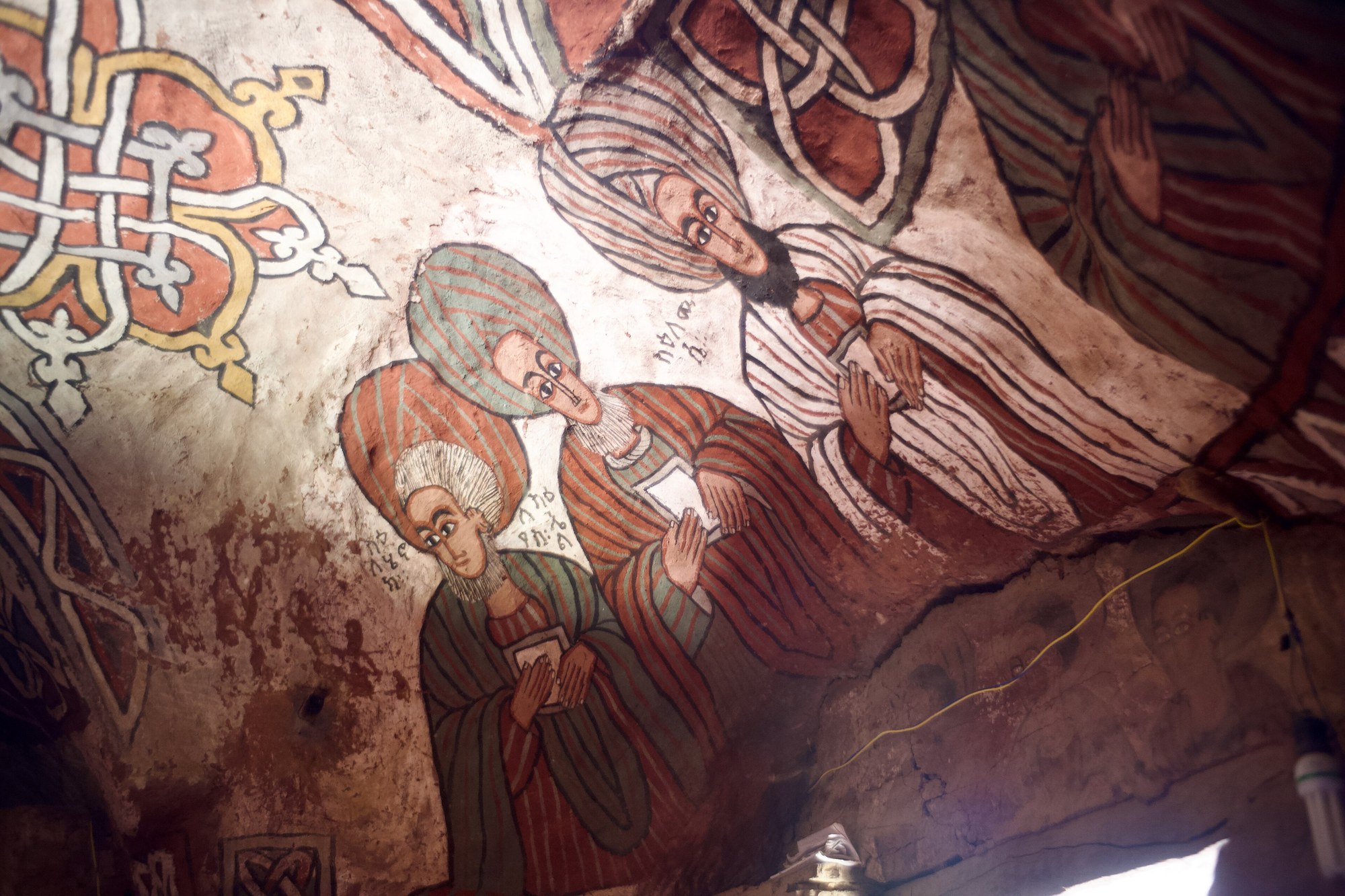
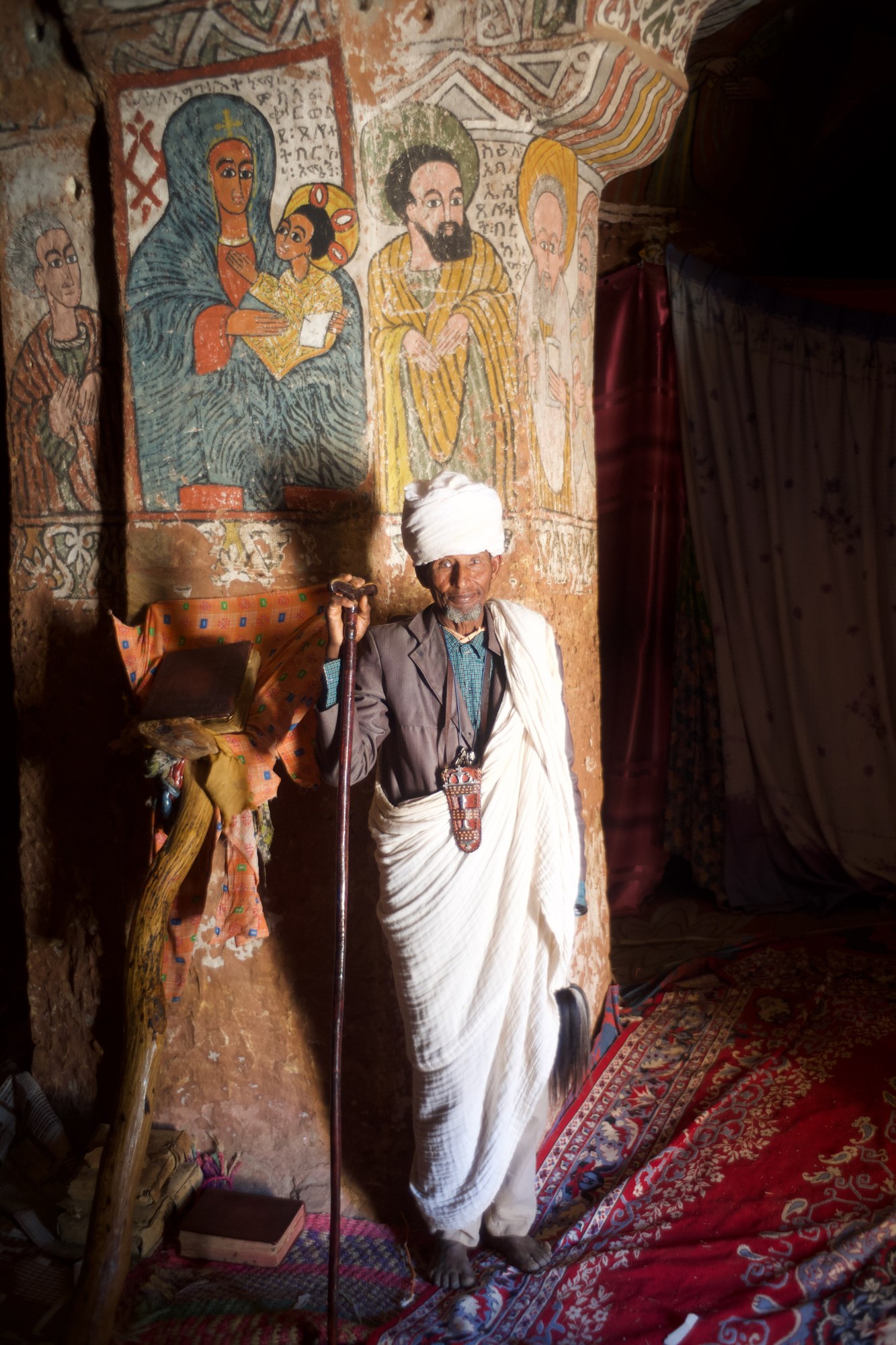
Inside, nearly every wall, cupola and column is painted. The study lists the Apostles, the Nine Saints, Abraham, Isaac and Jacob, Mary and Christ, angels, Moses, Paul and Peter, along with monks and interlaced patterns. The figures are identified by Ge’ez inscriptions beside them, following Ethiopian painting custom. Lonely Planet singles out the well kept frescoes on two cupolas and notes that bones of monks from open air tombs lie around the site.
Fifteenth or sixteenth century?
Tradition places the paintings much earlier than scholars do. The 2016 study’s abstract says the paintings are suggested to belong, on grounds of theme, style and iconography, to the second half of the fifteenth century; its introduction gives a range of the fifteenth to sixteenth century. Kidane and his colleagues examined tiny samples with portable spectrometers, microscopes and synchrotron diffraction. They found mostly earth pigments based on hematite, goethite and green earth, with some cinnabar, orpiment, lead white and carbon black, laid over a ground of red mud strengthened with straw. The binder appeared to be egg, which points to tempera. They also found signs that the image of Mary and a figure near it had been repainted or retouched.
Valeria Kuvatova of the Institute of Oriental Studies of the Russian Academy of Sciences argues for a later date. In a 2023 paper in Oriental Courier, she traces motifs in the paintings to Ottoman and Goan Christian art and sees echoes of the Roman icon Salus Populi Romani, a copy of which reached Ethiopia only after the 1570s. On that basis she places the paintings most plausibly in the late sixteenth century. She notes that no well-proved date has been established.
The 2016 authors credit the dry microclimate inside the church for the relatively good state of the paintings. They found heavy losses on the lower walls, where people touch them during services, and called for conservation work.
Sources
- Gebremariam, K. F., Kvittingen, L. and Nicholson, D. G. (2016), Multi-analytical investigation into painting materials and techniques: the wall paintings of Abuna Yemata Guh church, Heritage Science 4, article 32
- Kuvatova, V. (2023), Eastern and Western Influence in Wall Paintings of Abuna Yemata Guh Church (Ethiopia), Oriental Courier
- Lonely Planet: Abuna Yemata Guh