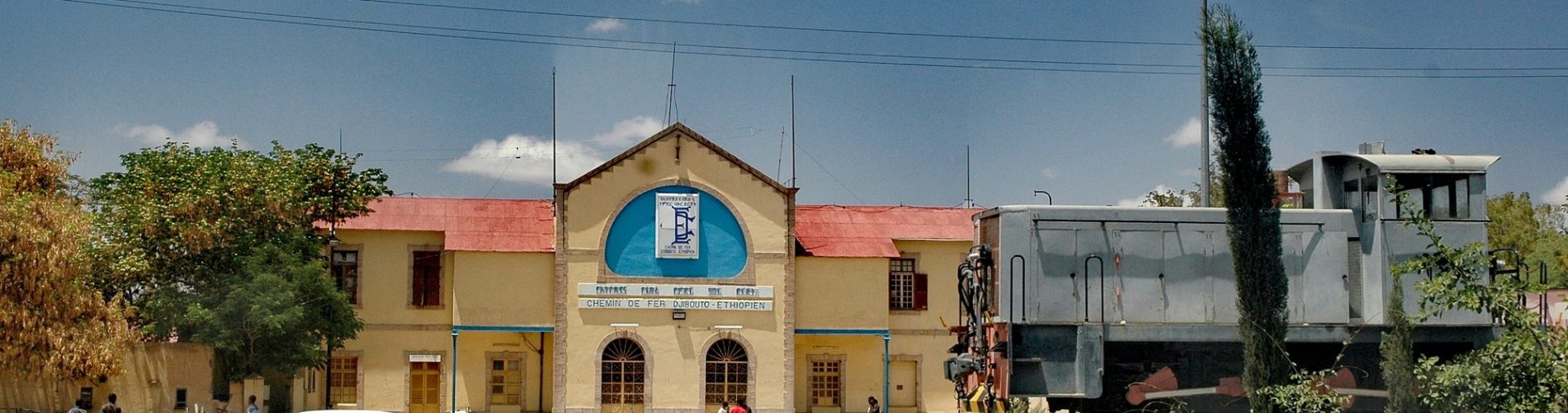
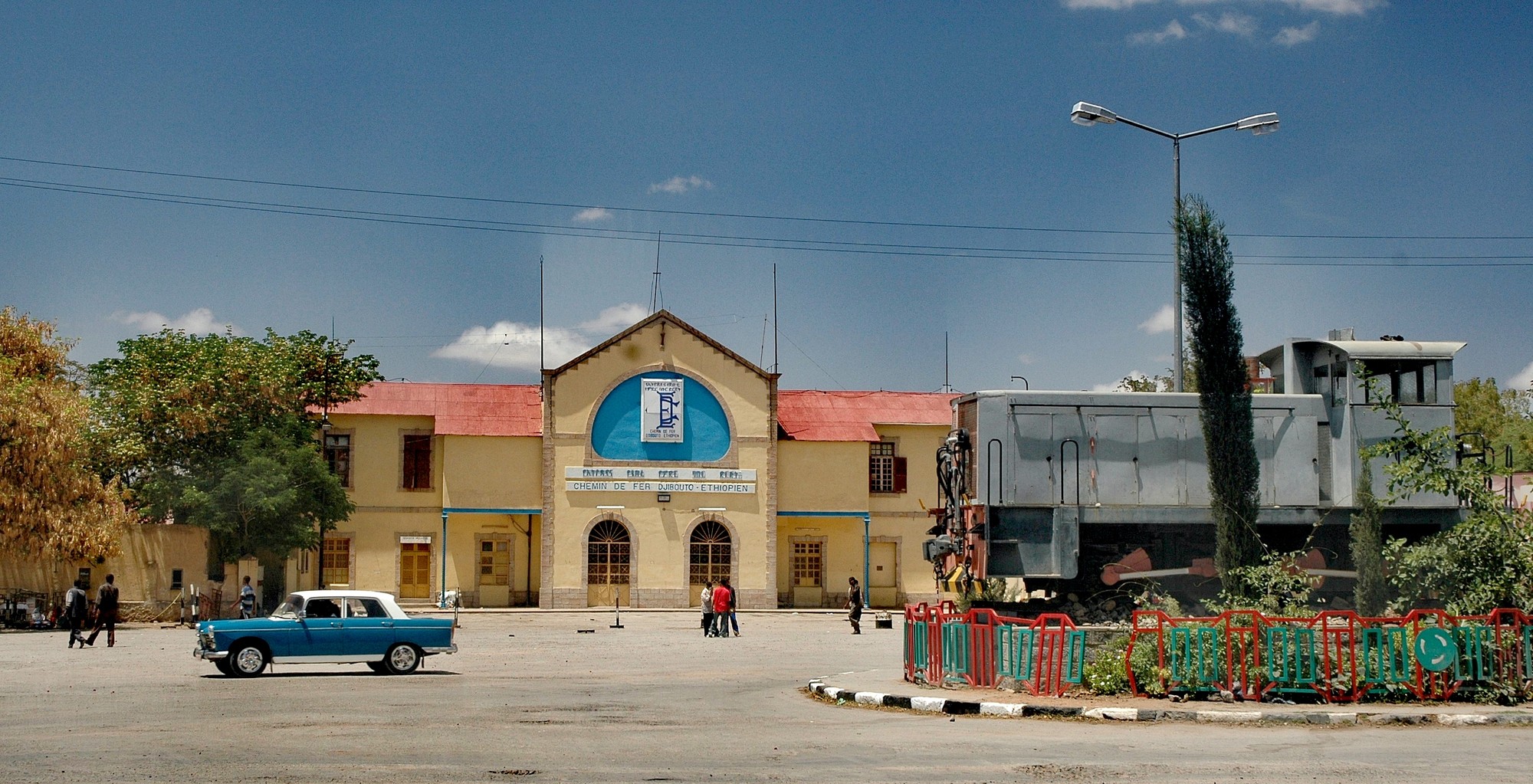
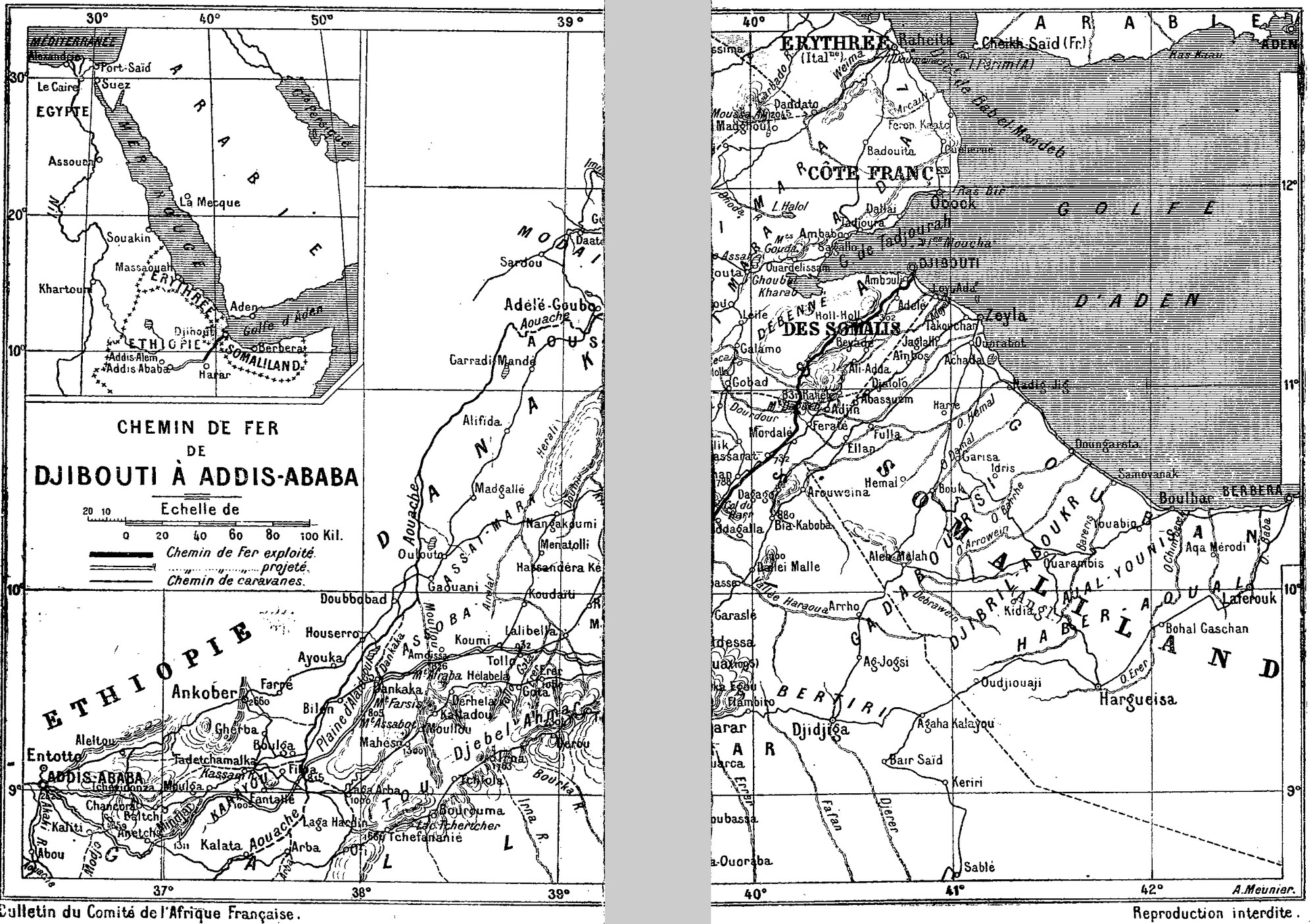
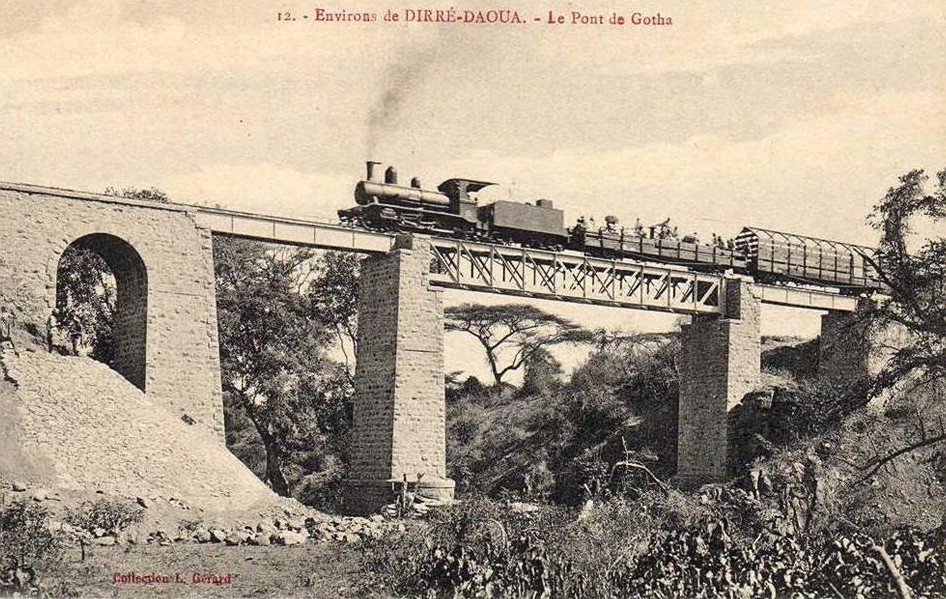
Ethiopia’s first railway, begun in 1897, reached Addis Ababa from the port of Djibouti in 1917. Old postcards and a 1907 map show the line and Dire Dawa, the town it created.
A concession from Menelik II
The idea belonged to Alfred Ilg, a Swiss engineer at the court of Menelik II. On 9 March 1894, writes the historian Simon Imbert-Vier in a short history of the line for the Djibouti magazine Human Village, Ilg received from Menelik a concession for a railway that was to run from Djibouti across Ethiopia to the White Nile. France, which held Djibouti, did not allow the line to cross its territory until 27 April 1896, after Ethiopia’s victory at Adwa that March had halted Italian colonial plans. Ilg and his French partner Léon Chefneux then set up the Compagnie impériale des chemins de fer éthiopiens, and Menelik held a quarter of its capital. Raising the money proved hard, and in the end British financiers, the Ochs brothers, provided the funds, mainly as loans.
Through the desert to Dire Dawa
According to Imbert-Vier, work began in the autumn of 1897. The first 108 kilometres, as far as Dewele, opened to traffic in July 1900, the same year the company finished its station in Djibouti. Money was so short, Imbert-Vier notes, that in places the track was simply laid along the beds of seasonal rivers instead of over bridges, which cut the line whenever it rained. The company’s private militia also dealt harshly with the herding communities along the route. In February 1902 the French government imposed a new agreement, paid a subsidy of eleven million francs and placed the company under state supervision. That December, after 315 kilometres of track, the rails reached a plain below Harar.
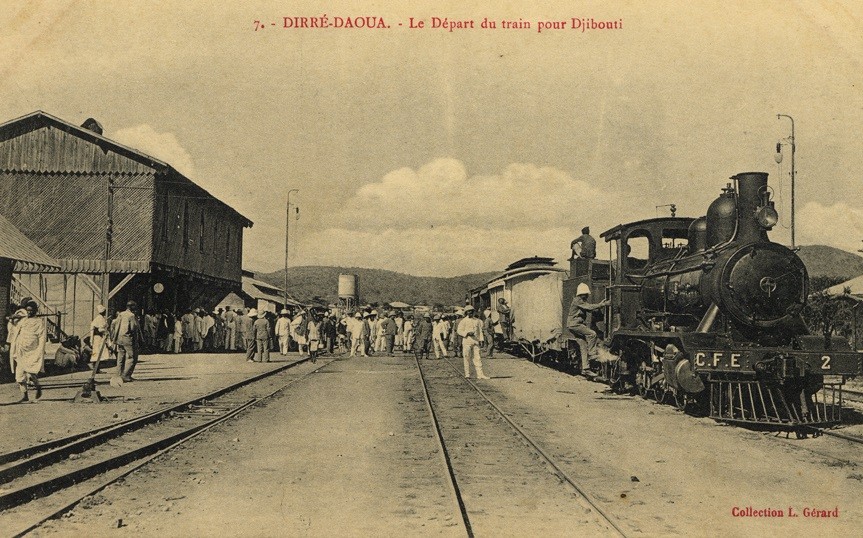
The terminus was first called Addis Harar. A history of the line compiled by the railway enthusiast Jean-Pierre Crozet says the engineers renamed the station after a small nearby village, Dire Dawa, to avoid confusion with Addis Ababa, and dates the arrival of the rails to 24 December 1902. The company laid out and ran the new town itself. According to Imbert-Vier, it administered Dire Dawa entirely, police included, until 1926, on a segregated model. Britannica notes that the Dechatu River divides the city into a modern quarter built by the French and an older quarter.
Stalled, then finished
In Imbert-Vier’s account, the 1902 agreement, made without consulting Ethiopia, turned the project into a possible prelude to foreign domination, and Menelik blocked any further building. In a treaty of 13 December 1906, France, Britain and Italy divided Ethiopia into zones of influence and allowed the French line to go only as far as Addis Ababa. Menelik at first rejected the treaty but could not stop it. The original company went bankrupt in June 1907. In January 1908 Menelik agreed that a new French company, in which he again held a quarter of the capital, would build and run the line, and Imbert-Vier dates the founding of the Compagnie du chemin de fer franco-éthiopien, backed by the Banque de l’Indochine, to 1909. Work resumed in January 1910, and the full line opened in June 1917. The station in Addis Ababa was inaugurated on 3 December 1929. Imbert-Vier puts the total cost of construction at 96 million francs.
Ethiopia’s road to the sea
For decades the railway was the main channel of Ethiopia’s foreign trade. When Italy invaded in 1935, French troops occupied Dire Dawa, which was declared a neutral city, and later handed it to the Italian authorities, which in Imbert-Vier’s view let Italy put the line quickly to use. After the company resumed running the line itself in July 1946, he writes, it carried between 55 and 75 percent of Ethiopian external commerce through the port of Djibouti. Road transport through the Eritrean port of Assab took business away in the 1950s, and from 1954 the railway ran at a loss. A treaty in 1959 turned the operator into a company under Ethiopian law, based in Addis Ababa, with capital shared equally between Ethiopia and France. The company, Ethiopia’s first industrial enterprise, trained Ethiopian and Djiboutian workers in its Dire Dawa workshops. After Djibouti’s independence in 1977, a new operating company of Ethiopia and Djibouti was created in 1981. Outdated equipment, a line built on the cheap and road competition left traffic almost insignificant by the 2000s.
Sources
- Simon Imbert-Vier, “Brève histoire du premier chemin de fer de Djibouti à Addis Abeba”, Human Village 29 (January 2017)
- Jean-Pierre Crozet, “The Franco Ethiopian and Djibouto Ethiopian Railway: Historical timeline” (archived 2013)
- Encyclopaedia Britannica, “Dire Dawa”
- Péroz, Le chemin de fer éthiopien et le port de Djibouti (Paris: Comité de l’Afrique française, 1907), library record