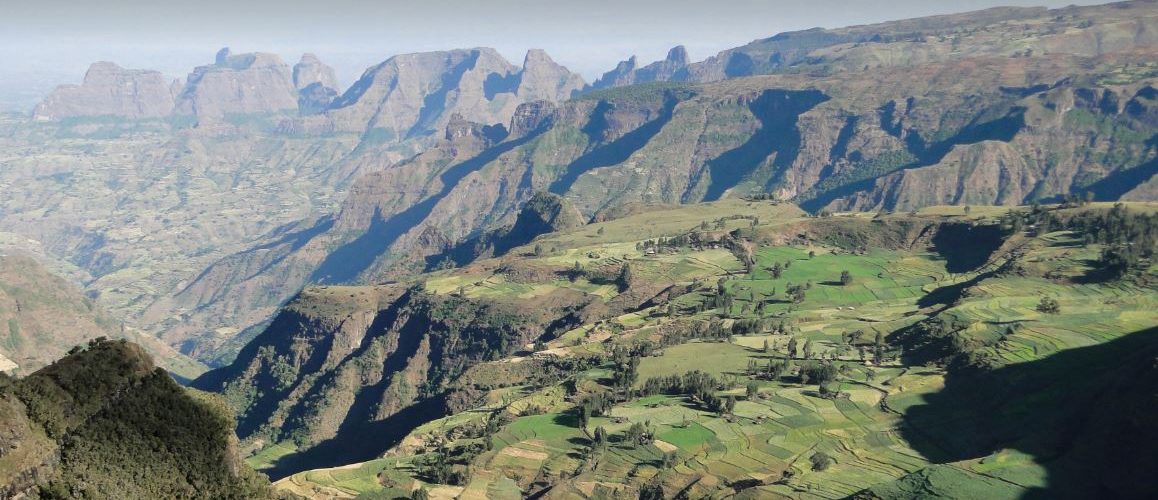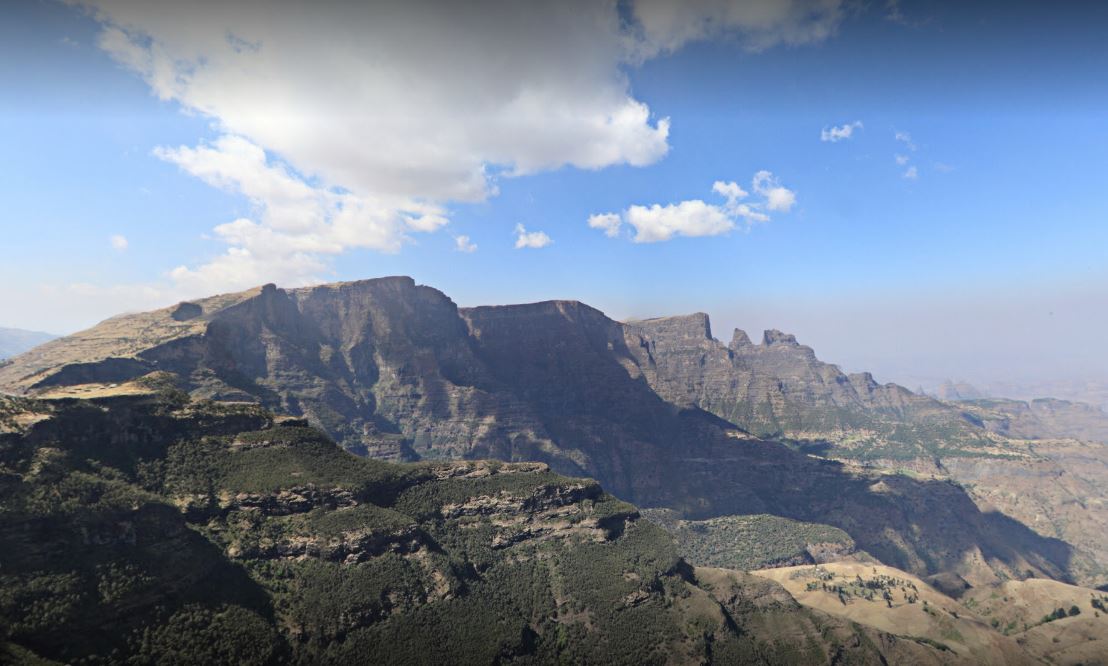
The Simien Mountains in northern Ethiopia are among Africa’s most dramatic landscapes, and hiking there means walking along the edge of enormous cliffs.
A landscape carved by erosion
According to UNESCO, massive erosion over millions of years has created jagged peaks, deep valleys and sharp precipices dropping some 1,500 metres. The northern cliff wall extends for about 35 km, and the massif includes Ras Dejen, the highest point in Ethiopia. UNESCO says the scenery is considered to rival the Grand Canyon.
Rare animals
The park is home to the Walia ibex, a wild mountain goat found nowhere else in the world, as well as the Ethiopian wolf, considered the rarest canid in the world, and the gelada, both endemic to the Ethiopian highlands, UNESCO says. More than 20 large mammal species and more than 130 bird species occur in the park, including the rare lammergeyer, a large vulture.
People in the park
Simien National Park was established in 1969 and inscribed on the World Heritage List in 1978. At the time of inscription, 80 per cent of the park was under human use of one form or another, according to UNESCO. Settlement, farming, soil erosion and grazing, particularly around the village of Gich, threatened its wildlife, and the park was on the List of World Heritage in Danger from 1996 to 2017.
UNESCO says that working closely with local communities is essential, and that ecotourism, if developed without harming the park’s natural and scenic values, could create more revenue for the property.
Off the danger list
Simien was one of the first four natural sites inscribed on the World Heritage List, and the first in Africa, according to the IUCN World Heritage Outlook. It was added to the List of World Heritage in Danger in 1996 because of a new road across the park, excessive cattle grazing, farming encroachment and falling numbers of Walia ibex, Ethiopian wolf and other large mammals, UNESCO says.
On 4 July 2017, meeting in Kraków, the World Heritage Committee removed the park from the danger list, citing better management and measures to reduce overgrazing and visitor impact. In its decision, the committee noted a possible increase in Walia ibex and Ethiopian wolf numbers and that the voluntary relocation of the Gich community had been completed.
Counting the ibex
A census carried out from 2009 to 2011 and published in the Journal of Mountain Ecology estimated an average of 752 Walia ibex in the park, living in groups of about 12. The authors found the ibex had shifted their range, probably in response to people, livestock and predators. IUCN reported in 2017 that grazing pressure from domestic livestock was still about fourteen times the level considered sustainable.
Sources
- UNESCO World Heritage Centre, Simien National Park
- IUCN World Heritage Outlook, Simien National Park, 2017 conservation outlook assessment
- UNESCO World Heritage Centre, Ethiopian World Heritage site, Simien National Park no longer in danger, 4 July 2017
- UNESCO World Heritage Committee, Decision 41 COM 7A.13 (2017)
- Journal of Mountain Ecology, Walia ibex have increased in number and shifted their habitat range within Simien Mountains National Park