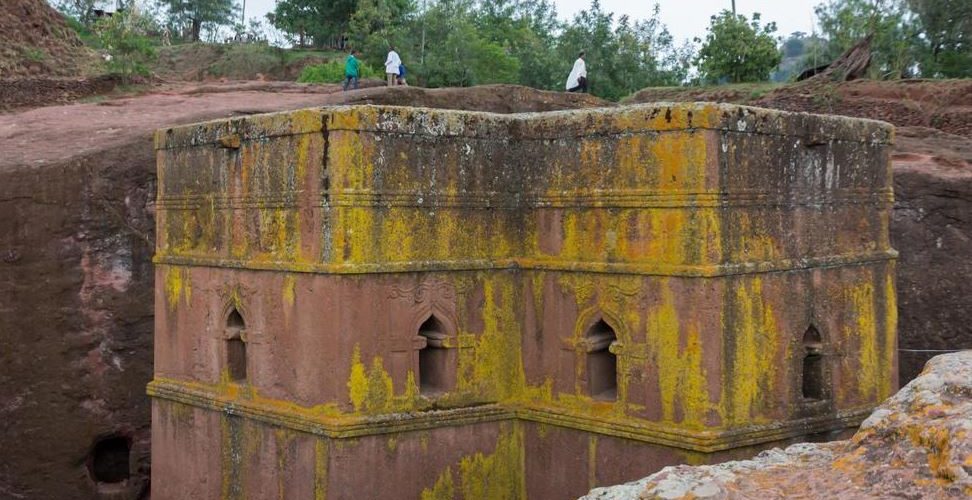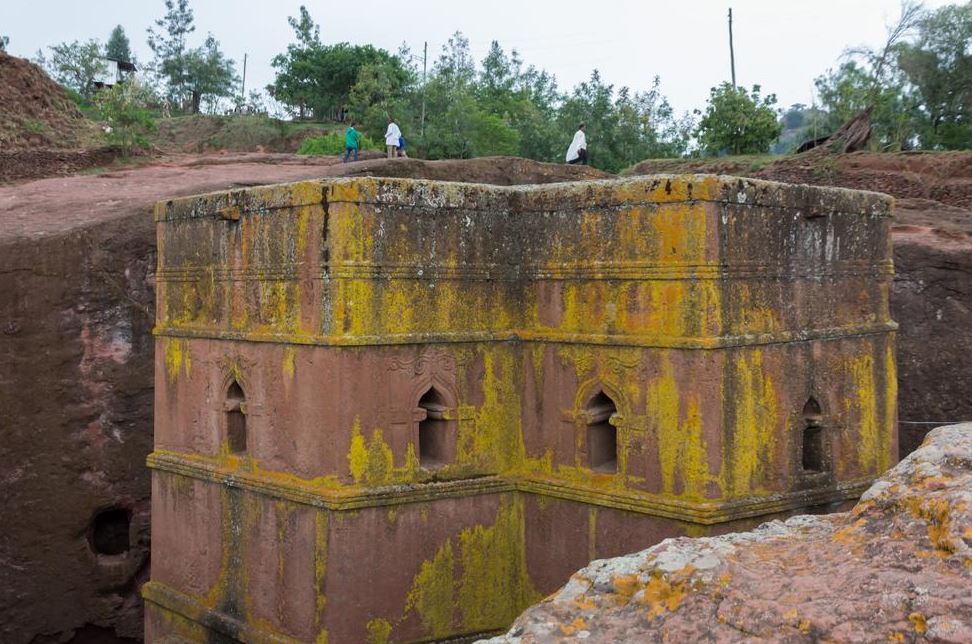
Lalibela, in the highlands of northern Ethiopia, is a place of pilgrimage for Ethiopian Orthodox Christians and one of the country’s best known heritage sites.
The town was the seat of the Zagwe dynasty, which ruled Ethiopia in the 12th and 13th centuries, and it draws pilgrims in especially large numbers at Christmas, when priests in white gather above and below the rock churches to sing, according to the Ethiopian News Agency. Local tourism officials told the agency they expected more than 200,000 visitors for one recent Christmas celebration.
What UNESCO says about Lalibela
UNESCO describes eleven medieval monolithic churches carved out of rock in a mountainous region in the heart of Ethiopia, some 645 km from Addis Ababa. Their building is attributed to King Lalibela, who set out in the 12th century to build a “New Jerusalem” after Muslim conquests halted Christian pilgrimages to the Holy Land, according to UNESCO. The site was inscribed on the World Heritage List in 1978.
UNESCO notes that the eleventh church, Biete Ghiorgis, the House of St George, is isolated from the others but connected to them by a system of trenches, and has a remarkable cruciform plan. UNESCO adds that all eleven churches represent a unique artistic achievement in their execution, size and boldness of form. The property also preserves traditional two storey circular village houses with interior staircases and thatched roofs.
A place of pilgrimage
The churches have been a focus of pilgrimage since the 12th century, UNESCO says. They belong to the Ethiopian Orthodox Tewahedo Church, which traces its establishment as a state religion to the 4th century conversion of King Ezana of Aksum, according to Encyclopaedia Britannica. Britannica also notes that the ark, or tabot, is an essential item in every church, and that monasticism is widespread.
Conservation
UNESCO reports that a four year conservation plan was established in 2006 but had yet to be fully implemented, a reminder that monuments carved from living rock need ongoing care.
Why it matters
Lalibela is both a working religious centre and one of Ethiopia’s best known heritage sites.