Gena, also called Ledet, is Christmas in the Ethiopian Orthodox Tewahedo Church. It is celebrated on 7 January, according to BBC Bitesize, and on Tahsas 29 in the Ethiopian calendar.
Before Gena, believers keep a fast of 43 days, eating a single meal a day with no ingredients of animal origin, according to BBC Bitesize. The Encyclopaedia Aethiopica (vol. 4, entry “Ṣomä lǝdät” by Habtemichael Kidane, pp. 692 to 693) says this Advent fast, known as the Fast of the Prophets, originally lasted 40 days and was extended to 43 under the influence of the Coptic Church. It ends on Christmas Eve.
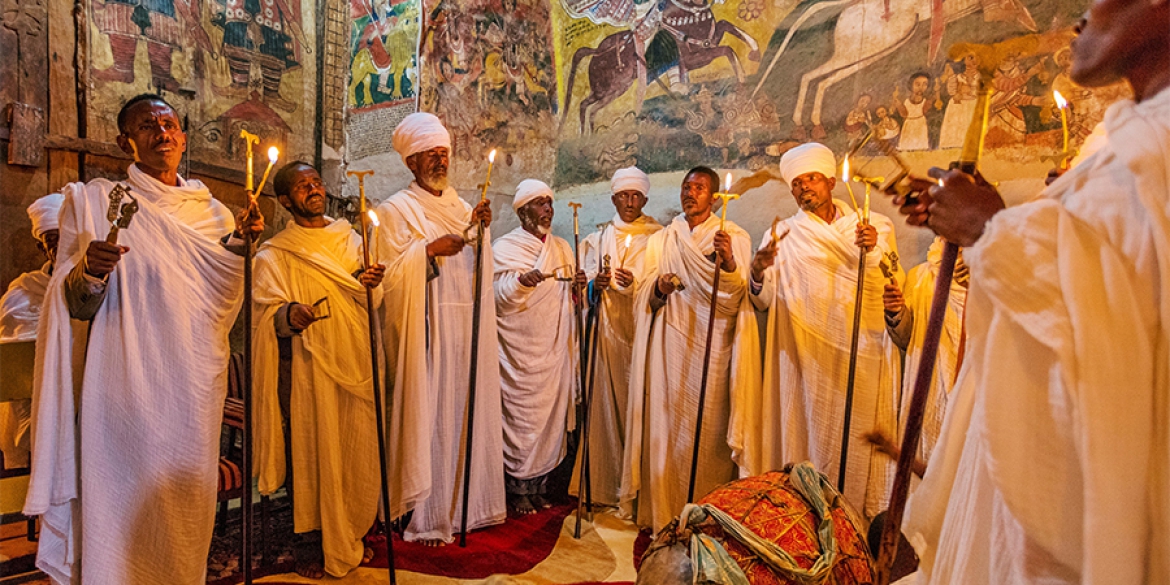
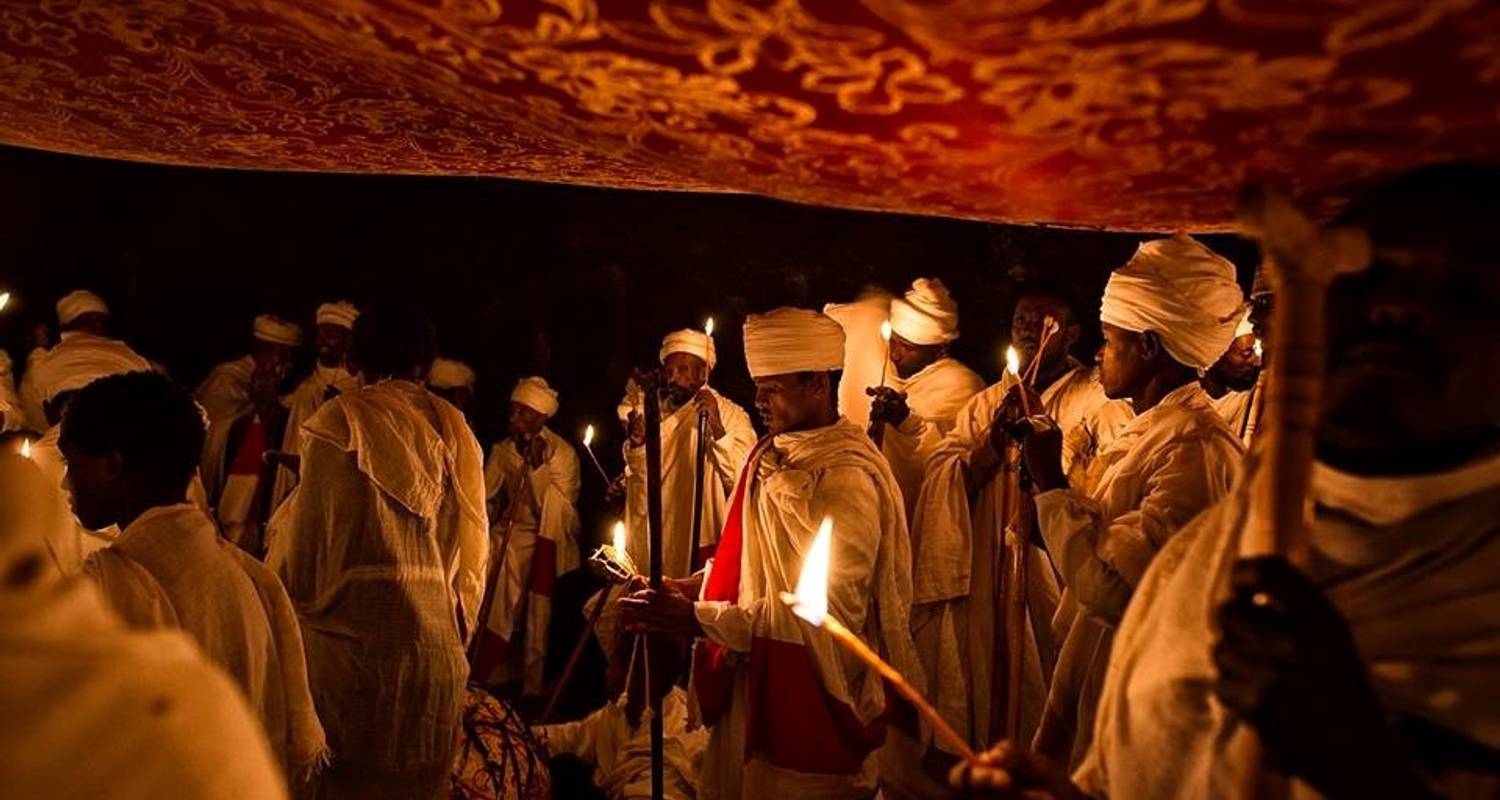
On Christmas Day, just before dawn, believers dress in the shamma, a white cotton wrap with coloured stripes across the ends, and gather for the early morning mass, a reader from Addis Ababa told BBC News in 2009, in a feature of readers’ accounts. Each person entering the church is given a candle, and priests in turbans and red and white robes lead a procession with prayers and songs, the reader wrote.
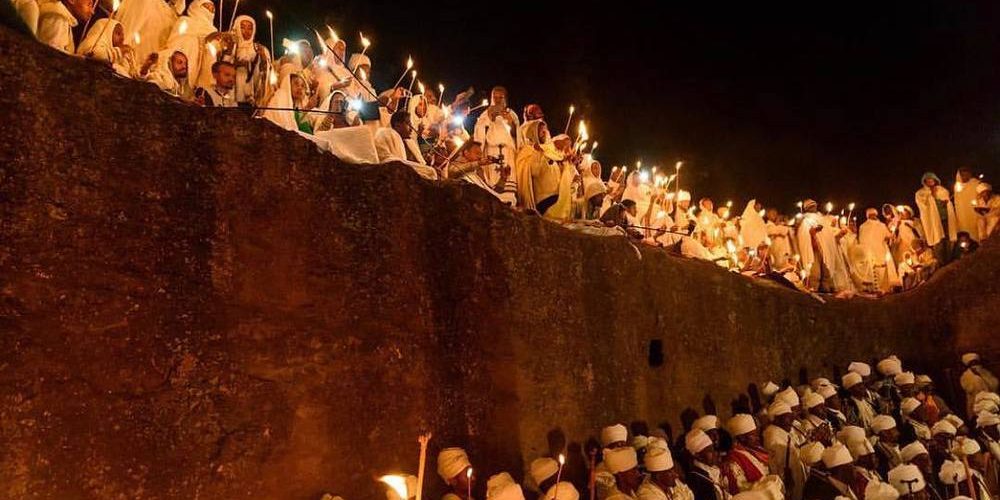
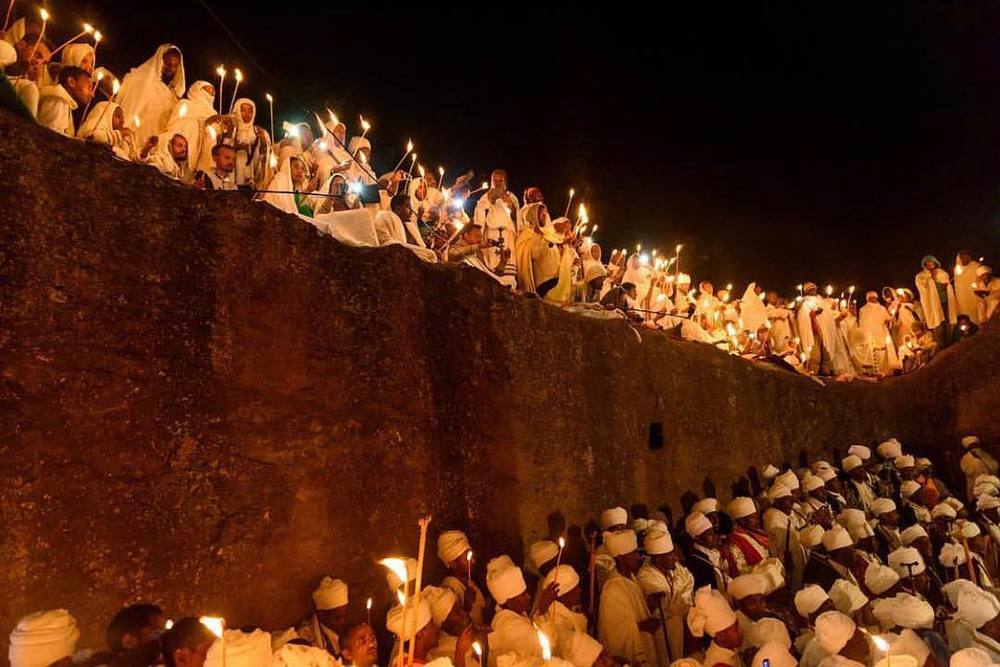
Pilgrims travel to Lalibela, the site of 11 churches each carved out of a single rock, for the holiday, according to BBC Bitesize. At Lalibela, priests in white with long crosses form circles at the top and bottom of the churches and sing a hymn in Ge’ez about the birth of the saviour of the world, accompanied by the kebero drum, according to the Ethiopian News Agency.
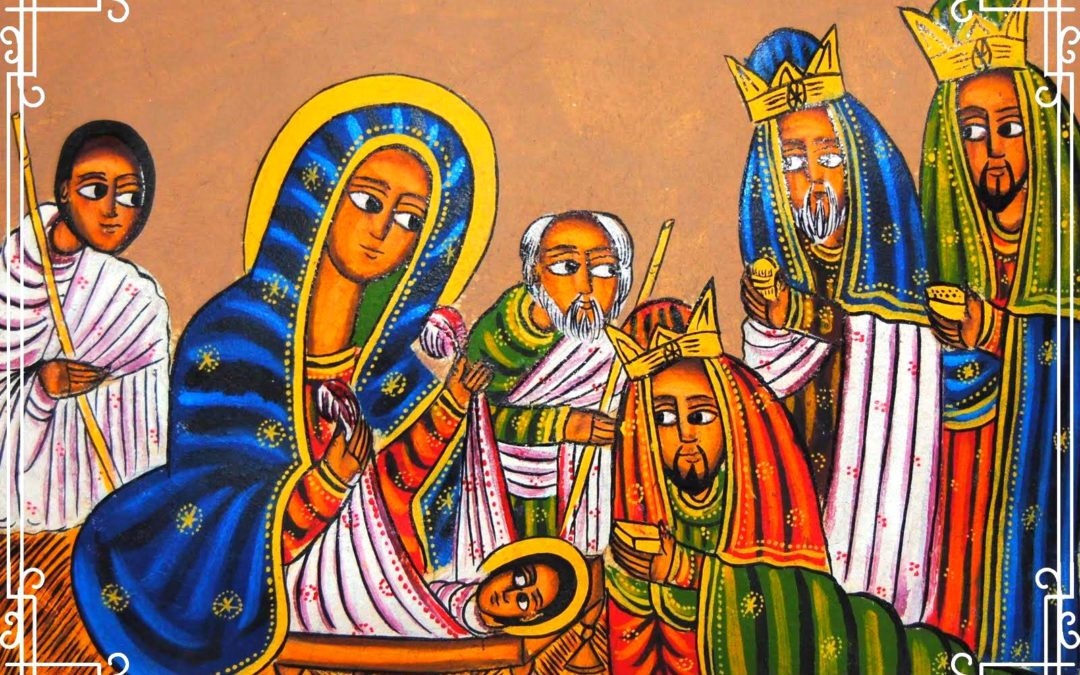
In rural areas, the game of gena, similar to field hockey, is often played at Christmas, according to BBC Bitesize, which says legend holds that shepherds began playing it with their crooks when they heard of the birth of Christ. Twelve days after Gena comes Timket, the Ethiopian Epiphany, the same reader told BBC News.
The church behind the celebration
Gena is kept by the Ethiopian Orthodox Tewahedo Church, an autocephalous Oriental Orthodox church with its headquarters in Addis Ababa, according to Encyclopaedia Britannica. Britannica records that Ethiopia was further Christianized in the 4th century by Frumentius, who became the first Ethiopian bishop, and that King Ezana of Aksum was baptized and made Christianity the state religion.
The name of the church carries its theology. Britannica explains that tewahedo is a Ge’ez word meaning “unity”, expressing the belief that the human and divine natures of Christ are united in a single nature. The liturgy and scriptures are typically in Ge’ez, though both have been translated into Amharic, and rigorous fasting is still practiced, which is why the long Advent fast before Gena matters so much to believers. In the early 21st century the church claimed more than 30 million adherents in Ethiopia, Britannica says.
Why Lalibela draws pilgrims
The pilgrimage to Lalibela at Gena is tied to one of Africa’s best known monuments. UNESCO describes eleven medieval monolithic churches carved out of rock in a mountainous region some 645 km from Addis Ababa. Their building is attributed to King Lalibela, who set out in the 12th century to build a “New Jerusalem” after Muslim conquests halted Christian pilgrimages to the Holy Land, according to UNESCO.
UNESCO notes that the churches have been a focus of pilgrimage since the 12th century, and it inscribed the site on the World Heritage List in 1978. Alongside the churches, the property preserves traditional two storey circular village houses with interior staircases and thatched roofs, UNESCO says.
A living tradition
Britannica points out that the ark, known in Ethiopia as the tabot, is an essential item in every church, and that monasteries often teach church music. Those threads run through the photographs above: candles, prayer sticks, drums and clergy in white gathered for a night of worship.
Sources
- BBC Bitesize, How do Christians celebrate Christmas?
- Habtemichael Kidane, “Ṣomä lǝdät”, Encyclopaedia Aethiopica, vol. 4 (Wiesbaden: Harrassowitz, 2010), pp. 692 to 693 (entry text reproduced online)
- BBC News, Celebrating Christmas across Africa (readers’ accounts), 25 December 2009
- Ethiopian News Agency, Unique Features of Ethiopian Christmas ‘Genna’
- Encyclopaedia Britannica, Ethiopian Orthodox Tewahedo Church
- UNESCO World Heritage Centre, Rock Hewn Churches, Lalibela