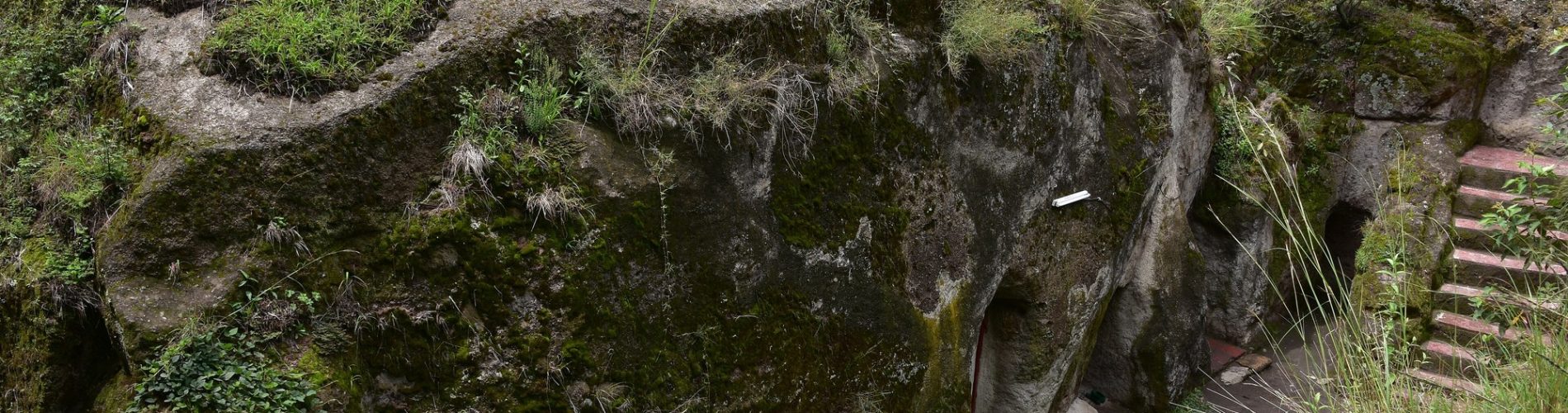
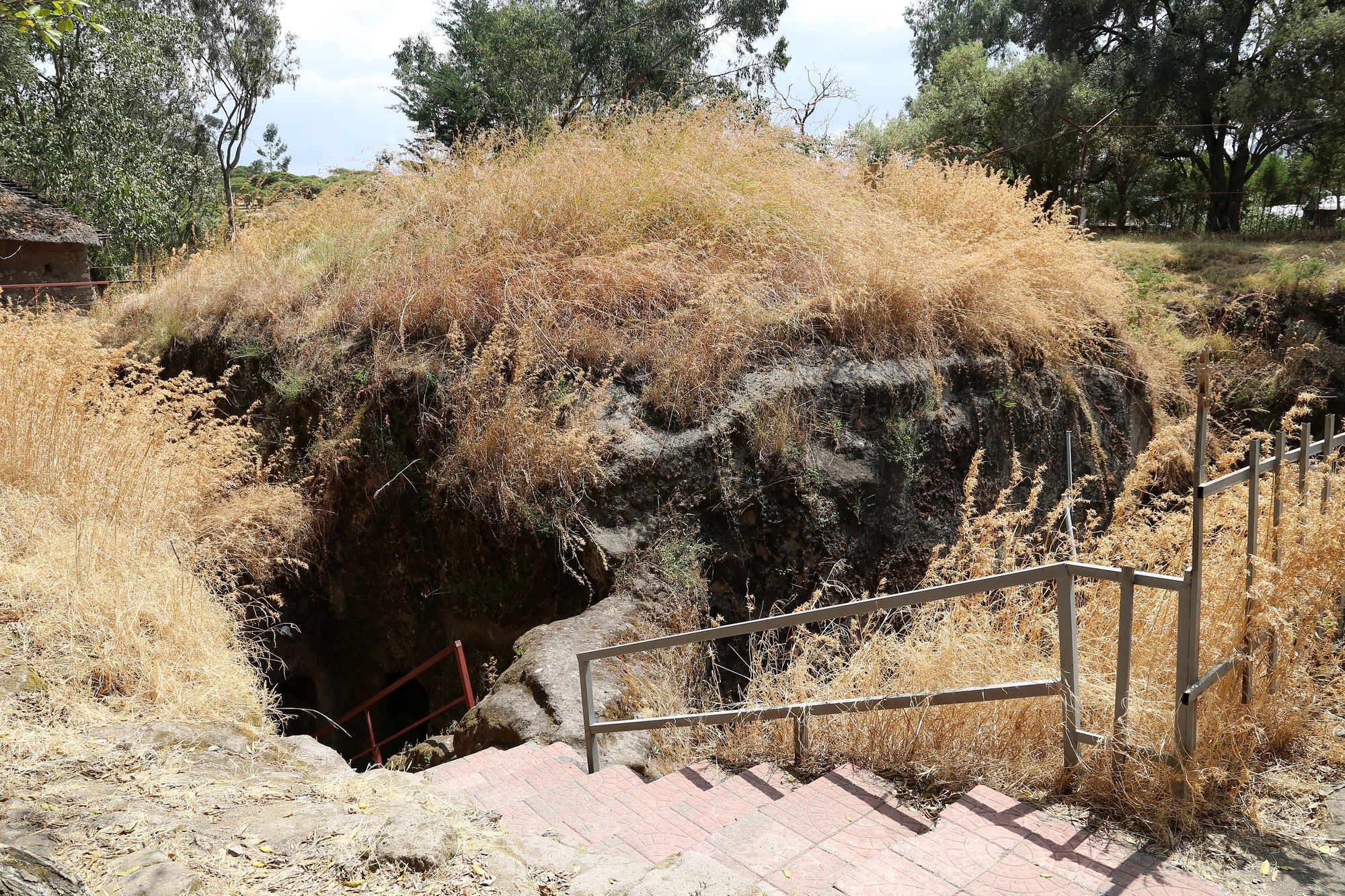
About 65 kilometres southwest of Addis Ababa, a church carved down into a single mass of rock sits inside its own trench. Adadi Maryam is one of the southernmost rock hewn churches in Ethiopia.
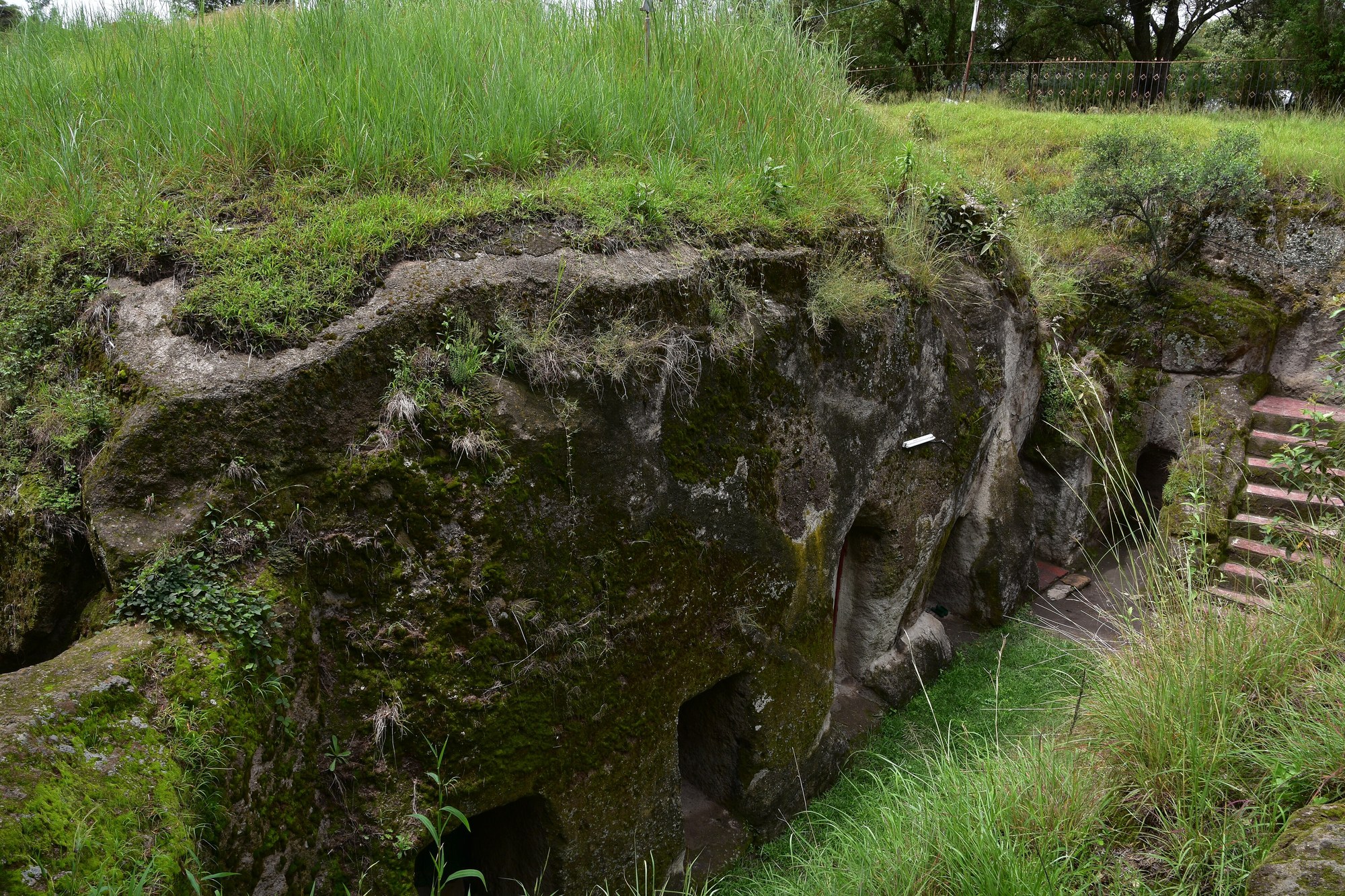
A church cut from the mother rock
The church is also known as Anfar Maryam, according to its entry in the Encyclopaedia Aethiopica, written by Ewa Balicka-Witakowska and published in 2014. The encyclopedia places it in Soddo Gurage, in the historic province of Shewa, about 18 kilometres north of Melka Kunture. A 2025 study by the archaeologist Manon Routhiau describes the same site as lying in the upper Awash basin, in today’s Oromia region.
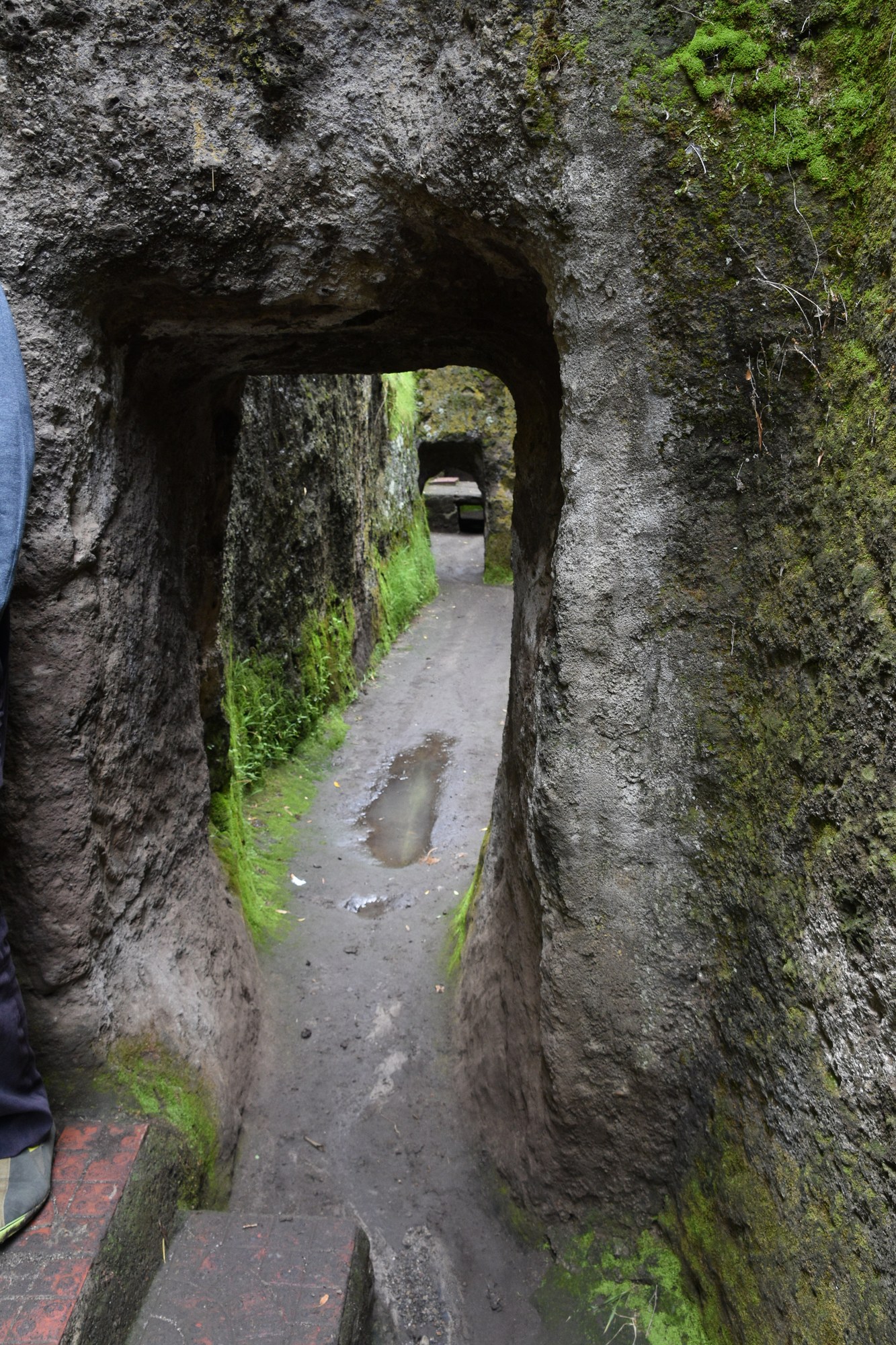
As a monolithic church, Adadi Maryam was made by cutting away rock rather than by building up walls. The encyclopedia describes a roughly square block about 19.5 by 16 metres, ringed by narrow trenches about 5 metres deep and joined to the surrounding rock at its corners by slightly curved buttresses. A row of pillars forms a walkway around the outside. About a third of the block, at its eastern end, was never fully excavated.
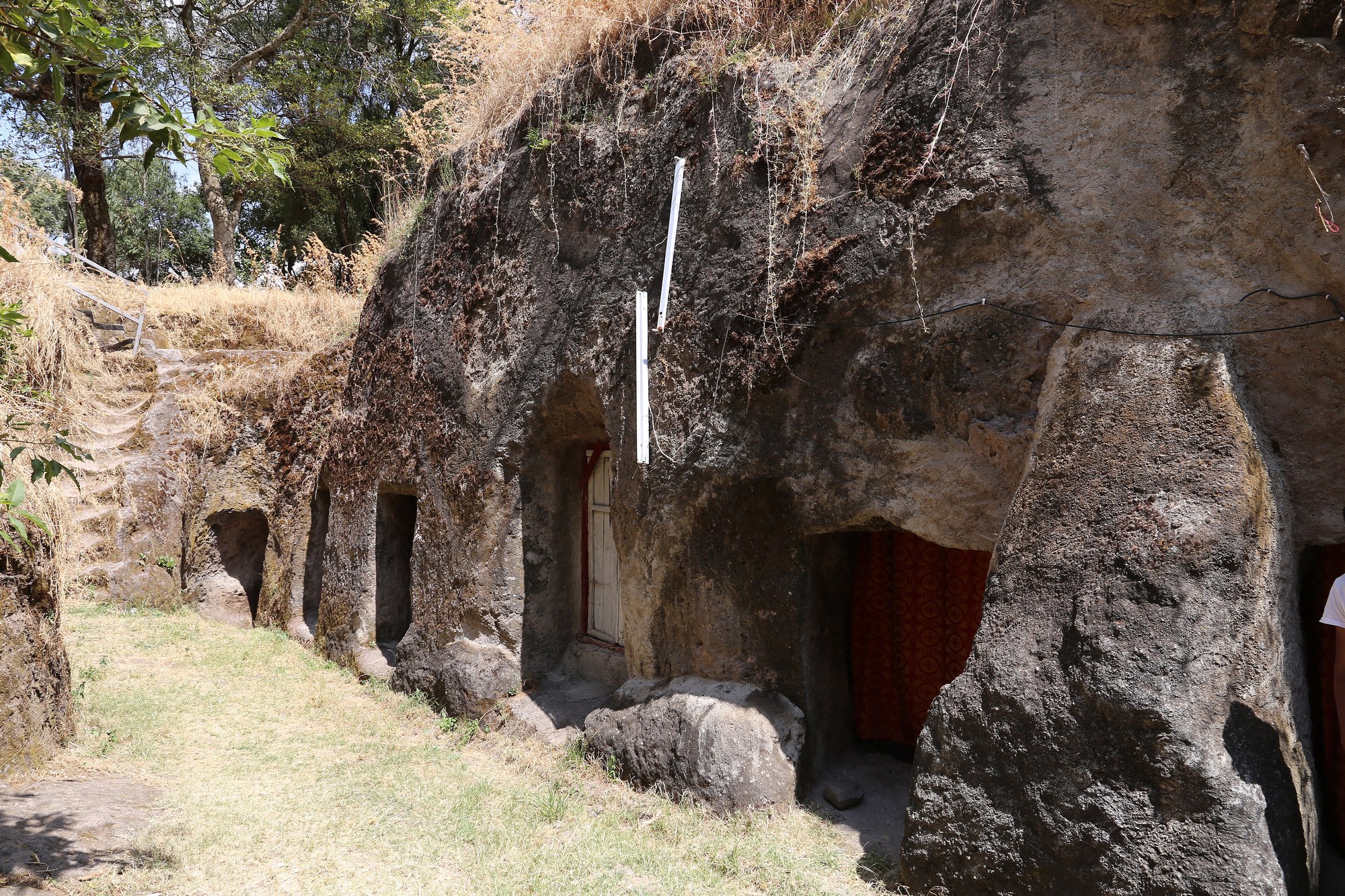
There are three entrances, on the south, north and west sides, and the interior is divided into two rooms. The narrow western room, about 8 by 2.5 metres and lit by two windows, serves as the qeddest. Beyond two pillars and three wooden doors lies the sanctuary, the maqdas, which holds two altars cut from the rock. The wider western part of the outer walkway is used as the qene mahlet. Carving is sparse: bands on the ceiling of the qene mahlet, two large crosses on the ceiling of the qeddest and a small, shallow dome above the sanctuary.
Who carved it, and when?
Local tradition credits King Lalibela with founding the church. The encyclopedia says its age cannot be fixed with certainty, but that it was clearly made after the Lalibela churches. It suggests a link with monastic groups that moved south at the end of the fourteenth century and in the fifteenth, pointing to the similar plans of the upper church of Ashetan Maryam and of Qanqanit Mikael, both near Lalibela. Local priests say Adadi Maryam appears in the Mashafa Tefut as one of the land grants Emperor Zara Yaqob made to Amba Geshen, the encyclopedia adds.
In her article in the journal Azania, Manon Routhiau notes that the few researchers who have studied the church date it to the fourteenth or fifteenth century, when the Christian kingdom, first based in the north, began to conquer the Shewa region. Her own observations of the outside of the church found architectural inconsistencies that raise questions about the order in which the site was cut and used. Comparing it with other rock cut sites in Ethiopia, she suggests an earlier phase of use before it became a Christian church.
Buried and uncovered
The encyclopedia records that the Portuguese priest Francisco Alvares wrote of the court of Emperor Lebna Dengel stopping at a rock hewn church in 1523, and that this may have been Adadi Maryam. An unpublished biography of Ras Gobana Dacche credits him with building the church in 1876. The encyclopedia reads this as a reference to a story that the church was filled with earth and stones in the sixteenth century and dug out again in the nineteenth.
A Swiss team carried out restoration work on the church from 1996 to 1998, according to the same entry. Adadi Maryam is not among the properties UNESCO lists for Ethiopia on the World Heritage List or on the country’s current tentative list.
Sources
- Ewa Balicka-Witakowska, “Adadi Maryam”, Encyclopaedia Aethiopica, volume 5 (Wiesbaden: Harrassowitz, 2014).
- Manon Routhiau (2025), “Adadi Maryam: a new perspective about the southernmost rock-cut church in the Ethiopian Highlands”, Azania: Archaeological Research in Africa 60 (4): 673 to 692 (abstract also on HAL)
- UNESCO World Heritage Centre, Ethiopia: properties inscribed on the World Heritage List
- UNESCO World Heritage Centre, Tentative Lists: Ethiopia