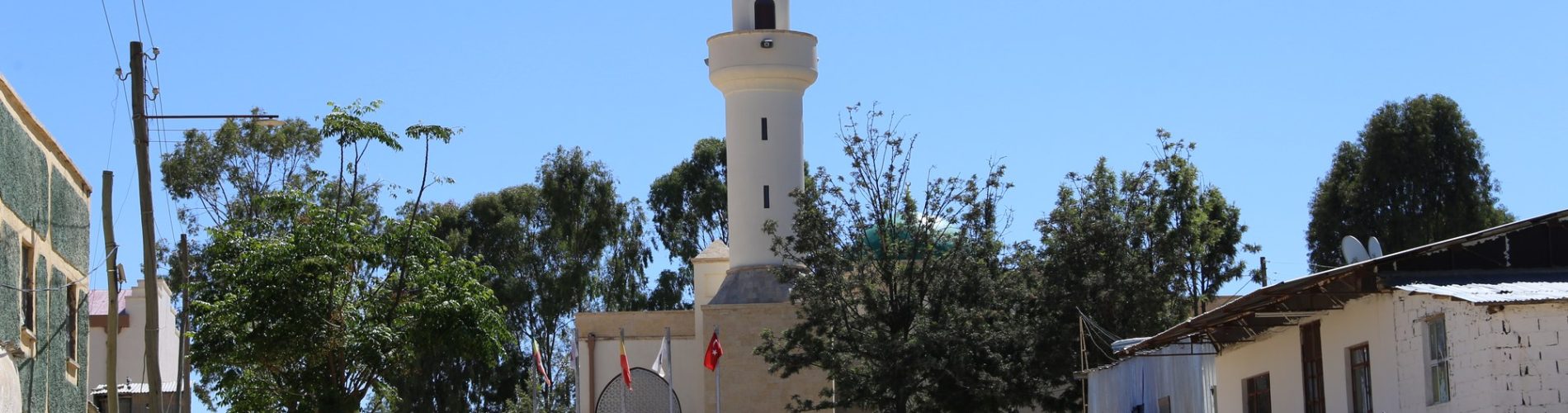
In the hills of eastern Tigray, the village of Negash keeps one of the oldest Muslim memories in Africa: the story of refugees from Mecca sheltered by a Christian king of Aksum around 615.
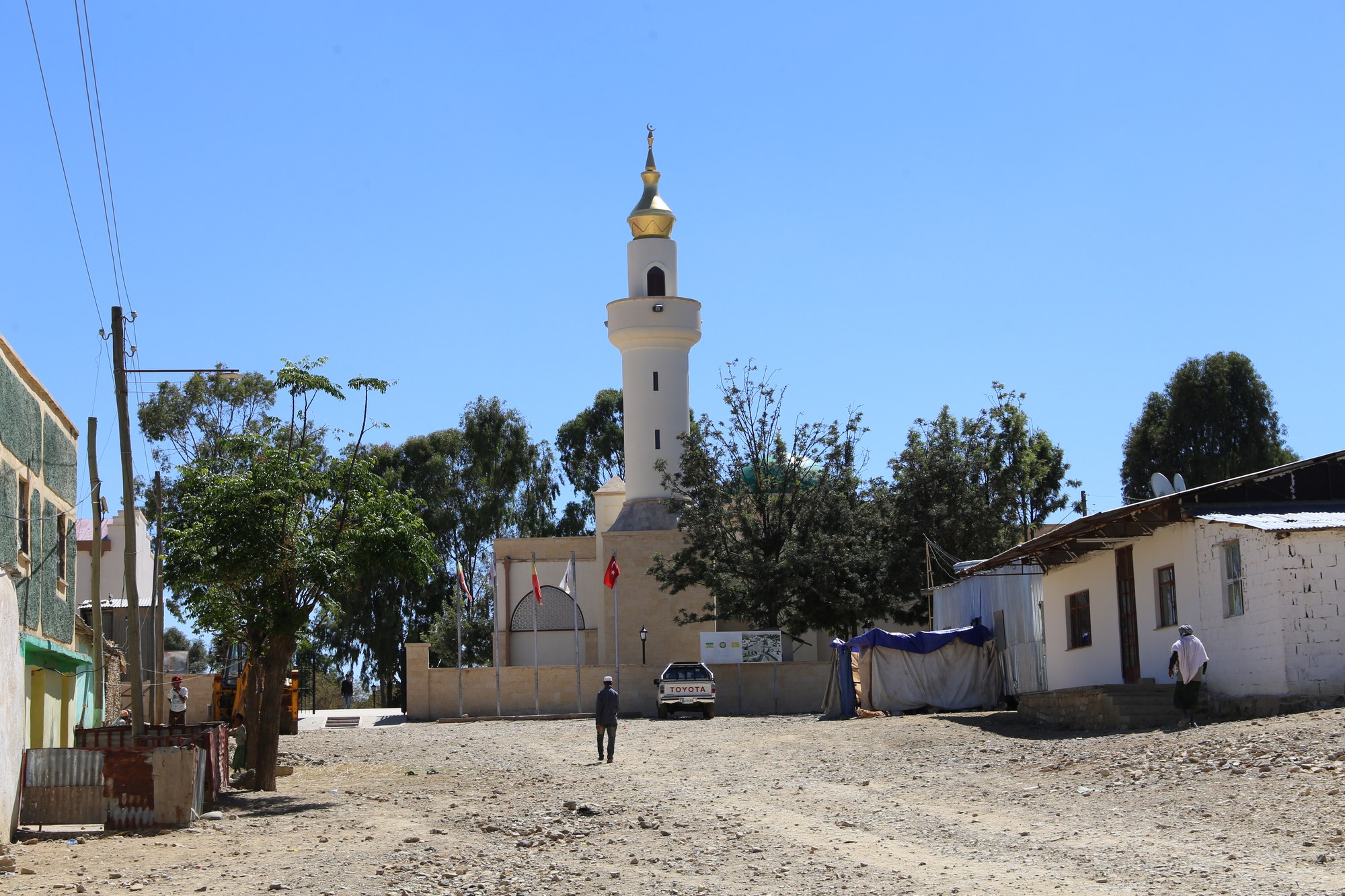
A village on the Mekelle road
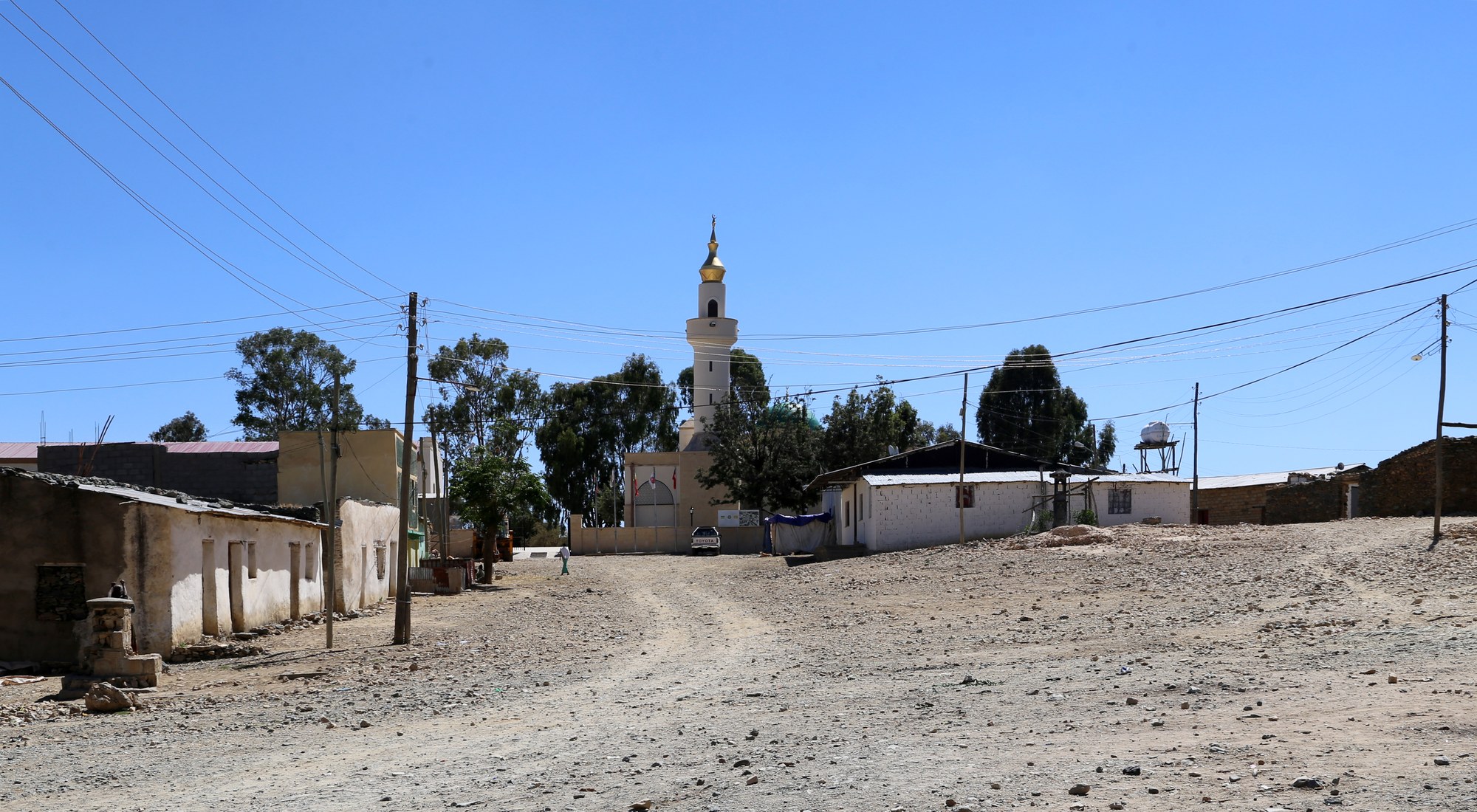
Negash lies on the main road from Mekelle to Adigrat, about 10 kilometres north of Wukro, in a mountain pass above the Gunfel valley in the historical province of Enderta. That is how the Italian scholar Alessandro Gori places it in his 2007 entry for the Encyclopaedia Aethiopica. He counted about 1,500 inhabitants at the time, half Muslim and half Christian, with two churches inside the village. On a rock at the top of the pass, he noted, an Italian inscription dated 1936 still names the pass; he thinks the village most probably served as a camp during Italy’s military campaign. The village sits in the same northern highlands as the clifftop monastery of Debre Damo and the temple of Yeha.
Gori calls Negash perhaps the most important Muslim holy place not only in Ethiopia but in the whole Horn of Africa. It holds the shrine of the Negus, the king who in Muslim tradition protected the first followers of the Prophet Muhammad to leave Arabia, and graves said to belong to some of those companions.
The first hijra
The story is told in the earliest biography of the Prophet, written by Ibn Ishaq in the eighth century and preserved in the edition of Ibn Hisham. In the English translation by Alfred Guillaume, Muhammad sees his followers persecuted in Mecca and tells them that Abyssinia would be better for them, because its king tolerates no injustice. Ibn Ishaq calls their departure the first hijra in Islam. The first small party included Uthman ibn Affan and his wife Ruqayya, the Prophet’s daughter; Jafar ibn Abi Talib followed, and others came after him.
The Quraysh of Mecca then sent two envoys, Abdullah ibn Abi Rabia and Amr ibn al-As, with gifts to persuade the king to hand the refugees back. In Ibn Ishaq’s account, Jafar spoke for the Muslims and recited a passage from the chapter of the Quran about Mary; the king wept and refused to surrender them. The team that excavated the medieval Muslim cemetery at Bilet, near Mekelle, follow the traditional chronology that places this emigration seven years before Muhammad’s own move to Medina in 622.
Arabic sources give the king’s name as Ashama ibn Abjar. Researchers at the University of Warsaw note that matching him with a ruler known from Aksumite sources remains uncertain. Gori adds that the sixteenth century chronicle of the wars of Imam Ahmad ibn Ibrahim calls him Ahmad, a name he suspects comes from local tradition.
What the records show
That chronicle, the Futuh al-Habasha, is the first text to mention the shrine. According to Gori, the imam’s army passed the tomb in 1533 while chasing a Christian governor; his soldiers wanted to stop and visit, but he pressed on, promising to return the next day. The team that excavated Bilet, writing in the journal Antiquity in 2021, cites Gori to stress that the shrine is undocumented before the sixteenth century. They add that no trace of a seventh century Muslim presence has yet been found in Ethiopia. Their own digs showed a different, later story: Arabic gravestones from Bilet, one dated to 1040, reveal a Muslim community living in Tigray in the eleventh century. For the walled Muslim city of eastern Ethiopia, see Harar Jugol.
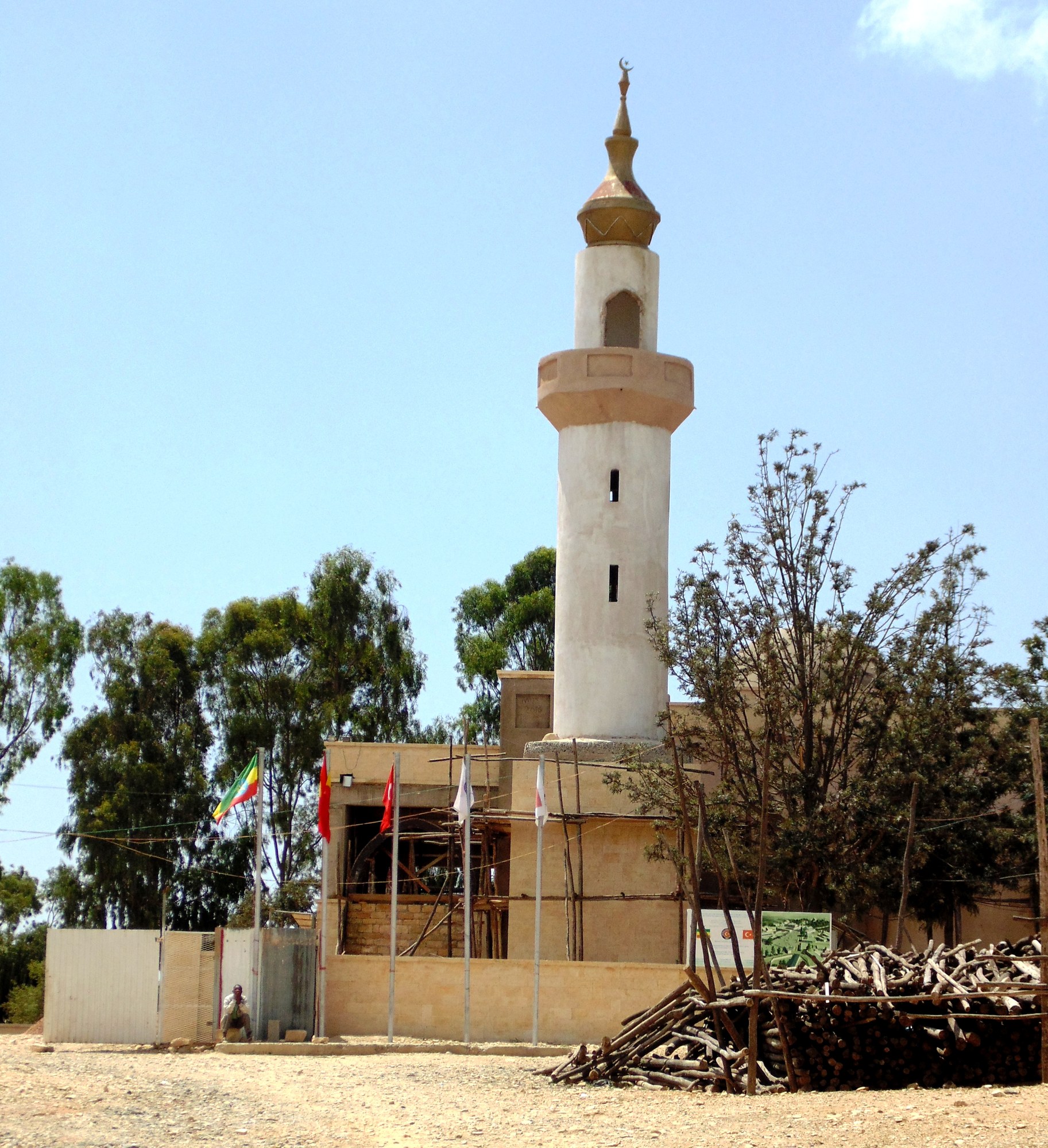
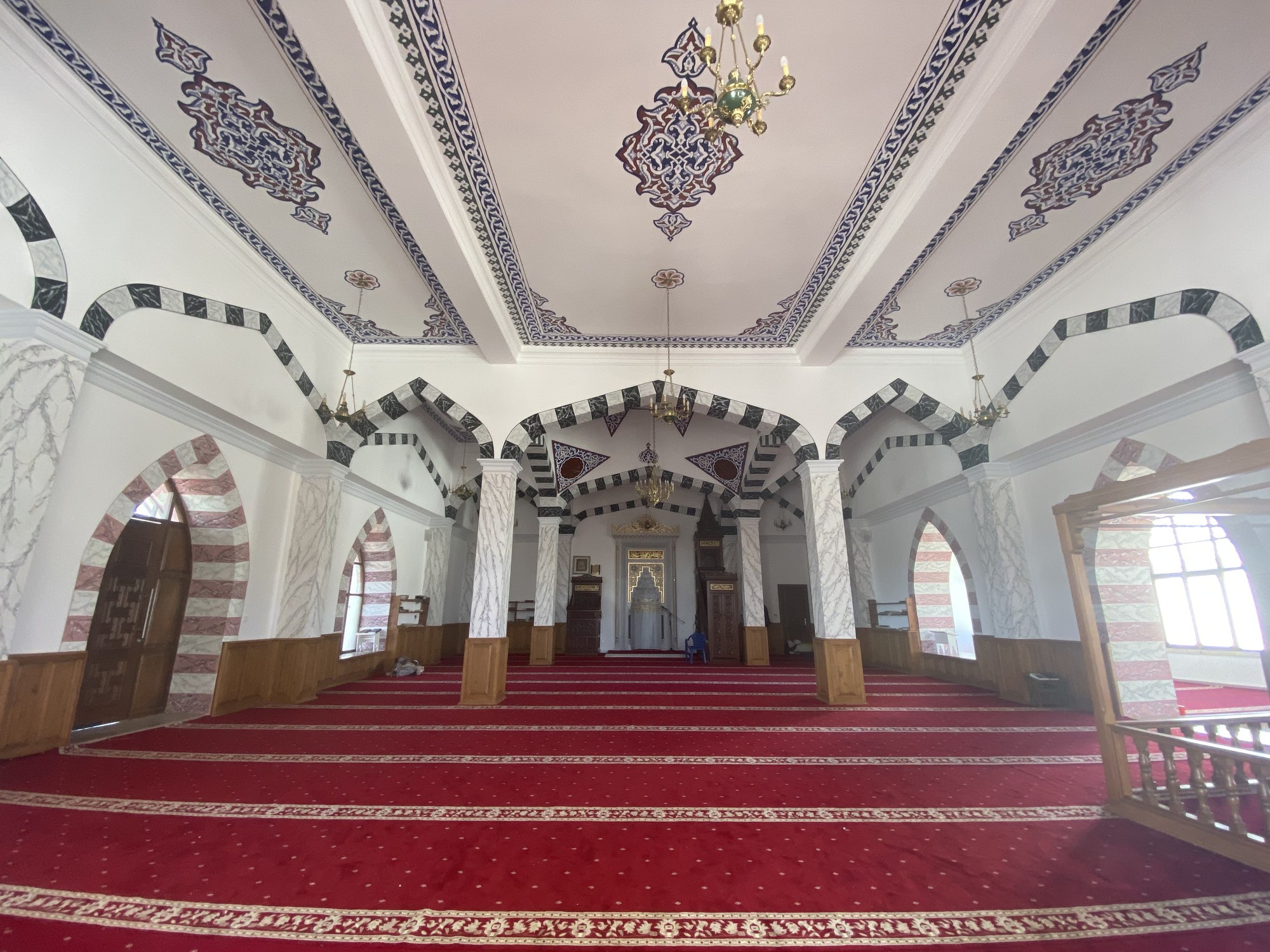
In his 2007 entry, Gori described the holy compound as two green domed buildings, both recent. The larger houses the shrine of the king; the smaller holds Uday ibn Nadla, remembered as the first refugee to die in Ethiopia, and scattered graves in the yard are those of other companions. Every year on Ashura, the tenth day of the month of Muharram, thousands of pilgrims come from across the Horn and Sudan. Outside the graveyard, he adds, a big mosque had been built with private funding.
Looking for the first settlement
The present compound is modern, write Zuzanna Augustyniak and Kamil Kuraszkiewicz of the University of Warsaw in a 2025 field report. It was renovated with Turkish government support before the war in Tigray, badly damaged during the fighting of 2020 to 2022, and was being repaired by the same donor when they wrote. Local tradition, they note, places the refugees’ settlement farther west. A survey with Mekelle University in November 2024 found the ruin of a small mosque on one hilltop, about 6.5 by 4.5 metres, its walls of flat limestone pieces set in clay and a niche in the north wall facing toward Mecca. Two more hilltops held ruined houses. An old graveyard south of the modern mosque contains upright stones, one inscribed for a woman named Khadija; the report offers no dates for any of these remains yet.
In January 2026 Ethiopia’s heritage authority put Negash on its tentative list for World Heritage, a first step that does not mean inscription. Its submission treats the whole village, mosque and cemetery as a living landscape and claims the gravestones are among the earliest physical evidence of Islam in Africa, a claim that, on the published evidence, still awaits dating.
Sources
- Alessandro Gori, “Nägaš”, Encyclopaedia Aethiopica, volume 3 (Wiesbaden: Harrassowitz, 2007), pages 1107 to 1109.
- Ibn Ishaq, The Life of Muhammad: A Translation of Ishaq’s Sirat Rasul Allah, translated by A. Guillaume (Oxford University Press, 1955), pages 146 to 155.
- Julien Loiseau and others, “Bilet and the wider world: new insights into the archaeology of Islam in Tigray”, Antiquity 95 (2021), pages 508 to 529
- Zuzanna Augustyniak and Kamil Kuraszkiewicz, “The early Islamic tradition in Ethiopia: report on the first season of the archaeo-ethnographic research in Negash (Tigray)”, Studies in African Languages and Cultures 59 (2025), pages 169 to 185
- UNESCO World Heritage Centre, Tentative Lists: “Negash (AI-Nejashi) Village: Sanctuary of the First Hijra and Enduring Legacy of lnterfaith Tolerance”, submitted 22 January 2026